
Wooing the diaspora: Indian brands set up shop Down Under
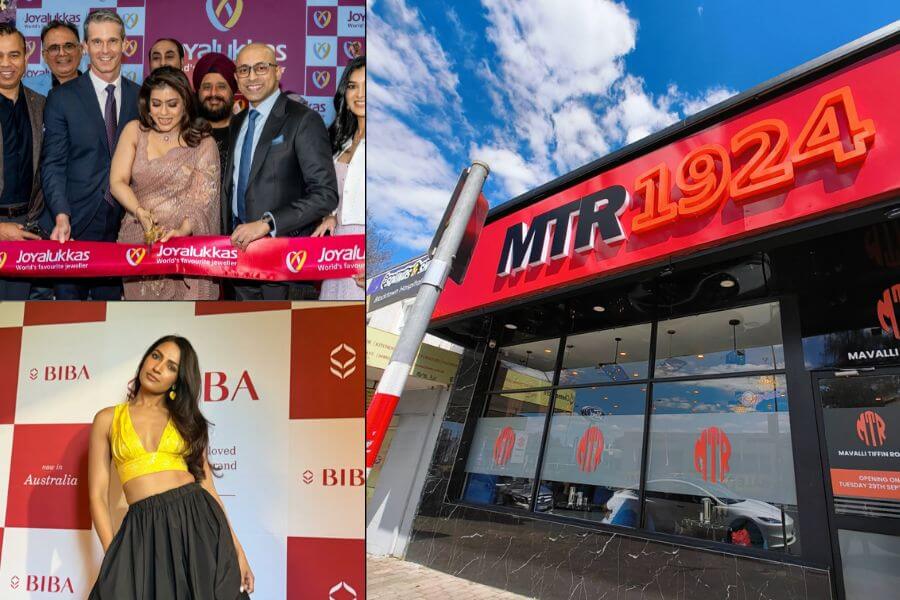
MTR aka Mavalli Tiffin Room opened its first Australian restaurant in Sydney this week. The 102-year-old Bengaluru institution, known for its dosas, filter coffee and the rava idli it is credited with inventing, arrives with chefs who spent close to a year training in its original Lalbagh kitchen. For many Indian-Australians, it is one more eatery that hit home.
BIBA, a traditional Indian clothing brand opened, its first Australian store in Melbourne in September. South-Indian jewellery brands Joyalukkas opened Sydney and Melbourne showrooms in April, following Malabar Gold & Diamonds, which arrived in Sydney in 2024 calling itself the first Indian jewellery retailer here. Chennai-based restaurant chain Saravana Bhavan has opened its tenth Australian outlet, in Sydney’s CBD; a well-known Indian snack brand Bikanervala has opened in Adelaide, and pan-Indian diamond jewellery brand from the house of TATA’s called CaratLane just launched a dedicated Australian online store. Add the Indian grocery stores popping up in almost most localities, and a pattern takes shape: not isolated openings, but a shift worth reading two ways – what it says about money, and what it says about belonging.
A post shared by Julian Hill MP (@julianhillmp)
Behind the rush of Indian brands into Australia is an increasingly compelling customer base: the Indian diaspora.
As of June 2025, India-born residents numbered 971,020, making them Australia’s largest overseas-born group for the first time on record – up from 411,000 a decade earlier. And that doesn’t count Australian-born generations who have grown up with the same food, fashion and cultural touchstones – and may still want a proper masala dosa on a Sunday.
For South Indian jewellery brands, Sydney’s sizeable South Asian population offered an obvious market of customers already familiar with their names. Joyalukkas has also pointed to the Australia-India Economic Cooperation and Trade Agreement (ECTA) as helping create favourable conditions for its Australian entry.
But look at how these brands are actually arriving and another important factor emerges: local Indian-Australian entrepreneurship.
BIBA’s Melbourne store is run by local founders, while Saravana Bhavan’s expansion is being driven by a local managing partner. The Adelaide operator behind Bikanervala recalled people back home describing it as “the KFC and Burger King of India”: in Australia, that familiarity became a business opportunity. CaratLane, meanwhile, has taken a different route, entering the market online first.
A post shared by BIBA (@bibaindia)
The different approaches reflect the economics of each business.
For food brands, franchising is the favoured route. MTR’s Sydney outlet is its first international franchise, while Bikanervala trained its Adelaide team to the brand’s standards before handing operations to local management. The Indian parent provides the name, recipes and systems in return for fees and royalties; the Australian partner invests in the lease, fit-out and staff and assumes much of the day-to-day risk. For the brand, it is a relatively low-cost entry into a distant market. For the local operator, it is a business with a name many customers already know and trust.
Jewellery requires a different model. Gold means costly inventory and a business heavily dependent on trust, so the major jewellers have arrived with large flagship showrooms and senior executives from head office.
Then there is the online-first approach. A dedicated Australian website allows a brand to test demand, pricing and delivery before committing to bricks and mortar.
Three models, one underlying bet: that recognition built in India will translate into loyalty – and repeat custom – in Australia.
The location is the story, not only the store. For decades, Indian retail here meant a strip in Harris Park, Dandenong or Parramatta, spaces we built for ourselves, largely invisible to everyone else. Malabar Gold and Diamond did set their foot into that world, in Harris Park’s Little India. Two years on, the newer arrivals are betting on Westfield and the CBD instead: BIBA near Target, and Saravana Bhavan serving CBD workers dosas at lunch.
A post shared by Anchor_Hiral Adhyaru (@hiraladhyaru)
It shows up, too, in who cuts the ribbon: the Joyallukas store launch drew state and federal MPs and India’s Consul General. Even the chosen faces say something – while one brand had Brett Lee open its Sydney showroom, the other brought in Kajol Devgn, a Bollywood big-wig to grab eyeballs. A small but revealing split in who each brand thinks it’s talking to.
Arriving isn’t the same as belonging. So far, these brands are mostly selling nostalgia to people who already know them, a sound opening move for sure, but a ceiling. Japanese and Korean brands won here by making ramen and skincare part of everyday life for everyone, not just their own diasporas. Indian brands need to do the same: a kurta besides linen shirts for a Melbourne summer, filter coffee holding its own in a city that takes coffee seriously.
There’s a responsibility with scale, too: our community has been vocal about workplace exploitation in migrant-run businesses. The brands that thrive long-term will pay their staff properly and treat Australian workplace law as non-negotiable.
Industry observers expect more Indian fashion, beauty, jewellery and lifestyle brands to consider Australia, and I think they’re right. Bikanervala’s choice of Adelaide, not Sydney, for its first address is telling: brands now see this community as national, not a two-city story.
For the Australian economy, this is a clear plus. Every showroom and restaurant means leases signed, local staff hired, suppliers paid and tax collected, with much of the profit staying with local partners. But let’s be honest: courting the diaspora is not the same as going mainstream. Outside the community, few Australians would recognise most of these names, and their customers are still overwhelmingly Indian. Until that changes, these are Indian brands in Australia, not yet Australian favourites, and they have a long way to go.
Read more: “Her eyes speak volumes”: Sydney photographer Shekhar Jay on Kajol
Related Stories
 Global Indians
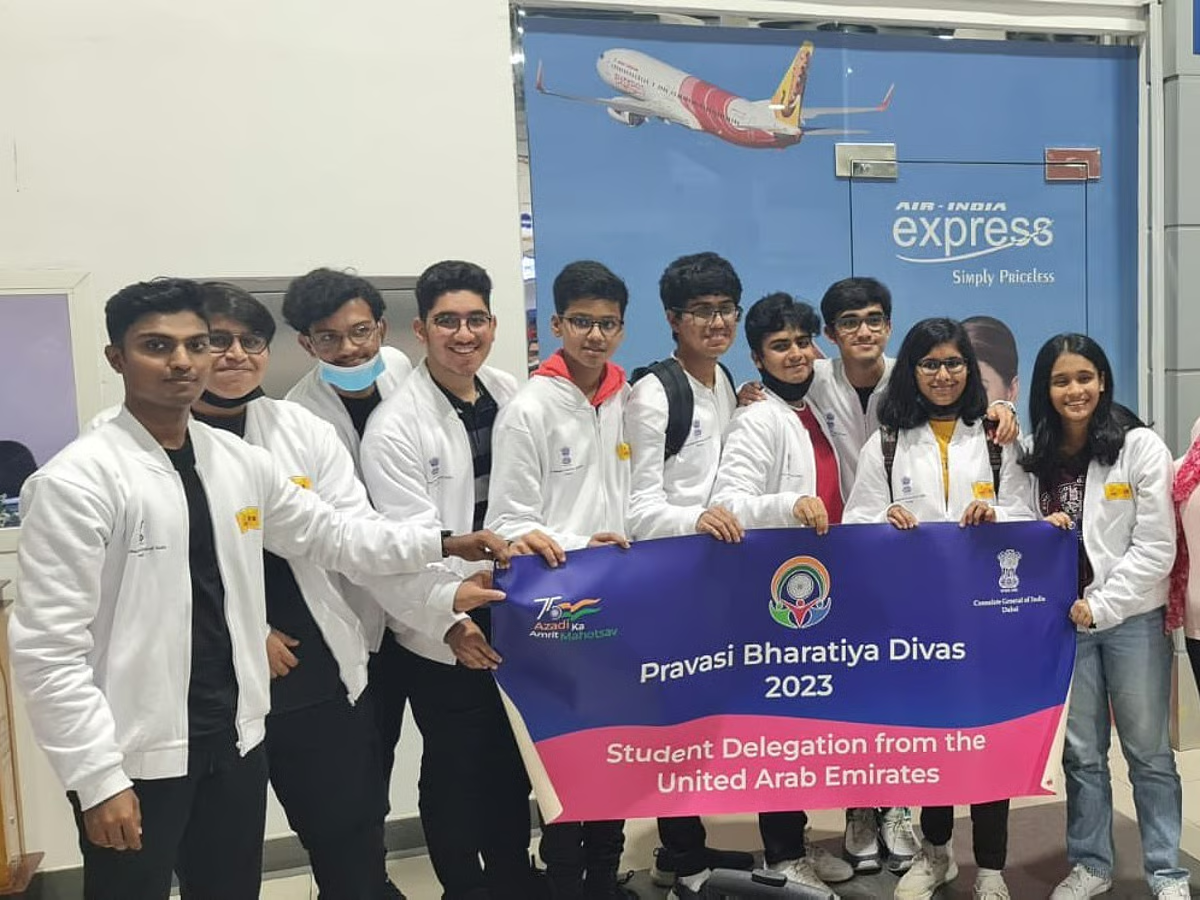
Indian Consulate in Dubai invites Indian expats in UAE for Youth Pravasi Bharatiya Divas 2027 in Kolkata
1 day ago
 Global Indians
Indian diaspora is dying to connect with India: Prasoon Joshi, Prasar Bharati Chairman
1 day ago
 Global Indians
Speaker meets Indian diaspora in Lima, discusses biz, cultural ties
2 days ago
 Global Indians
RS deputy chairman urges Indian diaspora in South Africa to partner in emerging technologies
2 days ago
 Global Indians
Buying property abroad for your NRI child? Know how much Indian parents can transfer and the tax implications
2 days ago
 Global Indians
Opinion | China is leveraging its diaspora to boost the economy, unlike India
1 week ago
 Global Indians
Telugu diaspora in Saudi Arabia among most vibrant in Gulf region: Indian Ambassador
1 week ago
 Global Indians
Aadhaar Card for NRIs in 2026: Eligibility, Documents and Application Process
1 week ago