
How Mahanagar Mirrors India's Majoritarian Politics
An incident that took place in Calcutta fourteen years ago asks to be narrated to show, first, how the pathology of fear of a phantom enemy can make even the powerful look silly and cowardly; and secondly, with what ease the socially visible and economically well-endowed can trample upon the rights of the weak and the vulnerable without fear of retaliation or opposition from any quarter.
When a young Anglo-Indian mother named Suzette Jordan was picked up on a February night of 2012 from a watering hole on Park Street, Calcutta’s popular entertainment zone, and repeatedly raped inside a moving car by five young men, and the matter became public knowledge following the victim’s report to the police, the then Chief Minister of West Bengal, Mamata Banerjee, said that nothing of the sort had happened and dismissed it as a conspiracy to malign her government and her administration.
However, subsequently, thanks to the exertions of Damayanti Sen, a fearless IPS officer in the rank of Deputy Commissioner, the rape was confirmed. Unfortunately, there was no concerted public demand for an apology from the Chief Minister, who had so brazenly tried to assassinate the character of a hapless victim. Clearly, Mamata Banerjee could do what she did and get away with it because Suzette belonged to a community that is numerically so small and economically so insignificant as to be almost invisible to “mainstream” view. On Suzette’s part, she was in no position to give visible shape to her anger apart from reporting to the police.
Somewhat characteristic of her style of doing things, the Trinamool chief had called Suzette a liar and accused her of trying to embarrass the government. Yet nothing was to be heard from her when, on December 10, 2015, the City Sessions Court, Calcutta, found all five of the accused guilty of rape. Alas, it was destiny’s way of denying the victim the satisfaction of justice that some nine months earlier, on March 13, 2015, she had succumbed to an attack of meningoencephalitis at the age of 40. For her pains, the upright police officer who had proved Suzette Jordan’s allegations to be true was transferred to a lesser posting outside Calcutta.
The popular myth that every woman is full of “the milk of human kindness” was roundly exploded one more time by the way Suzette was made to suffer during her last days on earth. Again, the Bengalis have an expression in frequent use, mayer jaat, which attributes all things beautiful and true to the nature of women. Suzette’s experience both upholds and quashes the expression. One woman caused Suzette’s torture, albeit on the mental plane, to increase manifold, but another risked her career prospects trying to bring justice to an unjustly demonised sister.
Also Read | Nemai Ghosh: Ray’s witness
Mamata Banerjee’s shrill complaint that the 2026 West Bengal Assembly election had been stolen from her by the BJP is not wholly untrue. But one must also consider whether the saffron camp could have notched up such a massive victory without Banerjee proving to be her own worst enemy. Apart from being able to polarise the Hindu vote significantly by taking recourse to an array of divisive means, the BJP worked hard to bring home to the electorate Mamata’s dismal record as far as violence and corruption were concerned.
The new West Bengal government’s announcement on May 18 that a high-power committee headed by a retired judge, Samapti Chatterjee, would examine complaints of violence against women during the Trinamool regime is likely to be welcomed by many people cutting across political persuasions. As if time was having its say, the committee will have Damayanti Sen, the much-respected IPS officer marginalised by the earlier regime, as its member-secretary. If only similar committees were to be set up in all the BJP-ruled States where party offenders, from leaders to cadres, are known to take the law into their own hands and perpetrate the most heinous offences against poor, defenceless women!
Suzette Jordan talks on “The Beast In Our Midst—Rape Survivors Speak Their Stories” during the opening day of THiNK 2013 in Goa, on November 8, 2013. | Photo Credit: Getty Images
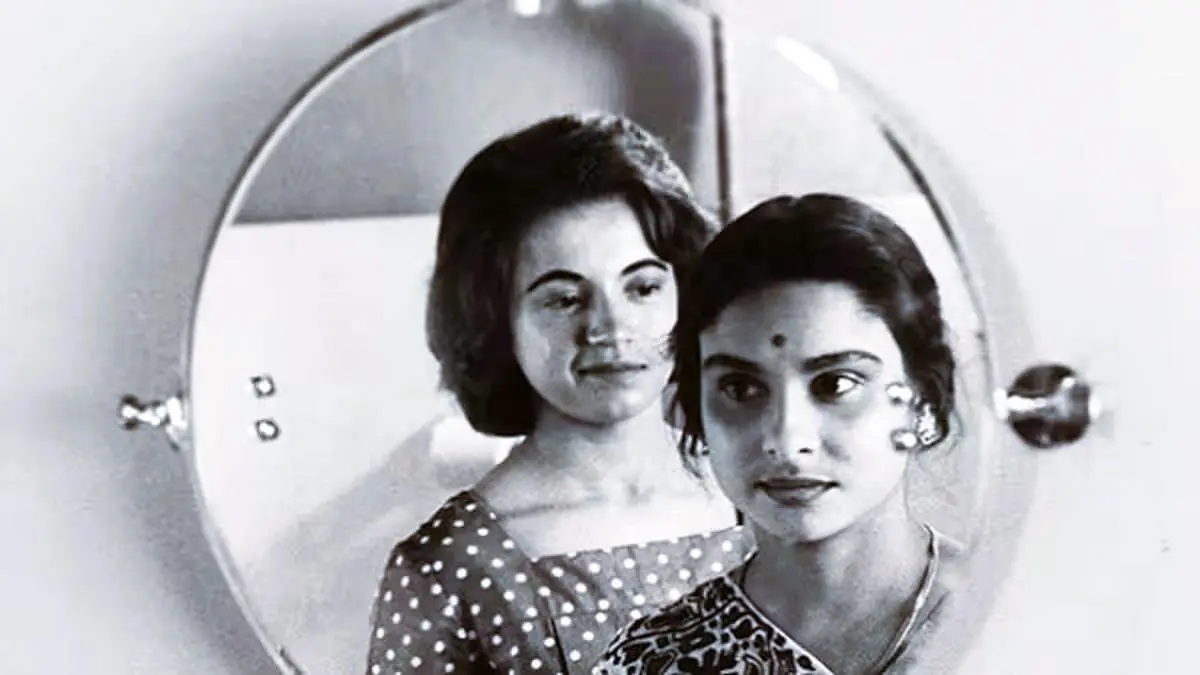
When Mamata Banerjee accused Suzette Jordan of lying without any knowledge of what had come to overwhelm the poor woman, she could well have reminded many a Bengali (read Indian) film viewer of the boorish conduct of Himangshu Mukherjee towards another Anglo-Indian woman in Satyajit Ray’s Mahanagar (The Big City, 1963). How uncannily life imitates art, or art reflects life.
Among other things, Mahanagar, a restored version of which recently took certain sections of the film world by storm both at home and abroad, draws our attention to the vulnerabilities that make for “the other” and, as surely, to expressions of viciousness invading them from without. The serious socio-politico-economic disadvantages in which “the other” have always found themselves in this country but, arguably, in never so pronounced a manner as today, can be traced to a fatal combination of at least three negative, notorious sentiments. What are these sentiments? The first is ignorance about an individual or the community to which he or she belongs; the second is prejudice, born of that ignorance; and the third is cruelty, which comes of the first two meeting. Here is an almost axiomatic progression towards the dark and the destructive, often hastened by the chaos of majoritarianism.
Himangshu Mukherjee of Mukherjee & Mukherjee, a Calcutta company selling expensive knitting machines to upper-class ladies, has appointed several attractive young women as salesgirls, or “canvassers”, as he likes to put it with a trace of haughtiness in his voice. From the beginning, the viewer can tell that Mukherjee is not exactly fond of the lone non-Bengali among the salesgirls, an argumentative Anglo-Indian named Edith Simmons. Ray prepares his audience subtly and well for a showdown between the two, which occurs in no time. Without making any effort to find out the reason for Edith’s absence from work one day, Mukherjee accuses her of having stayed away deliberately. The boss says he does not believe Edith’s explanation that she had been sick that day. Edith is badly stung by the accusation, and reacts, whereupon she is given the marching orders. In a sense, far worse than the sack is Mukherjee’s insinuation that “firingi” girls are morally wayward and not to be trusted.
(The word “firingi” can mean many things, including “foreigner”, “of mixed race”, or “Eurasian”, but the sense in which Mukherjee uses it has only pejorative connotations. Having spent his whole life in Calcutta at a time when the city was home to many Anglo-Indians, Ray was far from innocent of the excesses that those belonging to that community had to suffer at the hands of the pucca Bangali babu.)
When an agitated Edith tells Arati, her middle-class Bengali office colleague, of the loss of her job, the latter is furious. Arati, who knows of Edith’s sickness, having visited her home on the day of her absence from office, confronts Mukherjee like a woman possessed. She demands an apology for what she considers an act of insult and grave injustice to someone she has begun to value as a friend and, perhaps, even as a working-class sister burdened with similar monetary difficulties. Mukherjee is stunned at what he construes to be Arati’s impertinence, and asks whether she has gone mad to be arguing for a woman of doubtful character. The boss, who has perhaps never before been challenged like this by any of his employees, refuses to take back the dismissal order. Arati is left with no choice but to hand in her resignation. Whether it is a sudden rush of blood or her naïve, impressionable nature that made her do what she did, it is clear that henceforth Arati will feel greatly empowered wherever she goes, whatever she does or is called upon to do, as a result of her remarkable sacrifice. Nothing will ever be quite the same again for her.
Even as Mukherjee goes hurtling down in the estimation of the viewer and ends as a defeated tyrant, pathetic in his failure to subdue a frail, poor housewife, Arati rises to a position of substantive inner strength, the full depth or many-sided splendour of which might manifest itself at some point in the future. But what she has achieved outstrips her personal empowerment in emotive or social terms. She has revealed the need to assert one’s sense of right and wrong, the good man or woman’s basic moral fibre. By standing up for the wronged “other” and refusing to go along with the prejudices of her employer, Arati has placed herself squarely within a discourse of convinced dissidence, although it is unlikely that she had seen the issue in that light. Since we are discussing her decision to stand beside a wrongly persecuted member of a minuscule community different from the overwhelming majority in racial, religious, social, or cultural terms, it would perhaps not be far-fetched to characterise her act of solidarity as a “political” one.
Released in 1963, Mahanagar follows a middle-class housewife whose entry into the workforce as a saleswoman upends her family’s traditional beliefs. | Photo Credit: By Special Arrangement
Where an educated, well-off man with two cars and, who knows, what else to boast of, can see only the dissimilarities between himself and the woman he holds in utter contempt for reasons that would crumble before any enlightened scrutiny, a mere matriculate racked by financial uncertainties like Arati lays bare for our inspection her moral sense and cultured sensibility. Together, they convince her of the need for mutual respect and appreciation between individuals or groups of people, regardless of visible differences. Nor is it too difficult to appreciate that an experience of similar economic insufficiency binds the two women together in a sisterhood of the deceived and the damned.
Anyone living in Bharatavarsha circa 2026 is likely to come across questions and answers like, “You’re Muslim? You can’t be Indian!” or “You’re Dalit? You can’t be Indian!” In the context of Mahanagar, the refrain could well be: “You’re Anglo-Indian? You can’t be Indian!” And hence the status of the Anglo-Indian man, woman, and child in a scheme of triumphal majoritarianism can only be that of a pariah, an outcast, the marginal, to be tolerated as long as he, she, and it are willing to stay put at posts assigned to them on the periphery of mainstream society.
Whenever I watch Mahanagar, I have the feeling that I have always known more than one well-dressed, educated malcontent like Himangshu Mukherjee, who causes no end of worries for Edith, worries she certainly did not deserve. Viewers have often been known to be drawn to films where they detect similarities between their own experience of life and those of someone on the screen. This may be called “the identification syndrome”.
Also Read | The mad, sad, improbable world of Jiri Menzel
During the years I was growing up in the then small, sleepy steel township of Jamshedpur, there was a generous sprinkling of Anglo-Indians working in the steel mill, the engineering industries, or the English-medium schools as teachers or administrative staff. Frequently, they had to put up with sly and sarcastic comments regarding the community’s “traitorous” role in the days of the Raj, as if everybody else from Kashmir to Cape Comorin was busy training their guns on the British or organising opposition to foreign rule along non-violent lines. The hotheads in the community would react angrily, but the level-headed among them took the insulting remarks in their stride. One good thing about them was that they knew how to make merry; another was that they were innocent of the dubious art of nursing quarrels. They simply refused to be discouraged by the verbal opposition from the “Indian” crowd. Some of them seemed silly when they spoke of “home”, meaning England, with gushing enthusiasm, but there were also those who adapted themselves to a changed order with remarkable maturity.
The history of fundamentalism, solidly entrenched in the perverted being and soiled consciousness of upstarts like Himangshu Mukherjee, stretches back to a hoary past. When that history is not racial, religious, or linguistic, it is sartorial or culinary. In the circumstances, one can do no better than keep hoping, perhaps for the impossible, that for every ten Mamata Banerjees or Himangshu Mukherjees, there will be at least one Damayanti Sen, one Arati Majumdar, one Satyajit Ray. Only then will the Suzette Jordans and Edith Simmonses rest in peace, in the damp and cold of the cemetery or in the heated unease of our imagination.
Vidyarthy Chatterjee writes on cinema, society, and politics.
Related Stories
 India
India
'Must Think Why Youth Trusted CJP': Shashi Tharoor on GenZ, Dimagi Naxals & More
14 hours ago
 India
India
Rahul Gandhi INDIA bloc's 2029 PM candidate: Tamil Nadu minister P Viswanathan
15 hours ago
 India
India
India releases names of 63 Indian nationals rescued from Trishuli
1 day ago
 India
India
GlobalM and Lamhas Expand IP Broadcast Across India
1 day ago
 India
India
How India’s Gen Z movement of ‘Cockroaches’ dented Modi’s political image
1 day ago
 India
India
Cockroach revolution turns on India's leader
1 day ago
 India
India
Kangana Ranaut opens up on politics, career and being ‘Hugely Desirable’: 'Had an identity for 20 years a
1 day ago
 India
India
Will legacy brands handover online operations to start
1 day ago