
AI backlash raises political costs of Washington’s hands
AI backlash raises political costs of Washington’s hands-off approach
by AUSTIN DENEAN | The National News Desk
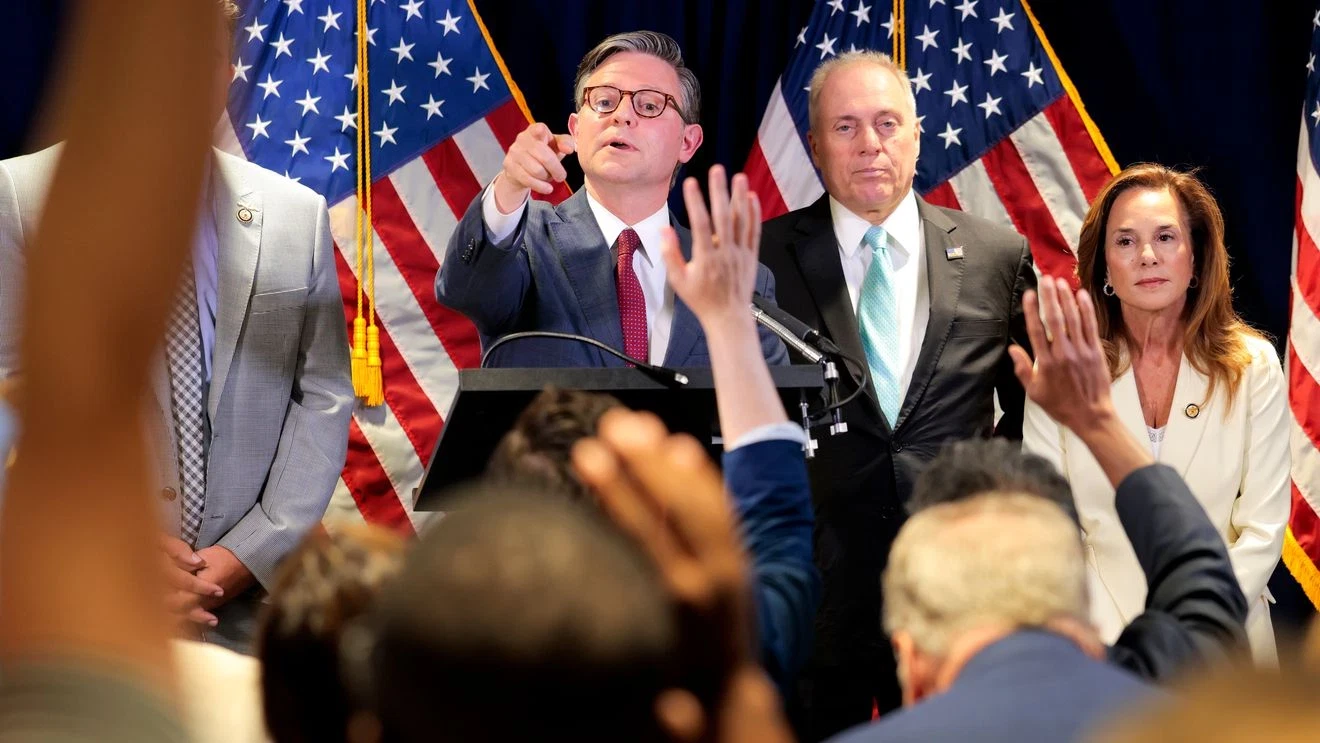
WASHINGTON (TNND) — Artificial intelligence developers’ increasingly urgent warnings about the dangers of the products they are creating are pushing the technology into the spotlight as lawmakers return to Washington for their final session before the midterms and renewing debate about whether the government needs to step in.
Dire warnings that AI could soon advance beyond its engineers’ ability to control it and lead to doomsday scenarios that threaten humans are the latest flashpoint from an industry already facing intense political pushback from voters while Congress has mostly sat on the sidelines.
Several executives at America’s biggest AI companies have called for a slowdown in development of advanced models in recent days and asked for the government to figure out a way to oversee the development of increasingly advanced systems. But the calls for regulation have also fueled skepticism about why the companies leading the AI race need the government to impose rules they could adopt on their own.
Vice President JD Vance questioned the tech executives’ motives in asking to be regulated, questioning whether seeking government intervention was a bid to quell competition.
“I have to say, just personally, I feel a little bit weird about the fact that you have so many frontier AI tech companies kind of coming to the government and begging the government to regulate them. It feels a little bit to me like a bit of a Trojan horse, so I think we just have to be careful about this,” Vance said.
While there is growing concern within the tech industry about the dangerous possibilities of AI tools that are quickly advancing, some Silicon Valley leaders also questioned motives and asked why frontier companies are asking for the government to address industry standards their companies are setting.
“Go ahead and pace the frontier. You are the ones setting it. The easiest way not to build superintelligence is for you to agree not to build it. Demanding your preferred regulatory framework as the price of that will look like blackmail of the public and the political system. So just do it,” David Sacks, the former White House AI and crypto czar, wrote in a social media post.
The warnings have been met with mixed reactions in Washington, with Democrats pushing for lawmakers to address the issue before the midterms while most Republicans and the White House have questioned the need for new federal rules.
The Trump administration has taken a hands-off approach to regulating AI and brushed off the recent calls for new regulations, arguing it is more important to maintain an advantage over China in being the global leader in AI development. President Donald Trump dismissed the recent fervor over out-of-control AI as a hoax and said warnings about AI going rogue were overblown.
Trump called Nvidia CEO Jensen Huang while the executive was talking about AI during a conference on Monday in a discussion that was put on speakerphone while on stage where the president again voiced his disagreements with the calls for regulation.
“It’s a hoax,” Trump said during the call. “The robots are not going to be taking over the world. That’s not going to happen.”
The continued build-out and advancement of the AI industry is seen by many as crucial to the future of the U.S. economy. Companies have invested massive sums in ramping up the construction of data centers and other AI infrastructure that could be the next major economic advancement, and some are concerned a heavy-handed regulatory approach could curtail that growth.
“We don't want to be rushed into some sort of bureaucratic, heavy-handed new set of regulations that should that could squash this huge economic engine. I think we can handle it with calm, with patience, and with some humility,” Bret Swanson, director of the Center for Technology and the Human Person at the Heritage Foundation, told the National News Desk. “Yes, it will create challenges, but we can use these new technological tools to actually help solve those challenges.”
But maintaining a hands-off approach to regulating AI is running into political headwinds that could soon force lawmakers to act.
AI was already a major issue ahead of this year’s midterm elections with candidates, though it had mostly been focused on opposition to data centers amid a public backlash against their construction due to cost-of-living concerns. Candidates on both sides of the aisle have called for moratoriums on construction or enacting other restrictions on them.
The latest warnings have expanded that debate, pushing the potential risks of AI to the forefront in the closing stretch of the midterm elections and raising questions among voters about whether lawmakers are doing enough to protect the country from the risks the industry’s leaders say are quickly approaching.
Several polls have found significant, bipartisan support for AI guardrails and prioritizing public interests over rapid innovation, putting the administration and many congressional Republicans at odds with voters.
A Fox News poll in May found 80% of voters said it was extremely or very urgent for the government to address AI regulation. The same level of voters also said AI regulation should prioritize protecting public interests even if it slows down innovation.
Related Stories
 AI News
UK, USA enhance cooperation on fusion energy
21 minutes ago
 AI News
Meta chief pushes back on AI slowdown calls
22 minutes ago
 AI News
Gates Foundation pledges $1B investment in AI access as industry faces scrutiny
52 minutes ago
 AI News
Artificial development
52 minutes ago
 AI News
Artificial Intelligence Doesn't Live Only in the Cloud: The Global Trade That Makes It Possible
52 minutes ago
 AI News
OpenAI boss says world 'right to be afraid' but 'should trust' AI firms
1 hour ago
 AI News
AI backlash raises political costs of Washington’s hands
1 hour ago
 AI News
Artificial intelligence industry leaders are calling for safety guardrails
1 hour ago