
Argentina
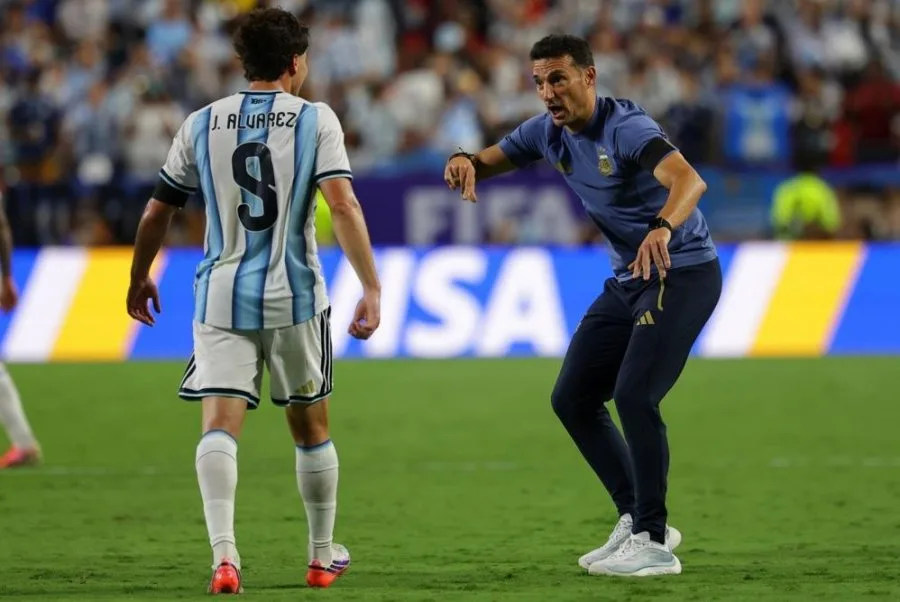
July 14 (UPI) -- In the hours before Argentina's 2026 World Cup semifinal Wednesday against England, veterans of the 1982 Malvinas War -- the name Argentina uses for the disputed South Atlantic islands -- urged the public to separate the armed conflict between the two countries from the soccer match.
A statement from the April 2 War Veterans Federation, provided to Argentine media, sought to temper extreme nationalism and hate speech that has spread in Argentina since the national team advanced to the semifinals.
The veterans stressed that the match should not be interpreted as "revenge" for the 649 Argentine service members killed in the war. Their statement also reflected concern after disturbances and vandalism were reported on Buenos Aires' 9 de Julio Avenue during celebrations of Argentina's victory over Switzerland.
Amid the heightened tensions, the veterans said Argentina's sovereignty claim should be pursued through peaceful diplomacy, separating passion for soccer from the memory of those killed in the conflict.
"The semifinal match is a sporting event with a global reach, not an armed rematch or historical compensation. Sovereignty is defended in international forums, through diplomacy, historical truth and the peaceful and unwavering claim established by our national Constitution," they said.
Argentina coach Lionel Scaloni reinforced the call for calm while acknowledging the historical and emotional weight surrounding the match. Scaloni said his primary task was to keep the team's concentration high and the "temperature of the atmosphere" low to prevent emotions from boiling over.
Asked about the Argentine team's locker room celebrations after the match that secured its place in the semifinals, Scaloni said: "It's a soccer match. We're not looking for anything else. Period."
During the celebration, Argentina's players sang chants about recovering the Falkland Islands, known in Argentina as the Malvinas, prompting England to file a formal complaint with FIFA.
Across the Atlantic, British media reacted sharply. Tabloids, including The Sun, described the Argentine celebrations as "childish and insulting," while framing the semifinal around "historic resentment." Radio network LBC and other outlets reported heated television debates over the history of the conflict.
Despite the complaints, FIFA confirmed that it would not sanction the Argentine team.
For many fans, the match is also difficult to separate from Diego Maradona's legendary performance against England at the 1986 World Cup, four years after the war. Argentina's victory in that match became widely viewed in the country as a form of "symbolic revenge" through soccer.
To ensure the semifinal is played safely, FIFA authorities and U.S. federal law enforcement agencies have established a high-security operation with a zero-tolerance policy for disturbances.
The teams' training bases in Kansas City are under strict security. Measures for the match at Atlanta Stadium include completely separate entrances, strict segregation of supporters behind the goals, a ban on projectiles and the use of Argentina's "Tribuna Segura" stadium security program in coordination with international agencies to prevent incidents.
Ahead of the World Cup semifinal, Argentine Foreign Minister Pablo Quirno also reignited the diplomatic dispute by describing the islands' current residents as an "artificially implanted population" and questioning the legal validity of their self-determination referendum.
In a lengthy opinion article published Sunday in the Argentine newspaper La Nación, Quirno urged his country not to fall "into the referendum trap," referring to the 2013 vote in which island residents overwhelmingly chose to remain a British territory.
Quirno formally called on the United Kingdom to reopen sovereignty talks under U.N. resolutions, prompting an immediate rejection from British Prime Minister Keir Starmer's government.
The British government rejected Quirno's assertions, saying the Falkland Islanders were "British with the right to determine their own future," The Independent reported.
"The U.K. position is clear. The islanders have repeatedly expressed their wish to remain a British Overseas Territory, and their right to self-determination is paramount," a government spokesperson said.
The Falklands War was fought between Argentina and the United Kingdom in 1982 over sovereignty of the South Atlantic islands.
The conflict began April 2 that year, when Argentine troops landed on the islands under orders from the military dictatorship then ruling the country. It ended June 14 with Argentina's surrender after an intense British naval and ground campaign.
The 74-day war killed 649 Argentine service members and 255 British personnel.
Despite its military defeat, Argentina continues to pursue its sovereignty claim through peaceful diplomatic channels, citing geographic proximity and rights it says it inherited from the Spanish crown.
Related Stories
 World
World
'Within his rights': Trump UN ambassador defends press ban
44 minutes ago
 World
World
Iran Open RoboCup brings together 700 teams and around 2,000 young robotics innovators
48 minutes ago
 World
World
From Edmonton to the world: Local bookstore wins international recognition
1 hour ago
 World
World
Player Spotlight: Fritz’s fire fuels Team World
1 hour ago
 World
World
West Asia war to resume? Iran warns of fresh US action amid deadlock over peace deal | World News
1 hour ago
 World
World
Federal Reserve rate hike reflects new world of sticky inflation and faster growth
2 hours ago
 World
World
‘The rules have changed’: has Russia begun to order assassinations on US soil?
2 hours ago
 World
World
This truth emerges as political situations change fast: Maps show us our world, but not neutrally
2 hours ago