
Bazaruto Center for Scientific Studies Publishes Eight Years of Continuous Ocean Data
Bazaruto Center for Scientific Studies Publishes Eight Years of Continuous Ocean Data
© Bazaruto Center for Scientific Studies
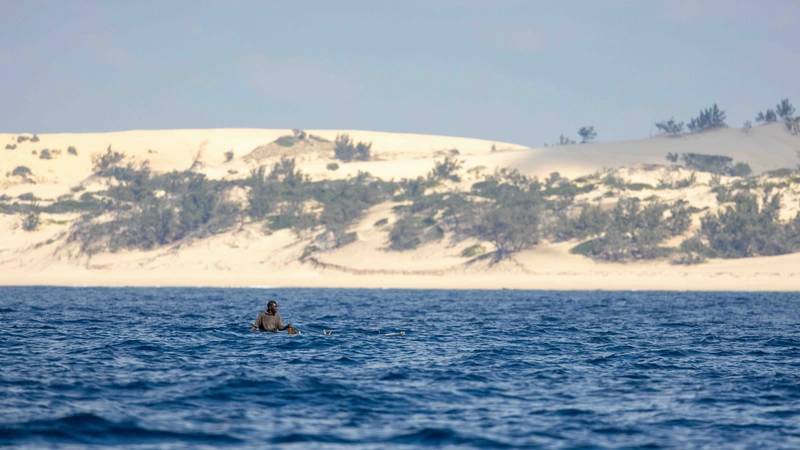
The Bazaruto Center for Scientific Studies (BCSS) has published eight years of continuous ocean data from Africa's first permanent, multi-ecosystem Ocean Observatory, creating one of the most comprehensive long-term records of marine environments in the Western Indian Ocean.
Established in Mozambique’s Bazaruto Archipelago in 2017, the Observatory has generated more than 22 million measurements across over 30 chemical, environmental and biodiversity variables, spanning six interconnected ecosystems and 14 long term monitoring stations across an approximately 6,850 km² monitoring area in the greater Bazaruto seascape, from mangroves, seagrass meadows and coral reefs to lagoons, seamounts and the open ocean.
Published today, two new papers in Frontiers in Marine Science, available here and here, set out the science and methodology behind the Observatory and its pioneering Resort-to-Research funding model, demonstrating how sustained, locally anchored, ocean observation can generate insights with relevance far beyond the region.
Eight years of sustained ocean observation
Long-term, high resolution data has traditionally been scarce across much of the Global South and Western Indian Ocean, limiting scientists’ ability to understand how marine ecosystems are responding to issues like climate change and human impact. The BCSS Ocean Observatory was established to help address that gap, enabling scientists to study connected marine ecosystems over many years, rather than studying individual ecosystems and locations in isolation. Over the past eight years, it has generated:
The resulting data forms a standardized, open-access data with metadata and DOI links repository which includes 21 datasets spanning physical-chemical parameters, biogeochemistry, biodiversity, acoustics, and pollution indicators. Together, they provide a long-term baseline for research into climate variability, carbon cycling, biodiversity resilience, fisheries, marine pollution and the wider effects of human activity for researchers to use around the world.
A new approach to supporting long term science
At the heart of BCSS is its Resort-to-Research business model, developed through its partnership with the Kisawa Sanctuary. Under the model, Kisawa co-funds and provides infrastructure and operational support for professional scientific research undertaken by BCSS. This helps the Observatory to maintain permanent scientific capacity, equipment and monitoring programmes rather than relying on shorter term grants and research cycles.
The two research papers showcase how the model is a potentially replicable approach for sustaining scientific infrastructure in remote and data-deficient regions, where maintaining long-term monitoring can otherwise be difficult.
Locally rooted science with global reach
While based in Benguerra Island, BCSS is designed to contribute to science well beyond Mozambique. BCSS works with research institutions and scientists internationally, while laboratory analyses linked to the Observatory have involved international organizations and universities around the world.
The papers also mark a first for academia in formally recognizing the contributions of the Benguerra Island community, whose work and local knowledge has significantly contributed to the Observatory and its scientific progress. Their presence grounds BCSS and the Resort-to-Research (R2R) model in both place and purpose, showcasing how science is inseparable from the people and ecosystems it seeks to protect.
A region of global environmental and economic importance
Long term ocean observation remains limited across much of the Global South, including the Western Indian Ocean, despite the region’s importance to global climate systems, biodiversity and coastal economies. This makes the BCSS Ocean Observatory particularly significant, providing continuous data across six interconnected ecosystems, from mangroves and coral reefs to seamounts and the open ocean.
Stretching along the East African coast from Somalia to South Africa and encompassing the waters around Madagascar, Comoros, Mauritius, Réunion and Seychelles, the Western Indian Ocean supports more than 60 million coastal people and a major Blue Economy market valued at $300 billion built around fisheries, tourism, marine resources and healthy coastal ecosystems. Yet the long-term scientific evidence needed to understand and manage these resources remains limited.
Through sustained monitoring, BCSS has also been able to understand and document species that are still less understood. For example, in August 2026, BCSS recorded a rare sighting of eight orcas in the Bazaruto Archipelago, yielding what BCSS believes are the first and, to date, only photo-identification data from the Bazaruto seascape where sightings remain uncommon and data opportunistic. The Observatory’s monitoring area also includes East Africa’s last viable dugong population, alongside numerous migratory whale, shark and other marine species moving through the Mozambique Channel.
The datasets provided by BCSS can support conservation and fisheries management, ecosystem modelling and emerging measurement and reporting frameworks, providing governments, businesses and investors with stronger evidence to understand environmental change and measure impact.
Related Stories
 World
World
12.1.5 Content Update Notes
7 minutes ago
 World
World
What happened in failed execution of Christa Pike
7 minutes ago
 World
World
‘It’s utter surrealism’: Venezuela’s Chavistas lament government’s embrace of Trump
1 hour ago
 World
World
Finnish PM says suspected break
1 hour ago
 World
World
‘From conflict to communion’: Lutheran World Federation meets with Pope
2 hours ago
 World
World
Ukraine persists with Russian oil refinery strikes in defiance of Trump
2 hours ago
 World
World
Indonesia honors Japan's forest fire team
3 hours ago
 World
World
Sofar Ocean Launches Wayfinder Explore Voyage Optimization Solution
3 hours ago