
Beyond borders: The rise of Brahminical politics
Beyond borders: The rise of Brahminical politics
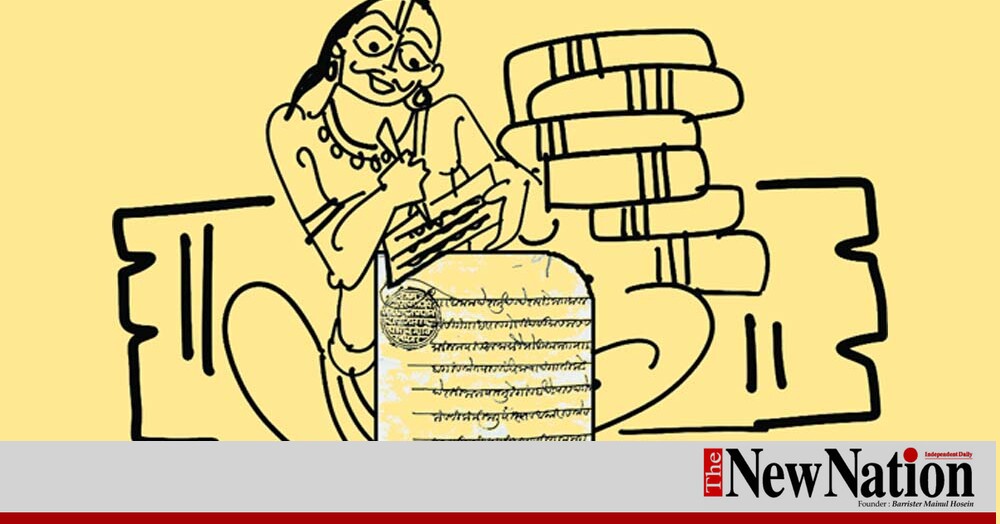
The growing influence of north-Indian Brahminical politics in India’s eastern states of West Bengal and Assam is increasingly being viewed not merely as a domestic political development but also as one with potential regional implications.
In Bangladesh, where geography, history and culture have long been closely intertwined with eastern India, many observers are following these developments with growing anxiety and concern.
The issue extends beyond electoral competition across the border to whether the rise of caste-based and exclusionary political narratives could have broader implications for communal harmony and regional stability.
Bangladesh and India share one of the world’s longest international borders, deep linguistic and cultural ties, and extensive economic interdependence. Stability in one country has often contributed to stability in the other.
Conversely, political or communal tensions can resonate across the border through public discourse, media narratives and debates over migration and identity.
Much of the current discussion centres on the growing prominence of Brahminism, a historical social order associated with caste hierarchy, hereditary privilege and unequal access to religious and social authority.
Supporters of traditional social structures often regard them as preserving cultural continuity and social cohesion.
Critics, however, contend that Brahminical dominance has historically reinforced exclusion, weakened social equality and constrained the space for India’s pluralistic traditions.
In West Bengal and Assam, debates over identity, citizenship, migration and border security have increasingly intersected with questions of caste, political power and regional identity.
In Assam, concerns over migration and demographic change have remained central political issues. In West Bengal, electoral competition has intensified around questions of cultural identity and governance.
Because both states share borders with Bangladesh, political rhetoric surrounding migration and national identity often attracts close attention in Dhaka.
For Bangladesh, the implications extend beyond bilateral diplomacy. The country’s founding principles emphasise religious freedom and communal coexistence.
Successive governments since independence in 1971 have repeatedly underscored the importance of maintaining communal harmony.
Against this backdrop, some Bangladeshi analysts express concern that increasingly polarised caste-based and exclusionary political narratives in neighbouring regions could indirectly strengthen divisive voices, deepen mistrust between communities or complicate cross-border relations.
History offers important lessons. South Asia has experienced the devastating consequences of hierarchical and communal politics before, most notably during the Partition of 1947 and in subsequent episodes of social and religious violence.
These experiences demonstrate how identity-based political mobilisation can generate consequences that extend well beyond national borders.
Equally important is the recognition that Indian civilisation has always been shaped by diversity. Vedic traditions evolved alongside Buddhist, Jain, Bhakti and Sufi movements, as well as numerous regional and indigenous cultures.
Reformers including the Buddha, Jyotirao Phule, Savitribai Phule and B. R. Ambedkar challenged inherited hierarchies and argued that equality and human dignity should form the foundation of public life.
Their ideas remain relevant whenever questions of caste and identity risk overshadowing constitutional values.
None of this suggests that India’s democratic institutions lack the capacity to accommodate political diversity. India’s Constitution guarantees equality before the law and protects religious freedom.
The country’s democratic institutions – including the judiciary, civil society, the media and opposition parties – continue to debate and scrutinise questions of identity, citizenship and constitutional rights.
At the same time, democracies are strengthened when public discourse promotes inclusion rather than portraying communities as political adversaries or reviving caste hierarchies as instruments of political power.
For Bangladesh, the broader implications are significant. Lasting regional stability depends not only on economic cooperation and diplomatic engagement but also on preserving mutual trust between neighbouring societies.
Political discourse that contributes to social polarisation in one part of the region is likely to generate concern elsewhere.
The future of South Asia is likely to be shaped less by competing nationalisms than by the ability of its societies to uphold pluralism, constitutional equality and respect for diversity.
Bangladesh’s interest in developments in eastern India should therefore be understood not as interference in another country’s domestic affairs, but as a legitimate expression of concern for the preservation of communal harmony and regional peace in a deeply interconnected neighbourhood.
Related Stories
 India
India
Nepal flood survivors reach safe areas as families await news of missing
3 hours ago
 India
India
"Eagerly waiting to meet you": Indian diaspora and Uzbek citizens express enthusiasm ahead of PM Modi's arrival in Tashkent
3 hours ago
 India
India
India news: PM Modi leaves for Central Asian tour
9 hours ago
 India
India
'Must Think Why Youth Trusted CJP': Shashi Tharoor on GenZ, Dimagi Naxals & More
1 day ago
 India
India
Rahul Gandhi INDIA bloc's 2029 PM candidate: Tamil Nadu minister P Viswanathan
1 day ago
 India
India
India releases names of 63 Indian nationals rescued from Trishuli
1 day ago
 India
India
GlobalM and Lamhas Expand IP Broadcast Across India
1 day ago
 India
India
How India’s Gen Z movement of ‘Cockroaches’ dented Modi’s political image
1 day ago