
Canadian investors say 'mini wave' of homegrown AI chip companies could be coming
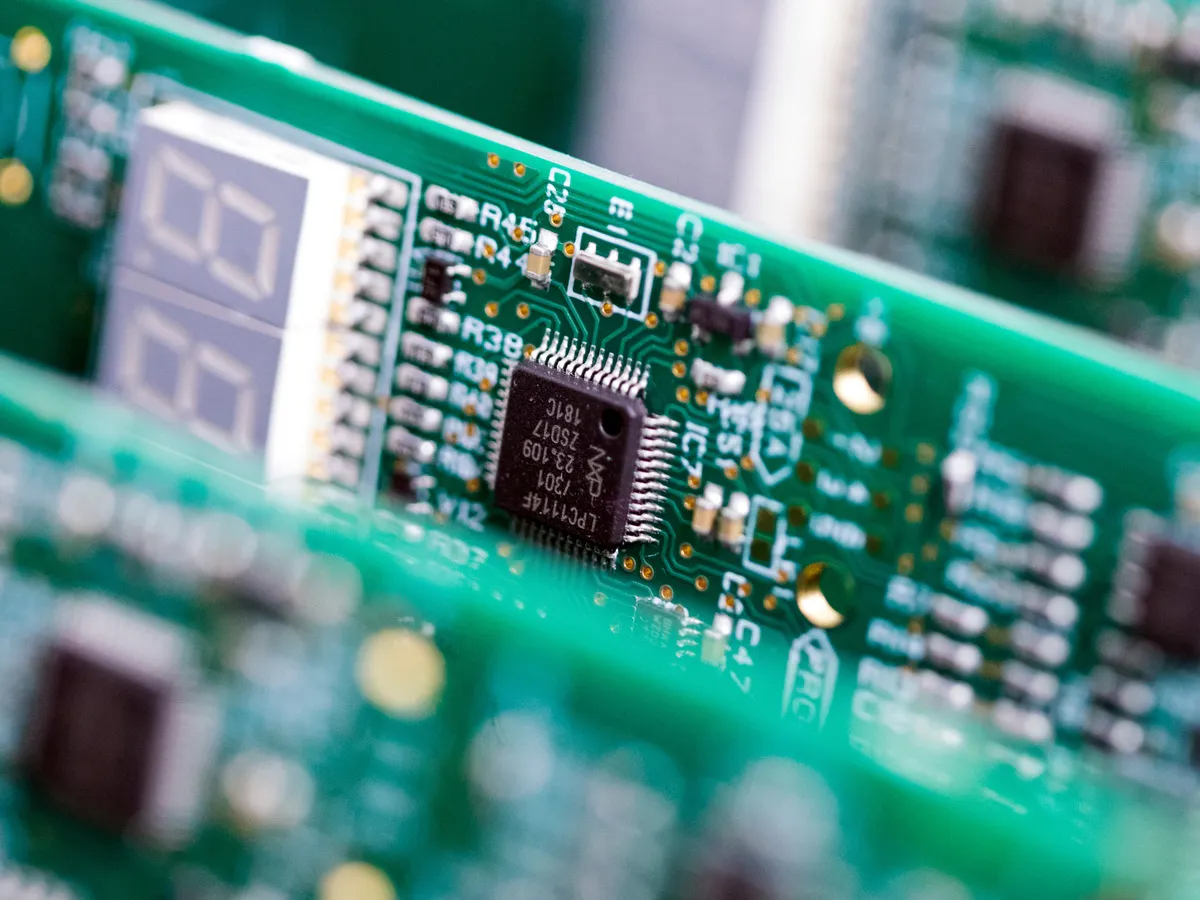
Canadian investors say interest from founders and funders about building and investing in the homegrown semiconductor industry as the demand for more efficient artificial intelligence chips accelerates could lead to a new wave of startups in the next year or two.
“From a deal opportunity, I’m seeing very high-quality, deep-tech companies birthing from within Canada,” said Eva Lau, general partner at Toronto-based early stage startup investor Two Small Fish Ventures Inc. Researchers are having breakthroughs in their technology stack and may have already formed a business. We’ll be seeing a lot of these companies coming out from stealth in the next 12 to 24 months.”
Two Small Fish has already invested in Canadian semiconductor startups, including Zinite Corp., which makes transistors, Blumind Inc., which develops analogue, low-power chip architecture for AI applications, and Hepzibah AI Inc., which is designing energy-efficient tech for AI inference, the process whereby a trained AI model generates output, such as an AI chatbot answering questions.
Likewise, Andrée-Lise Méthot, founder and managing partner at Cycle Capital Management Inc., a Montreal-based clean tech VC firm, said she is seeing a growing crop of Canadian startups building energy-efficient and specialized chips and hardware for AI, some of which her fund is working with, but has not yet publicly disclosed.
Cycle Capital is also a Blumind investor and invested in Ottawa-based transistor manufacturer GaN Systems Inc., which was acquired by a German chipmaker in 2023 for US$830 million.
These hardware startups are building next-generation chips, energy management systems for AI and robotics and physical AI, Jenny Yang, a partner at RiSC Capital Corp., a Vancouver-based early stage deep-tech fund, said.
“They are focused on how to get data centres to buy their products and what can provide the ten to 100 times improvement because we know the demand for AI is going to keep growing,” she said. “The AI genie is out of the bottle and it’s going like crazy.”
RiSC Capital has invested in Astrus Inc., a Toronto startup that uses AI to help semiconductor companies automate chip design.
Globally, venture capital deal activity in semiconductors has jumped since 2020 to hit nearly US$20 billion in 2025 and has reached US$10.8 million so far in 2026, while Canadian VC activity in the semiconductor industry reached $208 million last year and stands at US$67 million this year, according to Pitchbook data.
The demand for next-generation AI is leading some Canadian investors to start considering hardware plays related to chips and quantum rather than just focusing on software, Martin Laforest, partner at Sherbrooke, Que.-based quantum VC fund Quantacet Inc., said.
“More new funds are reviewing their investment thesis and saying that they’re going to start doing a few hardware investments (unlike) when we were raising our fund,” he said. “It became like a joke back then that everyone else was investing in business-to-business software-as-a-service (Saas).”
Related Stories
 AI News
Australian Businesses Favor AI for Back
8 minutes ago
 AI News
No Discount Survives an AI That Can’t See It
1 hour ago
 AI News
Parents Want Schools to Teach Responsible AI but Worry About Impacts on Students’ Learning
1 hour ago
 AI News
Global leader in AI and data analytics joins Marquette Business as Executive-in
2 hours ago
 AI News
Most Countries Will Not Win the AI Race, but They Still Need a Strategy
2 hours ago
 AI News
AI data startup Micro1 reaches $500M gross run rate amid AI training boom
3 hours ago
 AI News
WVU AI research could transform how scientists monitor ecosystems
3 hours ago
 AI News
AI
3 hours ago