
Dell Buoys AI Trade Amid Looming Chip Shortages
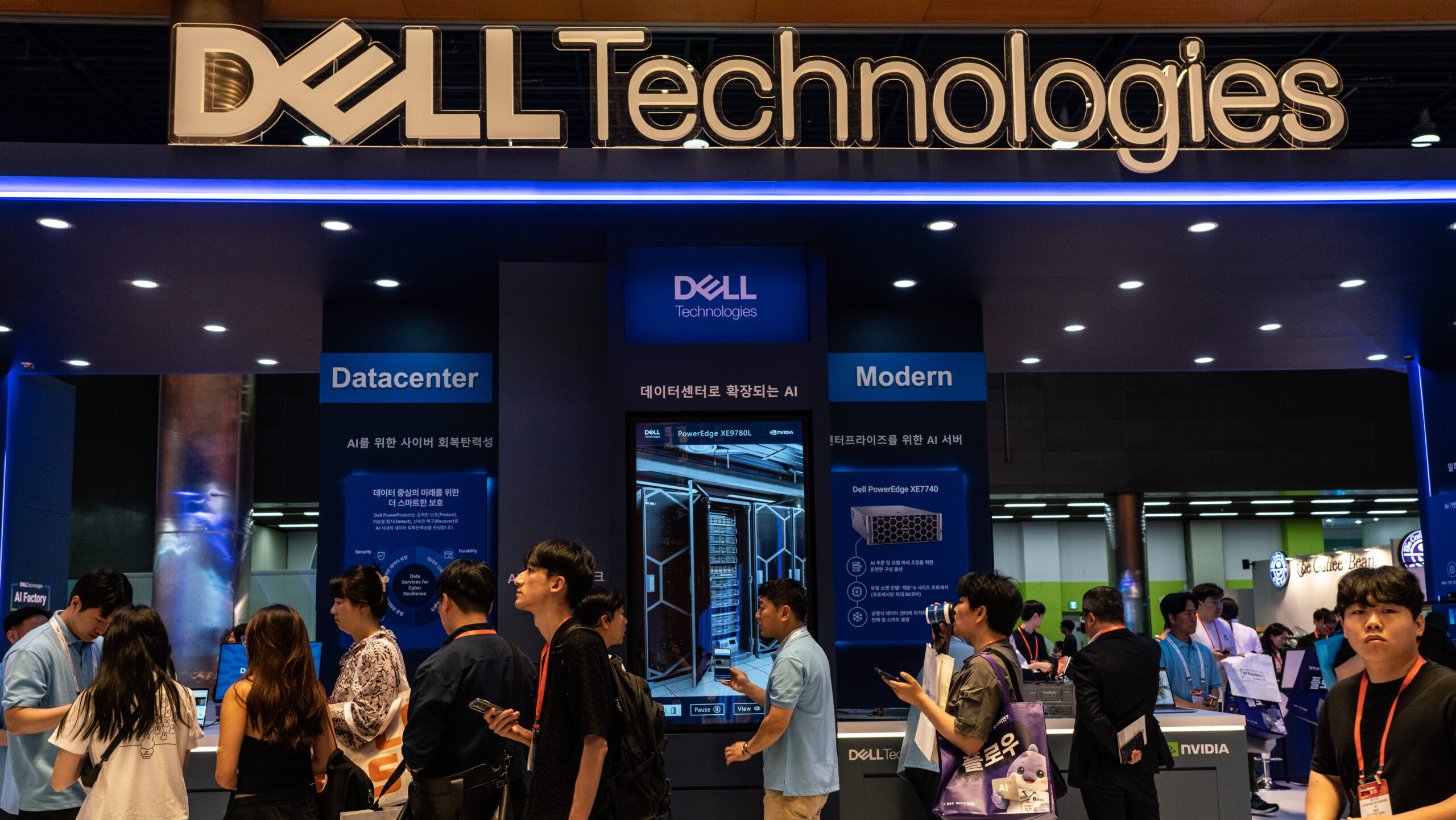
Dell used to be known as the maker of the cobweb-covered, 15-year-old PCs in your company’s IT department that, as the occasional intern learns, somehow still work. Amid the artificial intelligence trade, it has followed the company slogan and found The Power to Do More.
On Tuesday, Dell smashed Wall Street’s expectations with its latest quarterly earnings, posting revenue of $47 billion, up 58% year over year, and non-GAAP operating income of $5.9 billion, up 160%. Investors spent the day fretting that Dell, now a key cog in the AI supply chain, wouldn’t live up to the hype, sending shares down 6.8%. After the bell, it was clear one of the biggest growth stories of 2026 has a few more chapters left.
Dell entered Tuesday up 238% on the New York Stock Exchange this year. No longer just a PC-maker, it builds AI-optimized servers that can host heavy workloads and power the training of advanced models, making them crucial components in the technology’s development.
For this reason, Wall Street expected nothing less than explosive growth on Tuesday. Anything less would have been viewed as a lagging indicator that AI spending was running out of steam. But, in addition to beating top- and bottom-line estimates, Dell raised its full-year 2027 revenue forecast by $25 billion to $192 billion, nearly $18 billion more than the Wall Street consensus. AI-specific revenue supports the bullish premise:
Margin Call: One important figure was Dell’s non-GAAP gross margin, which was 21% of revenue, more or less in line with the past year. Dell’s margins are an especially important metric because the company is both a beneficiary and a victim of the market’s bullish attitude toward AI. Dell’s AI-optimized servers require two components, advanced graphics processing units and high-bandwidth memory chips, that are becoming increasingly expensive due to demand across AI industries and consumer electronics. Apart from costs, chipmakers say AI memory shortages are likely to stretch into 2027 and beyond, capping the ability of Dell and other AI infrastructure suppliers to fill demand. As COO Jeff Clarke put it in May: “We have a supply issue. We are supply-constrained in the second half. It is not a demand issue for us.”
Related Stories
 AI News
Bill Gross bets AI can help mass
2 days ago
 AI News
Nigeria records 93% rise in AI micro
2 days ago
 AI News
The Italian gelato maker using AI to invent new flavours
2 days ago
 AI News
Closing the Gap Between Agentic CX Pilots and Production
2 days ago
 AI News
New Brunswick data centre debate highlights cross
2 days ago
 AI News
How to Structure an AI Agent Referral Fee Agreement Between Startups
2 days ago
 AI News
No, AI didn’t delete a Swedish reality TV series
2 days ago
 AI News
There is no AI in Armageddon. Artificial intelligence is a tool, not an apocalypse
2 days ago