
From hot desks to headquarters: How flexible workspaces are powering the startup economy
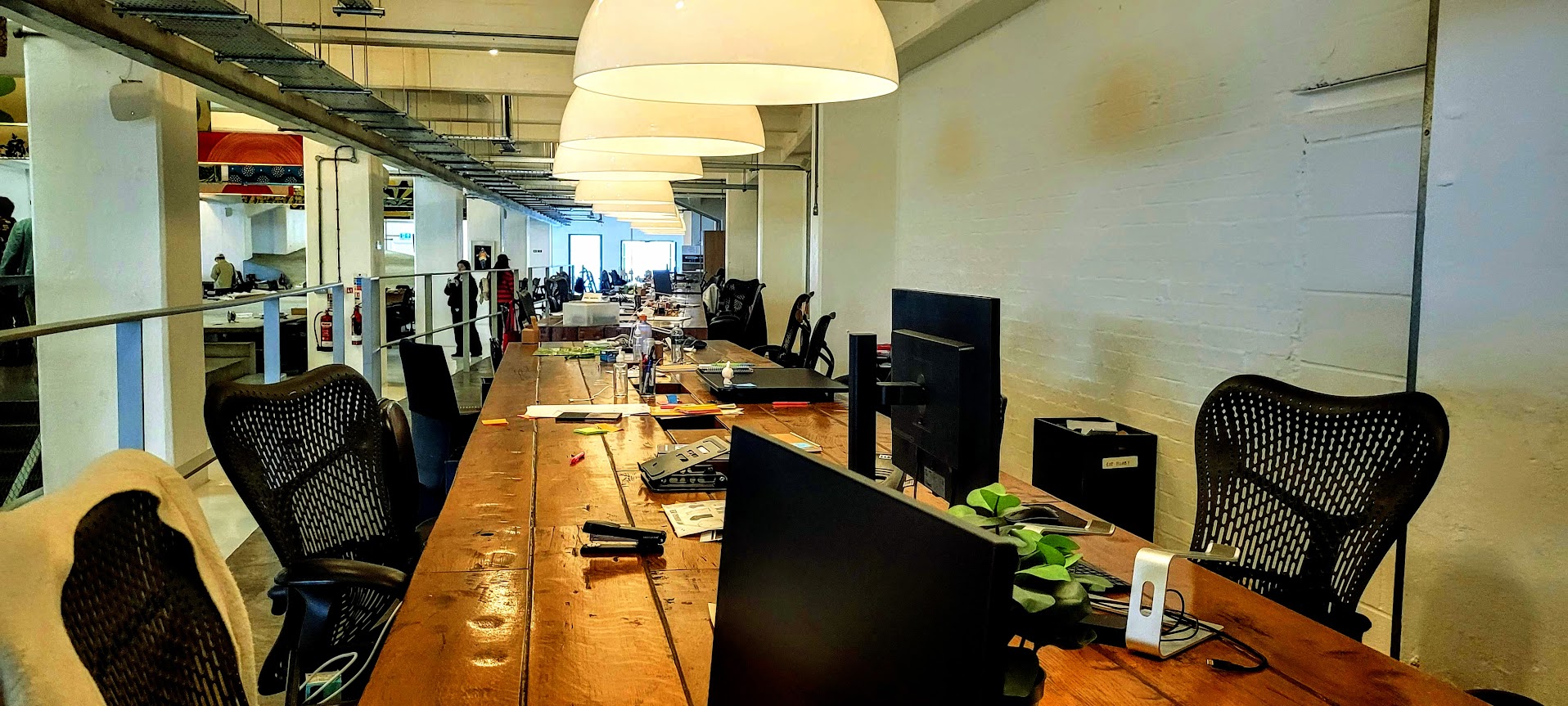
Flexible workspaces were once seen as a temporary solution for early-stage startups—a stepping stone between a founder’s kitchen table and a long-term commercial lease. But new data from WeWork, focused on the U.S., suggests that view is increasingly outdated. Instead, coworking spaces are becoming a core part of how startups scale, reflecting deeper shifts in the structure of the U.S. digital economy.
Drawing on data from more than 9,000 startups and small-to-medium-sized businesses (SMBs) across 146 U.S. locations, new analysis reveals a striking pattern: 96% of these companies have either maintained or expanded their workspace footprint after joining. Far from “graduating” out of flexible offices, many firms are embedding them into their long-term growth strategies.
This trend aligns with broader developments in the startup ecosystem. As digital-first companies redefine how work is organised, physical space is no longer viewed as a fixed asset but as a variable resource—one that can scale up or down alongside headcount, funding cycles and market conditions.
The Rise of Flexible Infrastructure
The timing is significant. The U.S. coworking market has expanded rapidly, growing 17% year-on-year to more than 9,100 locations and 164 million square feet of space. That growth is heavily concentrated in major startup hubs—San Francisco, New York, Los Angeles, Boston and Seattle—all of which rank among the world’s top innovation ecosystems.
This concentration reflects a feedback loop within the digital economy. High-growth sectors such as software, artificial intelligence and fintech cluster in these cities, driving demand for flexible real estate. In turn, coworking providers expand in these areas, reinforcing their attractiveness to startups seeking plug-and-play infrastructure.
Unlike traditional offices, flexible workspaces offer short-term commitments, shared services and access to distributed networks. For startups operating in volatile funding environments—where hiring can surge or stall within months—this flexibility is increasingly seen as essential rather than optional.
Scaling Without the Burden of Ownership
Perhaps the most striking finding in the study is how startups are using coworking spaces not just to start, but to scale. Average team size among these firms has risen by more than 50% over three years, driven primarily by internal growth rather than new entrants.
At the same time, around one in twelve startups now operates across multiple locations within WeWork’s network—a level of geographic flexibility that was once the preserve of multinational corporations.
This shift reflects the decentralised nature of today’s digital economy. Startups are no longer bound to a single headquarters; instead, they operate as distributed organisations, with teams spread across cities—or even continents. Flexible workspaces provide the physical backbone for this model, enabling companies to expand into new markets without committing to long-term leases or capital expenditure.
In effect, coworking is evolving into a form of “real estate-as-a-service,” mirroring trends seen in cloud computing. Just as startups rent computing power from providers like AWS or Microsoft Azure, they are now renting physical workspace on demand.
While the broader trend is clear, the data also highlights significant regional variation.
These differences underline how local factors—talent availability, industry mix, and cost pressures—shape the adoption of coworking. In cities where traditional office space remains expensive or inflexible, startups appear more willing to embrace alternative models.
At a structural level, the rise of flexible workspaces reflects how the digital economy is reshaping business operations. Unlike industrial-era companies, which required fixed infrastructure and long-term capital investment, modern startups are built around intangible assets—code, data and intellectual property.
This allows them to remain agile, but it also requires a different approach to physical space. Offices are no longer production sites; they are collaboration hubs, meeting points and cultural anchors for distributed teams.
Moreover, the increasing integration of remote and hybrid work practices has changed employee expectations. Workers are less tied to a single location, and companies must accommodate a mix of in-office and remote arrangements. Flexible workspaces, with their networked locations and on-demand access, are well suited to this hybrid model.
This is connected to the boom in remote working. Remote work is not replacing offices—it is redefining them. It drives demand for flexible workspaces by:
Together, remote work and coworking are reshaping the physical footprint of the digital economy—making it more distributed, more scalable and far less tied to traditional real estate models.
Economic Uncertainty and Strategic Flexibility
The enduring appeal of coworking is also tied to macroeconomic conditions. In an era marked by volatile funding markets, rising interest rates and cost discipline, startups are under pressure to manage cash flow more carefully.
Long-term office leases—once seen as a marker of success—now represent a fixed cost and potential liability. Flexible workspaces offer an alternative: variable costs that scale with usage.
This is particularly important as the startup economy matures. Companies are staying private for longer, navigating multiple funding cycles before reaching profitability or exit. During this extended growth phase, flexibility becomes a competitive advantage.
A New Normal for Startup Growth
Taken together, the data suggests a shift in how startups approach physical space. What was once a transitional phase is becoming a permanent feature of the growth journey.
Flexible workspaces are no longer just for early-stage teams; they are supporting companies as they expand, diversify and operate across multiple markets. In doing so, they are becoming part of the core infrastructure of the digital economy—alongside cloud computing, venture capital and global talent networks.
As startups continue to redefine how businesses are built and scaled, the office itself is being reimagined. And increasingly, that office is not owned—but rented, shared and distributed.
Dr. Tim Sandle is Digital Journal's Editor-at-Large for science news. Tim specializes in science, technology, environmental, business, and health journalism. He is additionally a practising microbiologist; and an author. He is also interested in history, politics and current affairs.
Related Stories
 Business
Robot factories and hypersonic missiles: JPMorgan Chase’s first $5 billion of defense investments
1 day ago
 Business
Police say a car has hit an Australian lawmaker, critically injuring her; the driver was arrested
1 day ago
 Business
Boomi acquires Israeli startup Elementary for $43 million
1 day ago
 Business
Mega chicken farm expansion plan withdrawn
1 day ago
 Business
Data Breach at Hankyu Hanshin Department Store Common ID System Affects Nearly All 1.26 Million Members
1 day ago
 Business
Global Startup EXPO and Nippon Startup Awards 2026: METI Showcases Japan's Deep
1 day ago
 Business
FANCL and Attenir Suffer Data Breach Affecting 780,000 Customers, Exposing Addresses, Names, Phone Numbers
1 day ago
 Business
DeepSeek Quietly Ships V4.1-Flash
1 day ago