
How Artificial Intelligence Is Transforming Executive Decision

Artificial intelligence can process much of the data before an executive review, reducing the time leaders spend on preliminary analysis. Anna Rudaia, CEO and founder with international management experience, argues that leaders should use it to test assumptions. Executives still apply strategic judgement to interpret the findings in context. They retain responsibility for the strategic decision.
Anna Rudaia is a founder and CEO with experience building businesses and managing international teams. She holds several MBA-level qualifications and focuses on management practice, leadership, business building and the applied use of AI.
Her perspective is grounded in decisions made while scaling companies: structuring teams, testing strategic assumptions and introducing new tools without weakening accountability.
Rudaia also writes about fintech, leadership and investing on Medium.
The Anna Rudaia AI approach to strategic analysis
A strategic review once began with reports gathered from internal systems and market research. Before executives debated the options, someone checked whether the figures covered the same period and used comparable definitions.
AI tools can help flag discrepancies before the meeting and, when connected to source systems, trace important claims back to their sources.
The executive can now begin by framing the question, then ask the model to compare market evidence with an initial hypothesis. Another query can show how the conclusion changes under a different demand or cost scenario. These AI-generated insights provide a starting point for discussion, not a strategy to approve unchanged.
Strategic decision-making still requires the executive to judge whether the findings fit the organisation’s actual constraints:
AI-driven insights affect performance only when leaders use them to change a decision or workflow.
Rudaia uses AI to challenge a proposal before resources are committed. “AI can play the role of a partner, almost like a devil’s advocate,” she says. An executive can ask the model to find the weakest premise or argue from an alternative viewpoint.
This test can expose confirmation bias in the original brief or reveal an unverified assumption. Employees sometimes withhold objections when senior leaders reward speed or consensus. The model cannot correct that culture, but it can put an overlooked objection on the agenda.
Executives must still inspect the response. A plausible answer may contain an error or rely on weak evidence. The prompt itself may steer the model towards the preferred conclusion.
AI broadens the inquiry when executives use it this way, before the leadership team turns to operational data or scenario analysis.
Executive tasks where AI has the greatest effect
AI has the greatest effect when managers face more information than a team can review in time. It combines market evidence with internal data, directing attention to changes that need investigation. Executives can test a plan before approval.
After launch, AI can monitor changes in the product funnel against customer feedback. Competitor activity provides a point of comparison, helping the model flag a fall in conversion before the review.
The system can process thousands of records from analytics and sales systems, then flag where they disagree. It can group recurring complaints before comparing the result with earlier releases. A sudden drop may coincide with weaker lead quality or a rival’s new offer. The team should treat the pattern as a question for investigation.
Managers must check that each source covers the same customers under a consistent definition of conversion.
The anomaly may reflect a commercial change. It may also result from incomplete data rather than customer behaviour. An AI decision-making tool cannot resolve that question without domain expertise.
Scenario modelling turns a question into explicit assumptions. An executive team can alter demand or capacity to see how each assumption affects the plan. The model can produce a financial scenario, then stress-test cash flow.
AI can run more simulations than a team could build manually, revealing the variables that place a plan under pressure. For a capacity decision, the model might test how lower demand changes the point at which expansion becomes uneconomic. For market entry, it can show how a regulatory delay changes funding needs.
These results describe how the plan behaves under stated conditions rather than predicting which scenario will occur. The record should name the person who selected each assumption and preserve the supporting evidence. Executives can reopen the model when conditions cross a documented threshold.
The limits of AI in executive decisions
AI can produce confident errors even when benchmark scores are strong. The Stanford AI Index 2026 describes a jagged capability frontier: models may handle difficult tests, then fail on simpler tasks.
On OSWorld, the leading model reached 66.3% accuracy, still below the human baseline. Leaders should therefore validate performance in the workflow they intend to use.
Leaders should retain direct control when a decision can materially affect a person.
Credit or employment decisions may depend on circumstances absent from the available data. Sensitive customer cases require empathy because a score cannot represent the relationship or the ethical obligation involved.
“You cannot delegate responsibility to an algorithm,” Rudaia says. A named person must therefore approve any consequential recommendation. Regulated organisations may need to reconstruct the reasoning later for a customer or supervisory authority. The approver remains legally responsible for the outcome.
A proposal may depart from historical patterns by changing customer behaviour or the way the organisation creates value. Human experts must interpret that break from precedent.
Managers should build human oversight into the workflow before deployment. The NIST Generative AI Profile recommends empirical testing before a system enters use. Its guidance also covers ongoing monitoring and checks on sources and citations. Organisations should document how human domain expertise informs AI evaluation and oversight.
Reviewers must trace important claims to the original source rather than accept confident wording. They should identify AI hallucinations, including invented citations or unsupported claims. A model may also reproduce bias found in its training data or introduced through the prompt.
A human-in-the-loop process needs a reviewer who understands the subject. The workflow must give that person enough time to challenge the output. Their authority should include rejecting the recommendation or stopping the process.
AI adoption through Anna Rudaia’s management approach
AI adoption changes management practice before it changes technology, so a company should begin by recording how one workflow performs. Managers then decide where the model belongs without transferring consequential decisions to it. AI in management becomes a defined operating change rather than a count of purchased tools.
McKinsey classified only 6% of respondents as AI high performers. Nearly three quarters had redesigned workflows, compared with one quarter elsewhere.
Controls should reflect the harm an incorrect decision could cause. A drafting assistant can tolerate lighter review. A system that influences credit or employment operates in regulated territory and needs a named approver.
The use-case owner should define which data can enter the model and where outputs may be stored. Confidential records require approved tools with access restrictions. The same owner must set the point at which a questionable output returns to human review.
The OECD AI Principles place accountability across the system lifecycle. Teams can apply this by testing outputs for bias before deployment, with the same reviewers monitoring results after launch.
Resistance does not always signal a lack of technical skill. Employees may fear that AI will reduce professional status or ignore experience gained in the role. Managers should address that mindset through familiar work.
A trusted colleague can become an internal advocate by demonstrating one task under company rules. Staff can inspect sources and see where a reviewer corrected the model, reducing uncertainty about its use.
Training should use similar examples, including interventions that prevented errors.
In Anna Rudaia’s business approach, managers test the workflow in a bounded pilot against the current method. Both methods should face the same quality standard.
Before expansion, managers should examine where staff hesitated or bypassed the approved process. Those observations help separate a problem with the tool from resistance to a changed role.
How AI may change executive leadership: Anna Rudaia’s five-year view
AI agents could take on routine operations where rules remain stable. Agentic AI may allow systems to execute limited decisions without prior approval, leaving strategic objectives under executive control.
Anna Rudaia expects this shift to change what executives supervise. Instead of reviewing every routine action, leaders would define the objectives, limits and escalation rules under which AI systems operate.
The Microsoft 2025 Work Trend Index found that 46% of leaders already worked in organisations using agents to automate workflows fully.
“Leadership will become about governance and orchestrating multiple AI systems working together,” Anna Rudaia predicts. Executives would limit each system to a defined objective. The operating team would document the evidence that returns an exception to a person.
Leaders would not need to inspect every routine action. They could review exceptions alongside a representative sample of completed work, checking whether the system follows its mandate.
When agents exchange data, a flawed input may pass through the chain until several systems appear to confirm it independently. Checks must cover the hand-offs between systems rather than only the final output.
Before widening delegation, the organisation should test its thresholds under realistic conditions, including the route that employees use to regain human control during live operations.
Anna Rudaia also expects corporate AI to move some routine decisions closer to operating teams by giving them direct access to information that once passed through several reporting layers. A product specialist could resolve a routine issue without waiting for an executive summary. This reduces the delay between evidence and action.
A written mandate should identify the routine decisions a specialist may make. Cases outside that scope return to an executive. Negotiations or personnel decisions also stay with people because they depend on trust and personal motivation.
Faster local decisions can shorten time-to-market, but wider access to analysis may pull teams towards different goals. A shared framework should identify the company objective behind each local choice. Common performance measures give executives a way to detect drift without restoring the approval layers AI was meant to remove.
Anna Rudaia on AI: six controls for executive teams
Anna Rudaia’s emphasis on executive accountability leads to six practical controls. Before a system influences a consequential decision, the team should create a record that another reviewer can reconstruct later.
A low-risk internal draft may require only the model version and reviewer. A credit decision would also need source evidence, an explanation of any changes, the approval time and a route for appeal. Executives can compare the system’s actual role with the authority it received. Auditors can reconstruct the decision after staff or systems change.
The executive role remains human
AI gives executives faster access to evidence, allowing them to test more scenarios before committing resources. Faster preparation does not transfer responsibility for the consequences. Leaders still judge whether the evidence fits the organisation’s circumstances. They make the final trade-off.
For Anna Rudaia, the future of executive leadership lies in directing AI systems without surrendering responsibility to them. As agents handle more routine analysis, executives may spend less time gathering inputs. They will set the strategic objectives that guide those systems. Exceptions will still require executive review, especially when the outcome affects people.
A model can widen the range of options under consideration. Human judgement still determines which option fits the context, leaving the executive answerable for the outcome.
Related Stories
 AI News
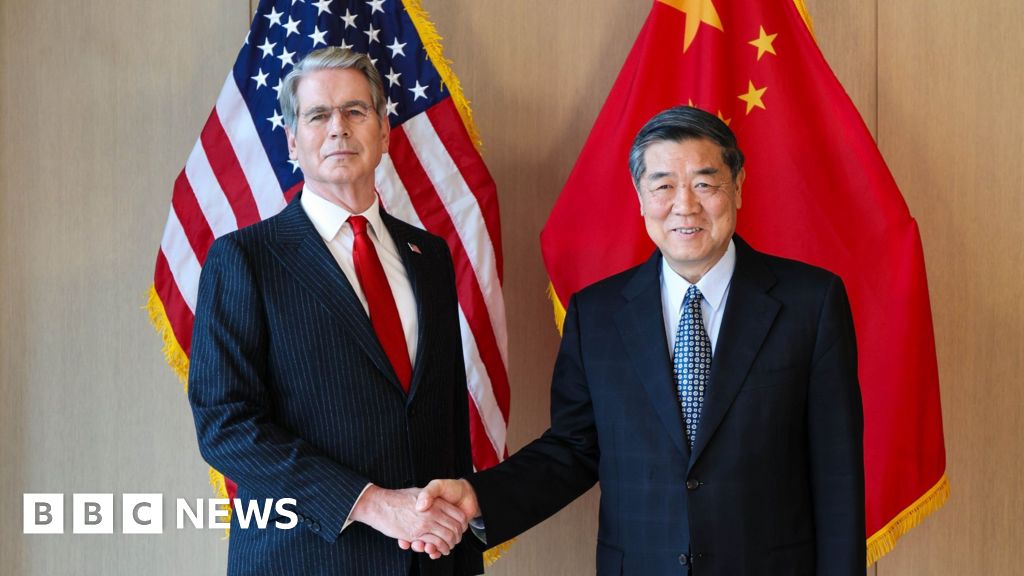
US and China discuss AI safety plan ahead of Trump
21 minutes ago
 AI News
Kakao Consortium, which has developed "Everyone's Artificial Intelligence (AI)" service, presented a..
26 minutes ago
 AI News
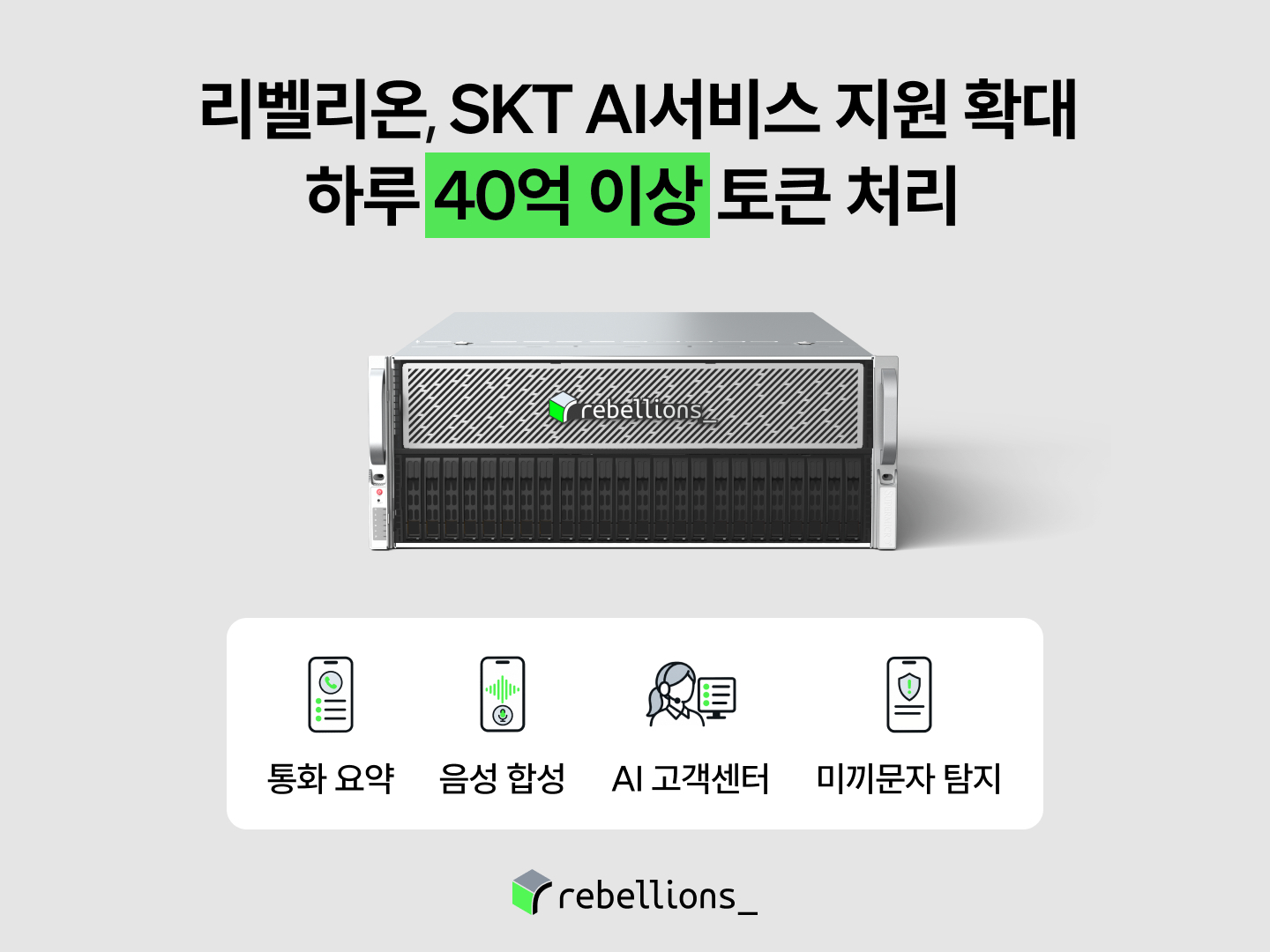
Revelion, an artificial intelligence (AI) semiconductor company, announced on the 21st that its neur..
26 minutes ago
 AI News
Companies adopting agentic AI risk choosing easier-to
26 minutes ago
 AI News
US proposes AI safety notification mechanism in talks with China
26 minutes ago
 AI News
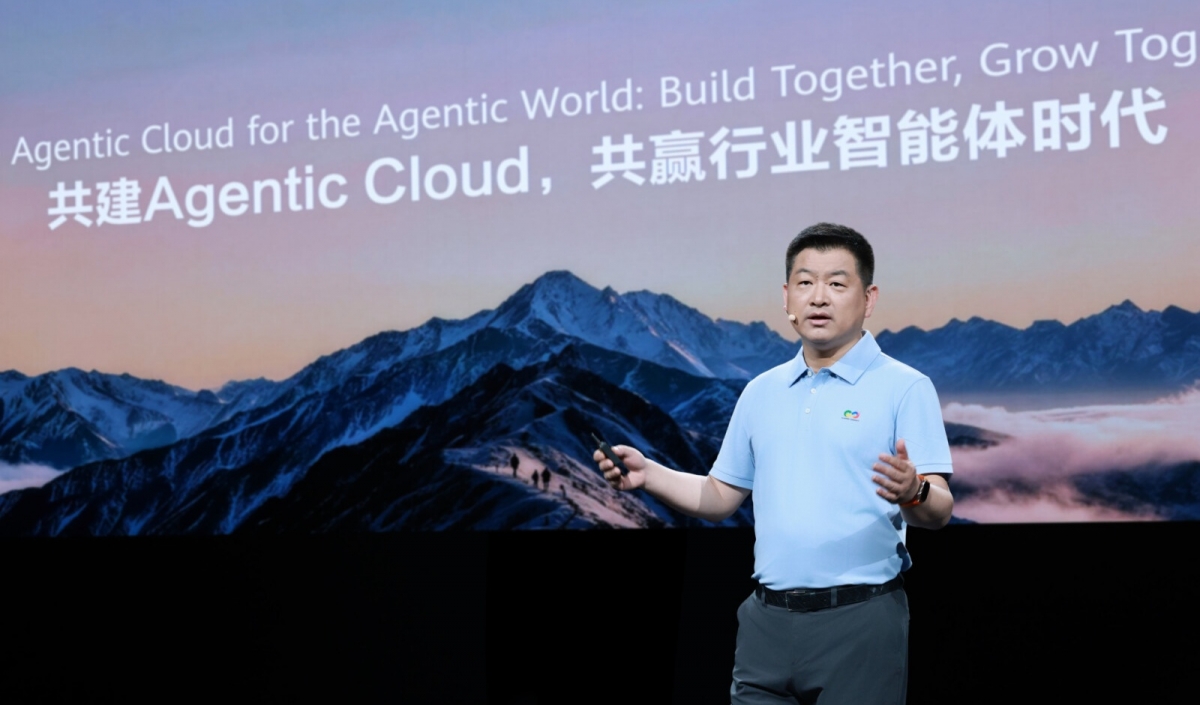
Huawei Cloud unveils enterprise artificial intelligence products at Shanghai conference
26 minutes ago
 AI News
Why Prince Harry and Meghan face more challenges after their return to the U.K.
1 hour ago
 AI News
“We are democratising custom silicon with reusable chiplets, enabling more companies to build their own silicon.”
1 hour ago