
Immersed in artificial intelligence: "We have 10 Manhattan projects"
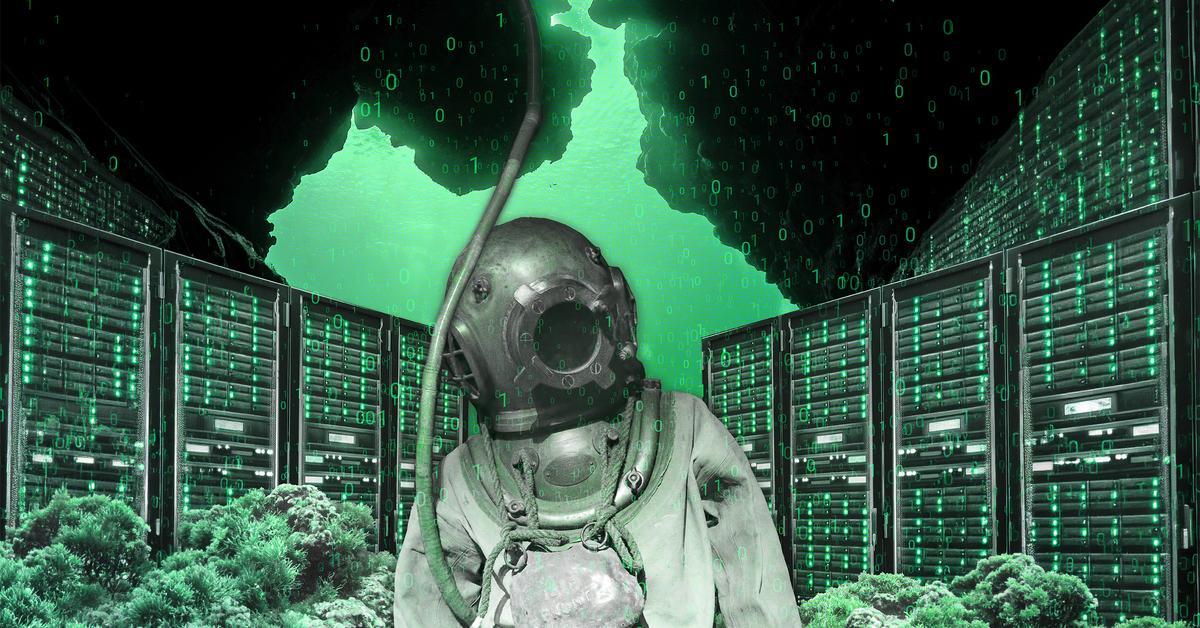
Immersed in artificial intelligence: "We have 10 Manhattan projects"
The bumpy entry into the AI era foreshadows unprecedented social tensions and regulatory impulses
BarcelonaWhen going to check your email inbox in Gmail, a multicolored star reminds the user that they have a new companion: "Ask Gemini," suggests Google, in practically every corner of its suite digital. WhatsApp's search engine is no longer a search engine; it's Meta AI, also present on Instagram as an image and text generator. Like X, formerly Twitter, which has placed access to Grok, the "chatbot of Elon Musk's. Outside of traditional applications, ChatGPT (OpenAI) and Claude (Anthropic) have become essential on phones and computers worldwide. "The AI era," as Microsoft co-founder Bill Gates calls it, has arrived; without permission, but with popular enthusiasm: both ChatGPT and Gemini are said to have surpassed 1 billion monthly users this summer; a usage figure that, as Ariadna Font, co-founder of the emerging Alinia AI and creator of Twitter's algorithmic ethics area, admits, "is dizzying in human terms". Read it all
Despite the growing bubble warnings that European institutions are accumulating, the financial boom of artificial intelligence still has a long way to go. Or so communicate the big North American tech companies, the main beneficiaries of the technology's expansion: Nvidia's latest results, presented last Wednesday, offered the market a 70% revenue growth forecast for the next fiscal year; a clear indicator that massive spending on AI infrastructure will last for at least a few more months. Only in 2026, the North American tech hyperscalers – companies like Alphabet (Google), Amazon, Meta, and Microsoft – plan to dedicate between 730,000 and 750,000 dollarss in data centers.
According to a recent investigation published by TheNew York Times, the computing power in use for artificial intelligence solutions will double every nine months over the next few years. If currently, according to the North American media, the equivalent of 20 million H100 chips – one of the flagship models of the company led by Jensen Huang – are in operation; it is expected that by the end of 2028, around 200 million equivalent chips will be in operation. In a recent essay on his website, Microsoft co-founder Bill Gates,, was already talking about the entry into the "AI era"; a period that, in his opinion, will be "one of the most turbulent in human history". The sector, academia, and companies agree: the technological expansion of generative AI – solutions like ChatGPT or Claude, which create new content from patterns inserted by the user – is as real as, at present, opaque; both in terms of its main business drivers and the social effects it has and will have in its future. A future that looks, beyond valuations, exponential.
If you want to investigate the graph in more detail, open the high-resolution version in another tabAI as most of the population knows it burst into global common sense in November 2022, with the release of ChatGPT, the tool that still dominates – albeit less and less – the global market for chatbots. Despite this, as Font recalls, its history goes back decades. "Artificial intelligence, as a field of study, is at least 70 years old", he remembers, with the first explorations by experts like Marvin Minsky and John McCarthy. The techniques and algorithms, therefore, existed years ago, "but the appropriate hardware to make it work didn't exist, or the network to transmit the results didn't exist, or the memory to store them", comments Carlos Castillo, who directs the research group in responsible computing at Pompeu Fabra University.
The expansion of recent years, in large part, is due to the fact that technological stars have aligned. Castillo places several technical advances, a priori independent of ChatGPT and its derivatives, as the origin of everything. "Generative AI as it exists owes a lot to video games": advances in graphics processors for computers and consoles, precisely commanded by Nvidia, have largely underpinned its current uses. "When all factors converge, there is a leap in technology," he details, such as what has been experienced in less than four years.
Technological capacity, however, is not everything. The "democratization" of AI, in Font's words, also responds to an unprecedented business drive. According to a tally by Morgan Stanley, in the next two years alone, companies dedicated to it have committed three trillion dollars to AI infrastructure, levels "we have never seen before," the expert details.
It should be noted that part of this user growth responds to massive integration into regular digital applications: Alphabet's subsidiary inserts Gemini into its suite of office products, around Gmail; while users of WhatsApp or Instagram already see Meta AI as part of their platform. "It's almost an instance of FOMO" (fear of missing out, for the acronym in English): because it's trendy, I'm incorporating it," reflects Mariona Sanz, head of innovation and business development at the Barcelona Supercomputing Center (BSC). With the benefits this brings to digital service providers: more expensive business licenses and more user data to process and train models.
The unusual speed of this technological wildfire is at the center of the social tension it generates, according to Liliana Arroyo, director of the SoReDI chair at Esade. Most of the disruptive technologies that humanity has developed have had a "social lag": they have gradually penetrated among users until they apply "socially ordering changes" over generations – the industrial revolution was the foundation for the emergence of the working class, for example. "With AI, this cultural lag collapses, because it is a rapid innovation that affects society's values," reflects Arroyo. For the expert, we are still far from grasping the scale of the impacts: "It feels like we have 10 Manhattan Projects in our hands – the military initiative that developed the atomic bomb – but the Hiroshima is not evident".
AI's capability is proven in fields that far surpass commercial chatbots. According to a recent assessment by the World Economic Forum, the technology "could help facilitate some of the most difficult steps in drug development," among many other issues. It is no coincidence that Alphabet's current chief scientist, Demis Hassabis, won the Nobel Prize in Chemistry in 2024 for the advances he achieved in protein study with DeepMind.
However, social risks are also evident, according to the experts consulted: from the replacement of human labor – which, according to Bill Gates' article, could be massive – to the loss of cognitive abilities due to excessive use, known as "cognitive sedentary lifestyle". In Font's view, the benefits and consequences are, for now, inseparable. "We had a very sweet period at the end of the last decade when the advantages of AI were very clear, but it hadn't yet become a weapon. The new reality, however, is something else," he observes.
These are dangers, moreover, that threaten everyone. In the words of Microsoft's co-founder, "as it sees, hears, speaks, and reasons, it will not only affect one sector of the economy." Furthermore, commercial chatbots offer a very simple entry into complex technology, thanks to the use of natural language. "It doesn't create a digital divide, like other technologies: for some people who don't know how to configure a router, ChatGPT is their friend," observes Arroyo. Massive access that also equalizes cultural and information consumption to the point of "homogenization of thought." "The range of cultural diversity is reduced to what the AI model offers," warns the expert.
Externalities are added, warns Castillo, which far exceed the scope of the technology. He highlights a massive environmental impact: according to a report prepared by United Nations experts, published last June, the planet's data centers could consume more than 9.3 trillion liters of water by 2030; and also around 945 TWh of energy, the equivalent of all of Japan. It should be noted that not all of this computation is dedicated to AI, but the ratio could scale up to 40%, in terms of energy usage.
These externalities, added to the destructive effects on the workforce or mental health, inform the recent drive by states and administrations to set certain limits. "It can be extremely costly not to put regulations in place. Nobody wants drugs that haven't been tested, but AI has always had a degree of opacity," observes Castillo.
The advance of AI, and the evidence regarding its dark side, have made voices in favor of effective regulation increasingly prominent. Gates himself proposed in his essay new taxes on artificial intelligence and robotics; or creating jobs "reserved for humans," where the law would halt machine access. Font sees an urgent need for regulations that provide guardrails: "This process, taken to the extreme, is chaos. Could we automate everything? Perhaps. But we wouldn't want to." In this regard, he considers applying taxes to AI companies for the ecological impact of their models, for example. In this regard, Castillo praises the sense of European regulations, such as the AI Act, which establishes the various risk levels posed by technological practices and applies limits and prohibitions according to the scale of the danger. "It is more than reasonable. It constitutes a set of best practices: documenting, testing, monitoring..." he enumerates.
Arroyo, while considering that technology regulation is a fundamental part, also warns that "it is slow and, once in place, difficult to apply." In this regard, he contemplates regulations that limit the market power of sector giants, to favor the competition of open-source, local, or more specialized initiatives. "We must not believe that the market self-regulates, and we must enforce antitrust laws," he states.
All in all, in Sanz's view, it generates more economic advantages than risks. According to the BSC expert, "companies implementing AI are very cautious," and distrust "laissez faire approaches that do not limit technological activity. In this regard, the productive world "considers regulation to be positive." Against the opinion of sector giants, European regulation can be an advantage; just as its scale as a market is. "Just to be able to access our users, they will already apply the rules," concludes the head of innovation.
Related Stories
 AI News
Mastercard Lighthouse UAE Picks Six AI Startups
22 minutes ago
 AI News
OpenAI Files a $400M Second Startup Fund
22 minutes ago
 AI News
Shopping with AI: Consumers ask artificial intelligence for advice but less than half trust it
23 minutes ago
 AI News
Tech news: EY to bring tailored AI solutions via Integrated Solutions portfolio
2 hours ago
 AI News
Apple unveils M5 Ultra and M6 chips with focus on artificial intelligence
2 hours ago
 AI News
Residents prepare to fight AI data centre approval
3 hours ago
 AI News
Quote of the day by tech pioneer Claude Shannon: 'I visualize a time when we will be to robots what dogs are to humans'
4 hours ago
 AI News
Anthropic is cutting Claude Code's current weekly limits by 17%
6 hours ago