
India's Missing Voters And The Politics Of Protest At Jantar Mantar
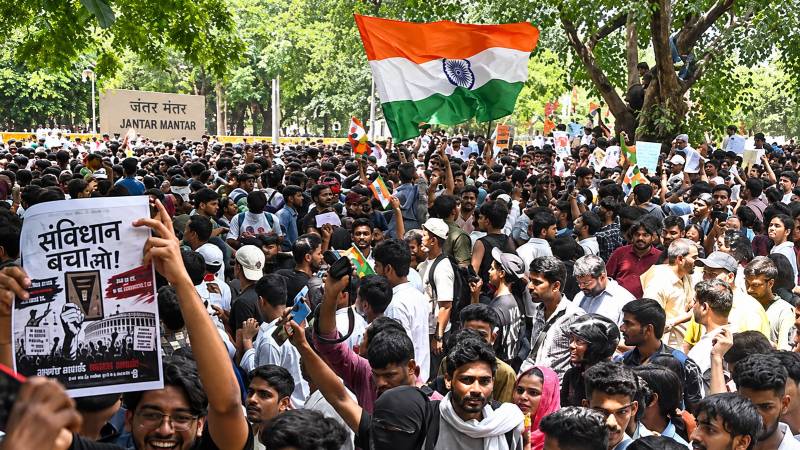
An exercise intended to tidy India's electoral rolls has erased roughly 130 million names, divided the Election Commission from within and brought the capital under lockdown. The party that rose to power through street protests now wants everyone to go home. During last week's attempt to reach Jantar Mantar, Delhi Police thought they had caught Neha Bora, national president of the All India Students' Association. The woman detained near RK Ashram Marg wore the same scarf, black-rimmed glasses and mask. But she was not Bora. The real one had already crossed the barricades and was posting from Connaught Place. Police eventually caught her at Vijay Chowk, near the President's residence.
It is a funny story, but also an apt summary of India's crisis: a state so preoccupied with identifying people that it catches the wrong one while the right one walks past. For more than a year, the Election Commission of India (ECI) has been doing something similar to the country's electoral rolls. The Special Intensive Revision (SIR) began in Bihar in July 2025 to remove dead and duplicate voters and those who had moved away. Bihar lost 69 lakh names, leaving 7.43 crore voters before the November elections. In October 2025, Chief Election Commissioner Gyanesh Kumar expanded the exercise nationally, beginning with 12 states and union territories covering approximately 51 crore voters.
The Commission's data subsequently showed around 13.3 crore names removed from draft rolls across different phases. Approximately 2.8 crore were classified as deceased and 1.01 crore as duplicates. The remaining 9.5 crore or so were removed as absent, permanently shifted or, in a category remarkable for its vagueness, "other". The figures become more troubling at constituency level. In Hyderabad's Malakpet constituency, 1,47,799 names were reportedly deleted, exceeding the 1,32,024 votes cast there in the 2023 state election. In one polling booth in Delhi's Chandni Chowk, 908 of 909 voters were removed. What happened to the survivor? Did officials run out of ink, or has he become a one-person electorate?
In Uttar Pradesh, The Reporters' Collective found that the Commission's software required officials to sign 85,854 deletion forms without specifying reasons. The state's chief electoral officer disputed the report's interpretation while confirming the figure. Karnataka recorded 91,278 objections using Form 7 between June and October. In Nandigram, one study found that Muslims accounted for 95 per cent of deleted voters in a constituency where they represented roughly a quarter of the population.
West Bengal reportedly lost around nine million names, or 12 per cent of its electorate, before an election the BJP won for the first time. Approximately nine in ten successful applicants whose appeals were decided were restored to the rolls. Madhya Pradesh, meanwhile, reported 34.25 lakh missing names from its final list and sent officials door to door to identify eligible voters. Pakistani readers who spent February 2024 learning the difference between Forms 45 and 47 will find India's Forms 6 and 7 grimly familiar. South Asian democracy, it seems, has one country's paperwork rhyming with another's. There is another problem: Form 6, offered as a remedy, is intended for first-time voters. Someone deleted as having moved away was already registered. Three former senior civil servants writing in The Wire argued that this remedy does not address the problem and called for the revised rolls to be scrapped.
The government's defence was that a constitutional body was simply doing its housekeeping. That argument weakened after The Indian Express reported in September that Election Commissioners Sukhbir Singh Sandhu and Vivek Joshi had objected approximately 14 times in ten months to decisions concerning registration, deletions and digital systems. They reportedly said these decisions had been taken without their participation. The Commission maintained that differing opinions were normal. But demands for Kumar's resignation intensified. An opposition notice seeking his removal through Parliament had been rejected in April, while Kerala's Assembly subsequently passed a resolution seeking his removal.
The controversy reflects a deeper institutional problem. In 2023, Parliament changed the appointment process for election commissioners, removing the Chief Justice of India from the selection panel. The prime minister and a cabinet minister consequently held a two-to-one majority over the leader of the opposition. Kumar was the first chief election commissioner appointed under the new law, despite Rahul Gandhi's dissent. A referee appointed by one team will inevitably struggle to convince the other that the rules are being applied impartially. Whether that perception is justified in every decision is a separate question, but the appointment process itself invites scrutiny.
The point of a designated protest site is that the state agrees, in advance, to tolerate being shouted at in one place. Barricading that place entirely is not crowd control. It is the state walking out of the bargain.
The BJP and the Election Commission deny wrongdoing. Prime Minister Narendra Modi has described India as the "mother of democracy". BJP spokesperson Sambit Patra dismissed the Delhi protests as a failure and accused Rahul Gandhi of collaborating with foreign powers. Ravi Shankar Prasad accused the opposition of weaponising protests, while Sudhanshu Trivedi invoked the Emergency of 1975–77 to counter comparisons with the present. The BJP's arguments deserve consideration. Electoral rolls contained dead and duplicate entries, and nearly four crore deletions reportedly fall into these categories. The Supreme Court upheld the SIR in May as consistent with the Representation of the People Act. Earlier opposition allegations of widespread electronic voting machine manipulation also failed to establish the fraud alleged.
But these arguments do not resolve questions surrounding the remaining deletions. Why were millions classified as absent or shifted? Why did two commissioners reportedly object repeatedly? And why were protesters prevented from reaching their designated demonstration site? Judicial approval of a process does not automatically settle every question about its implementation. The protest movement gained momentum after Chief Justice Surya Kant compared certain unemployed young people to cockroaches who become media, social media and Right to Information activists. He later clarified that he meant people with fake law degrees, not Indian youth generally.
On May 16, political communications strategist Abhijeet Dipke launched the Cockroach Janta Party (CJP), a satirical outfit mocking both the remark and the BJP. Its social media account was withheld in India within a week, only to return under the handle "Cockroach is Back". The movement expanded beyond satire, joining protests over the NEET examination leaks and demanding Kumar's resignation after reports of divisions within the Commission.
Neha Bora, 29, from Khatima in Uttarakhand, became one of its most recognisable faces. A theatre artist whose father served in the army, she spent her childhood moving between cities. During the examination protests, she undertook a 23-day hunger strike alongside Sonam Wangchuk. When police sealed Jantar Mantar on October 10, Bora redirected protesters to Dilli Haat, ten kilometres away, declaring that it had become Jantar Mantar for the day. Before being detained, she described her generation as students, unemployed people and cockroaches, promising they would return. The state's response to a satirical political party has been remarkably devoid of satire.
The INDIA bloc has attempted to harness the protests without appearing to control them. Uddhav and Raj Thackeray led demonstrations in Mumbai on October 4. On October 12, Rahul Gandhi led a "Save Democracy" march towards the Supreme Court, where police stopped demonstrators. A petition filed by opposition leaders seeks to halt the SIR and require the Commission to record its decisions as prescribed by law. Its petitioners include Mallikarjun Kharge, Akhilesh Yadav, Tejashwi Yadav, Supriya Sule and Sanjay Raut. Rather than simply asking the Supreme Court to reverse its earlier position, the petition questions whether the Commission has followed the law governing its own decisions. For an institution whose members reportedly say they were repeatedly bypassed, that is a significant question.
Delhi witnessed a substantial security deployment over the October 10–11 weekend. Reports put the number of police and paramilitary personnel above 20,000 initially, rising beyond 30,000 by Monday. Mobile internet was restricted around Jantar Mantar, six metro stations were closed, and stadiums were used as detention centres. Estimates of the number detained ranged from 2,000 to more than 7,000. Those reportedly detained included Dipke, YouTuber Dhruv Rathee, CPI(ML) general secretary Dipankar Bhattacharya, lawyer Prashant Bhushan and economist Jean Drèze. CPI(M) MP John Brittas alleged that police dragged and assaulted him. The UN human rights office urged India to release those arbitrarily detained. India deploys soldiers along the Line of Control to keep infiltrators out. It has been a strange week watching security personnel on Janpath keeping voters and protesters out.
Built in 1724, Jantar Mantar was designed to track the heavens. For decades, it has also tracked public anger. After the Boat Club lawns near the seat of power were closed to rallies following the farmers' protest of 1988, the road beside the observatory became a designated site for dissent. The Supreme Court restored the right to protest there in 2018, subject to regulation. In 2023, protesting Olympic wrestlers were forcibly removed from the site on the day the new Parliament building was inaugurated. A designated protest site represents an agreement: the state agrees to tolerate public criticism in a particular place. Closing that space entirely undermines the purpose for which it exists.
The BJP's hostility towards street politics is striking given its own history. Its predecessor, the Jana Sangh, supported Jayaprakash Narayan's movement in 1974 and suffered repression during the Emergency. Narendra Modi, then a young RSS organiser, worked underground in Gujarat during those years. The BJP gained national prominence through L.K. Advani's Rath Yatra in 1990. In 2011, it supported Anna Hazare's anti-corruption movement, whose demonstrations at Jantar Mantar and Ramlila Maidan weakened the UPA government and helped create the conditions for the BJP's 2014 victory.
Protest is not a malfunction of democracy. It is a feedback mechanism through which citizens tell their rulers that something has gone wrong. The BJP understood this when it stood on the other side of the barricades. Its predecessors were once accused of the same anarchy and foreign influence that its spokespeople now attribute to their opponents. Kumar's resignation, if it comes, would neither establish guilt nor restore a single deleted name. The underlying problems would remain: an appointment process dominated by the executive, a revision exercise that places the burden on existing voters to establish their eligibility, software that flags discrepancies such as unusual age gaps between parents and children, and remedies that may not suit those removed from the rolls.
The Supreme Court can insist that the Commission follow its own rules. Parliament can reconsider the appointment process and restore a more balanced selection panel. Whether either step will happen soon remains uncertain. From Pakistan, we have watched our own institutions bend in ways Indian commentators once regarded as reassuringly foreign. The lesson is that a voter list is not merely a clerical document. It is a country's answer to the question of who counts. India has long taken pride in the scale of its democracy. The removal of approximately 130 million names raises an unavoidable question: how many citizens can be excluded before that democratic promise is compromised? The cockroaches, at least, have promised to keep asking.
Related Stories
 India
India
Navi Pillay’s Nobel Honour: Praise, Politics, Diplomatic Calculations
1 hour ago
 India
India
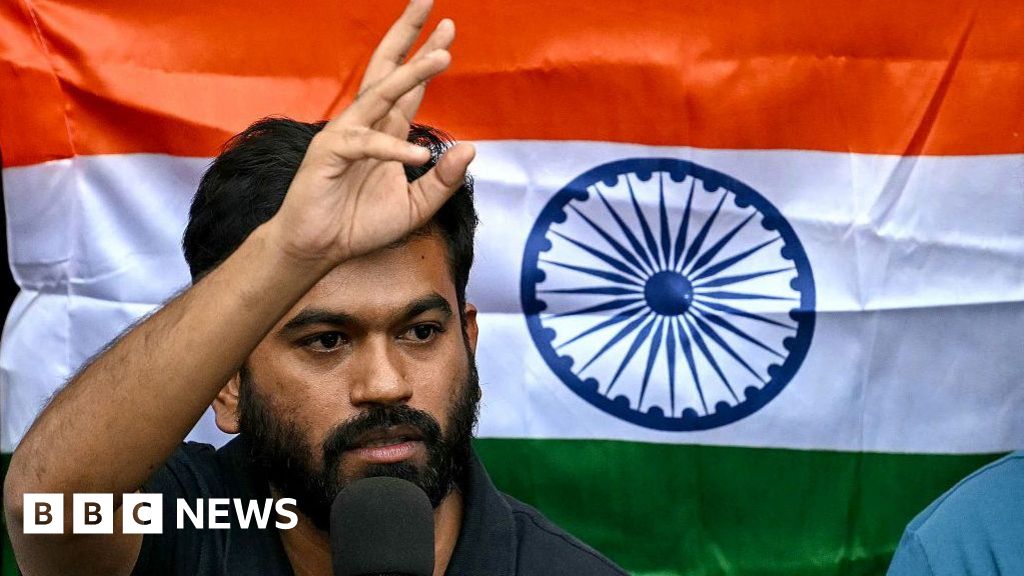
CJP, Abhijeet Dipke: 'Cockroach' party founder detained ahead of Central Park Delhi protest
1 hour ago
 India
India
As ex
2 hours ago
 India
India
'Oppose, expose, depose': Jairam Ramesh invokes Pranab Mukherjee after Rajnath Singh's 'regime change' cha
2 hours ago
 India
India
Vijay’s TVK joins INDIA bloc anti
2 hours ago
 India
India
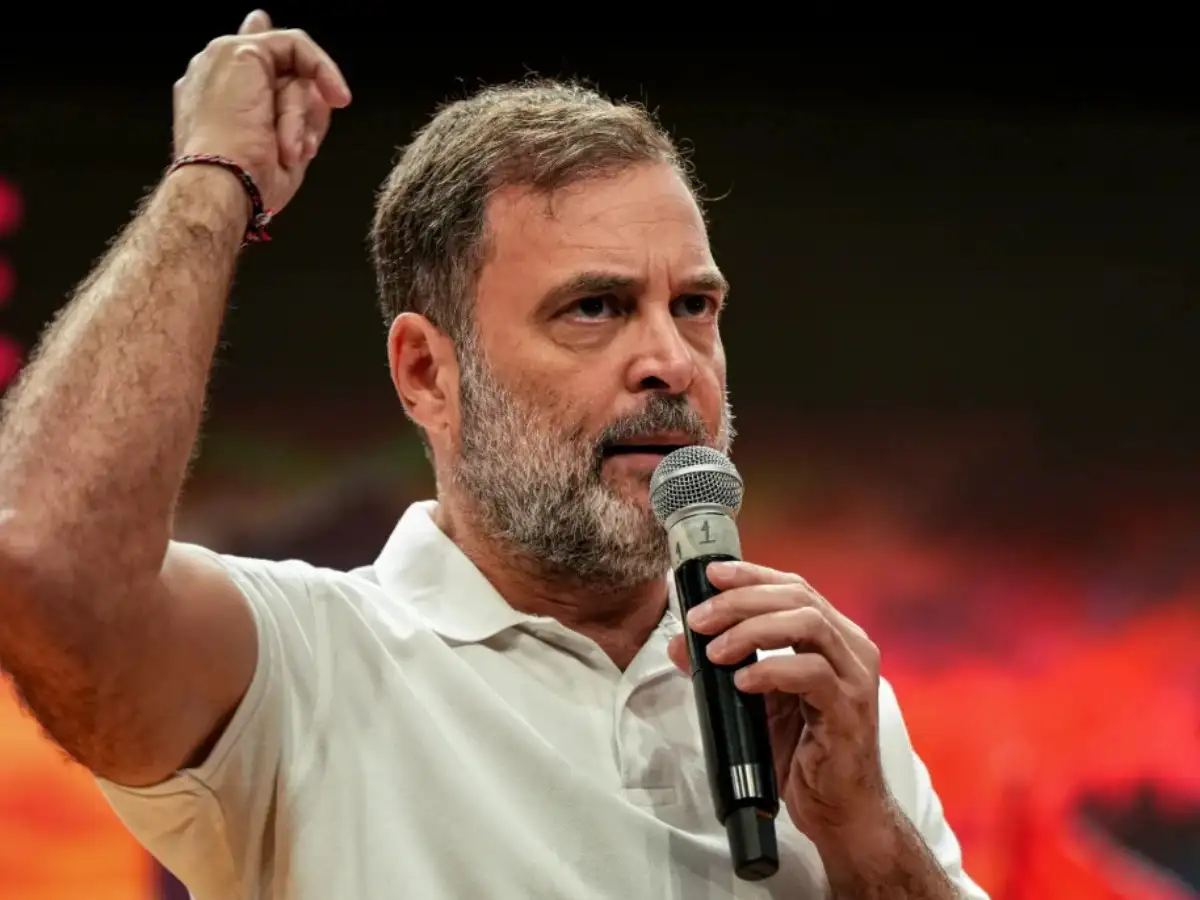
Rahul questions govt over Rubio's proposed meeting with Indian officials in Mumbai
3 hours ago
 India
India
As Vijay & allies join INDIA bloc’s anti
4 hours ago
 India
India
"India's democracy is a colossal banyan tree": Yogi Adityanath hits out at Congress over Delhi protests
4 hours ago