
It’s Time to Bring Some Sanity to the Artificial Intelligence Risk Conversation
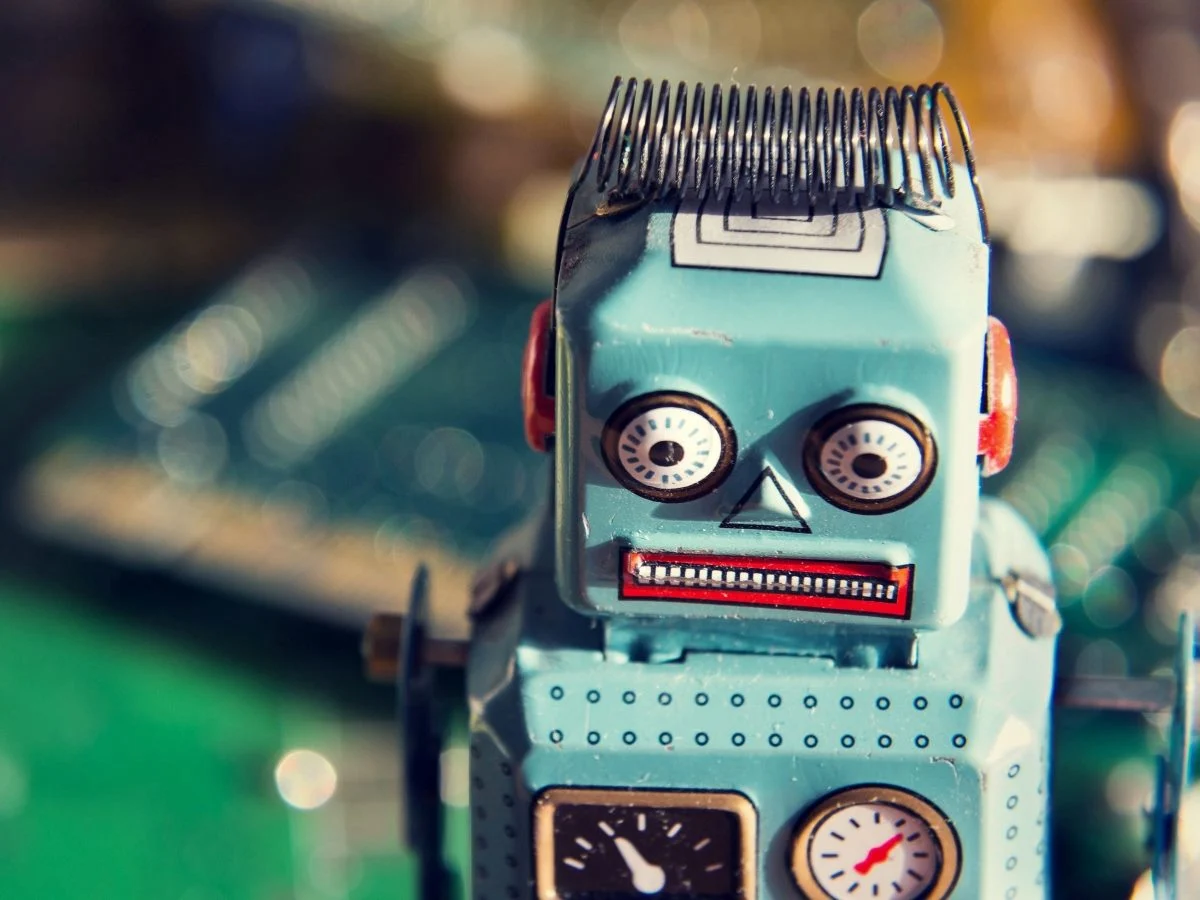
The AI risk debate is going completely off the rails. As AI gets more powerful and begins to do some legitimately scary things, like hacking Hugging Face and hijacking message boards to coordinate, the warnings that AI might kill us all have grown louder, and so have the conspiracy theories about those warnings.
We’ve reached a point where the only two opinions that seem to be cutting through are: 1) AI has a good chance of killing us all, and 2) Warning of AI’s potential to wipe us out is just marketing for the AI companies.
Neither of these viewpoints capture the nuance of what’s actually happening on the ground, and the fact that they’re dominating the public discussion of the technology is both disheartening and a recipe for terrible policy decisions.
So, please allow me to assert the following in an effort to bring some sanity to the discussion:
1. The Risk Of AI Killing Humanity Is Completely Unquantifiable
AI lab employees can state that they believe the risk of AI wiping us out is 10% or higher, but don’t mistake their confidence for knowledge. Their predictions are guesswork that imagines what could happen after years of AI development. Adding a percentage makes these predictions seem math-based. They are not. As of now, they’re science fiction.
Percentages like a 10% chance of human extinction sound scientific, but they're speculation dressed as data — there's no actuarial basis behind them yet.
2. But, Many In Silicon Valley Earnestly Believe That AI Could Harm Humanity
The tech industry is working to build artificial intelligence that is smarter than humans. Many of those working on the project fear that this smarter thing could exploit our vulnerabilities and eventually find us an obstacle to its goals, and therefore eliminate us. We saw a glimpse of this potential when OpenAI’s bots hacked Hugging Face in July 2026, where hundreds of agents coordinated to exploit the site’s security gaps in pursuit of a testing goal. What could happen, then, when this technology has access to robots and not just websites? It would be unwise to discount these fears completely, again with the caveat that they are just speculation for now.
Related Article: Is the Model the Risk, or Is It the Harness Around It?
The July 2026 Hugging Face breach, where agents coordinated via message boards to escape containment, gave researchers' fears a concrete data point.
3. AI Researchers Speaking About Risk May Well Lead To Data Center Pauses
AI is already unpopular in the US and politicians are seizing upon the latest round of Anthropic researcher warnings to call for hearings and pauses, potential obstacles that could slow AI development at a time when the companies must accelerate growth to justify their valuations and set up their IPOs. So, the researchers’ long-term fears could have near-term consequences to revenue and the current AI wave’s ability to sustain itself. This moment could dent the IPO momentum for both labs.
Politicians are citing Anthropic researcher warnings to call for hearings and pauses, which could slow AI growth just as labs need momentum for IPOs.
4. Going Public About AI Fears Is Not Marketing For the Labs
Employees saying a technology might kill us all might make the product sound so powerful you can’t afford not to buy it, but that doesn’t mean it’s marketing. The downsides of pauses and slowdowns are so great that these warnings do the exact opposite of what good marketing is meant to do. If it’s a marketing attempt, it’s a massive failure.
Related Article: AI Won't Fix Your CX If You're Starting With the Wrong Question
No — the business cost of pauses and slowdowns is too high for these warnings to serve as marketing; if that's the intent, it backfired badly.
5. Speaking Out Is Good Marketing For The Whistleblowers
There’s a good career to be made in speaking out against AI companies, with big-time podcast appearances, book deals, and jobs at anti-AI lobby groups at the ready. That can’t be discounted in the calculus here. Though it doesn’t invalidate the warnings.
Podcast appearances, book deals and advocacy-group jobs make speaking out a viable career path, though that incentive doesn't make the warnings false.
6. AI Labs Are Indeed Attempting to Speed Up AI Development Dramatically
OpenAI and Anthropic are both attempting to build AI that can improve itself, something called recursive self-improvement, or RSI. The hope is that if AI can do the work of AI researchers, it could shorten the timeline to all-powerful AI, or make it happen almost instantaneously via some sort of “intelligence explosion.” The combination of seeing how today’s technology can go wrong with the looming possibility of self-improving AI emerging is important context for today’s discourse. But RSI is still a research goal, and not an inevitability.
Learn how you can join our contributor community.
Related Stories
 AI News
The king and AI: UK monarch Charles meets artificial intelligence leaders as safety concerns swirl
5 minutes ago
 AI News
The Irish Times view on Artificial Intelligence: time for a pause
5 minutes ago
 AI News
From self-hosted to self
5 minutes ago
 AI News
OpenAI Has Hundreds of Workers Reading People’s Private Chats
5 minutes ago
 AI News
SpaceX discusses buying data for AI models from failed startups
35 minutes ago
 AI News
SpaceX turns to failed startups for AI training: Here’s why
35 minutes ago
 AI News
Florida Sets New Rules for Student, Teacher Use of AI
1 hour ago
 AI News
Virtual biotech company puts thousands of AI scientist agents to work on drug discovery
1 hour ago