
Maersk to test rotor sail technology on 8,700 TEU containership
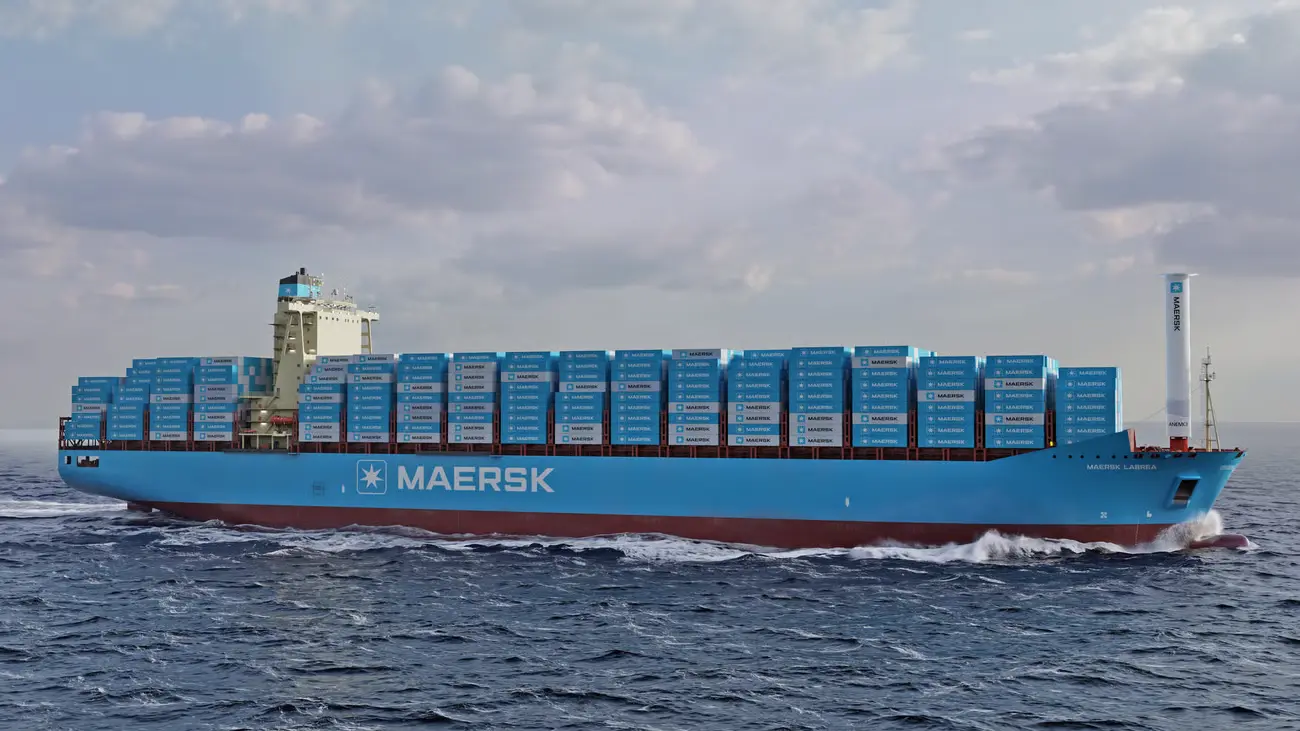
Maersk has selected Anemoi Marine Technologies to install a rotor sail on an 8,700 TEU containership.
The project will mark the first installation of Anemoi’s Rotor Sail technology on a container vessel.
The system is designed to use wind power to provide additional propulsion. This can reduce fuel consumption and emissions under suitable operating conditions.
Rotor sail installation planned for 2027
Anemoi will design, manufacture and deliver one fixed Rotor Sail for a vessel in Maersk’s 8,700 TEU Lima class.
The sail will measure 35 metres high and five metres in diameter.
Anemoi will also support the engineering and installation process.
Installation is scheduled for mid-2027. Maersk will then test the technology during the vessel’s regular operations.
The vessel is expected to operate on North and South Atlantic voyages during the pilot.
Maersk explores wind-assisted propulsion
Rotor Sails use aerodynamic lift from the wind to generate additional thrust.
Anemoi has already installed the technology on other vessel types, including bulk carriers.
The Maersk project will extend its application to container shipping.
“Wind-assisted propulsion is one of several promising maritime solutions with the potential to improve vessel efficiency and reduce emissions,” said Ole Graa Jakobsen, Head of Fleet Technology at Maersk.
He said the pilot will allow Maersk to gain practical experience and assess the technology’s potential for its wider fleet.
Anemoi expands technology into container shipping
UK-based Anemoi was established in 2015 and has deployed Rotor Sails on vessels operating across international trade routes.
“We’re delighted to be working with Maersk on this pioneering project,” said Clare Urmston, CEO of Anemoi.
She added that the project demonstrates how collaboration can support the adoption of wind-assisted propulsion in shipping.
Related Stories
 Technology
When Tech Companies Die, What Happens To The Products They Leave Behind?
1 week ago
 Technology
Two Finns supplying Russia with missile tech worth tens of millions
1 week ago
 Technology
Drones with pepper spray, four
1 week ago
 Technology
Micron Technology stock pre-market at EUR 800.50: memory storage - ad
1 week ago
 Technology
TAIEX Ends at 4
1 week ago
 Technology
ZAWYA: Technology, start-ups can double India
1 week ago
 Technology
Czech government to consider CZK 1 billion fund for startups
1 week ago
 Technology
GDIN Supports Eight Startups at CEATEC 2026 in Japan, Opens Door to Local Investor Collaboration
1 week ago