
Patients struggle to get vital medicines amid shortages
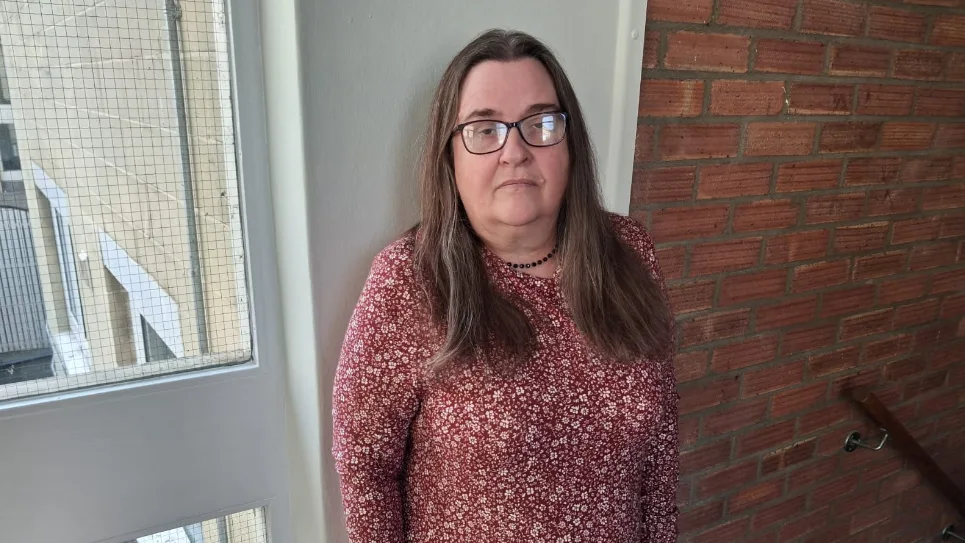
Patients are facing growing anxiety over access to vital NHS medicines as pharmacists warn shortages have become a "national crisis".
Pearl Butler, who has epilepsy and was diagnosed with Parkinson's disease in March 2025, said she had been left without medication for weeks, resulting in increased seizures and tremors.
More than 1,500 medicine shortages were reported across England between May 2024 and April 2025, according to Community Pharmacy England.
Pharmacists say shortages affecting medicines including Creon, insulin, ADHD medication and blood pressure treatments have become a persistent problem. The Royal College of Pharmacy has called for "urgent action" to strengthen supply chains.
Heatwave conditions forecast as health alert issued
River 'wife' hopes Avon will gain new rights
Motorcyclist dies in crash at gorge
Ade Williams, lead pharmacist at Bedminster Pharmacy in Bristol, said the situation had become a "national crisis" and a longer-term strategy was needed to ensure a consistent supply of medicines.
Butler, 52, who lives in Bath, Somerset, said medicine shortages were a constant worry.
"I've had periods of weeks when I've had to go without the medication and I really, really suffer," she said.
"I don't want to be in that position of being weeks without it again. It's a real concern."
Karen Andrews, 62, from Calne, in Wiltshire, takes Creon - a pancreatic enzyme replacement therapy - and without it is unable to digest her food properly.
Following an operation for a pre-cancerous pancreatic cyst in 2020, she said supplies had been erratic, particularly last year when at one point she was unable to secure any at all.
Although the situation had improved recently, when she went to collect her latest prescription her usual strength was unavailable.
She was given a lower dose, meaning she now has to take seven tablets a day instead of three.
"It's a logistical problem for me to plan things on a normal daily basis," she said.
"Without the Creon, I haven't got the ability to digest my food properly. I would just have diarrhoea and probably waste away."
According to Pancreatic Cancer UK, many patients are currently experiencing difficulties obtaining Pancreatic Enzyme Replacement Therapy.
Williams said community pharmacies were spending increasing amounts of time dealing with medicine supply issues.
"We have ongoing supply fluctuations with Creon as well as diabetic insulin medication and drugs managing blood pressure," he said.
"It's one of the things that takes up a significant amount of time for community pharmacies but that doesn't even start to capture the impact it has on the anxiety, stress and confidence of patients."
RCP President Tase Oputu said medicine shortages had become a persistent challenge.
"Pharmacists spend hours tracking down medicines when more of their time and expertise could be spent advising and treating patients, Oputu said.
"We need urgent action to strengthen medicines supply and give pharmacists greater flexibility to make straightforward amendments to prescriptions during shortages so patients can get the medicines they need safely and without unnecessary delays."
Emily Truscott, a clinical pharmacist at St George's Surgery in Cheltenham, agreed that the current system was complicated.
"Things can change on a monthly basis," she said. "The two big issues that we've had are ADHD and HRT medications.
"The reason behind this is that there's been a huge rise in the awareness and diagnosis of those conditions.
"I certainly have had a lot of patients where I've had to say, 'sorry, you're going to have to go to a different pharmacy this month' and, in extreme cases, I've had to liaise with my hospital pharmacy colleagues."
The Department of Health and Social Care (DHSC) said the government was making "significant" investments in the UK medicine manufacturing industry to strengthen the supply chain.
A spokesperson said the department had plans in place to manage disruptions and was working closely with industry to keep supplies stable.
The DHSC is also analysing the results of a consultation over whether community pharmacies could make minor amendments to prescriptions.
This includes pharmacies being able to offer alternatives for Hormone Replacement Therapy (HRT) during shortages.
Williams said it was a "positive step forward" as "things like that really, really matter".
He said: "It means that a patient walks out of the pharmacy with their medication and, for the pharmacy team, it doesn't start a cascade of events that's going to take 30 or 40 minutes."
According to Epilepsy Action, there are 1,000 epilepsy-related deaths in the UK every year with uncontrolled seizures one of the leading causes.
Jon Eaton, director of communications for the charity, said it was important for patients to plan ahead.
"Don't let yourself get down to the last couple of tablets - plan a couple of weeks in advance and make sure you have those conversations with your pharmacist early," he said.
"Anything the government can do to make sure the supply chain isn't so lumpy will be very welcome."
Follow BBC Wiltshire on Facebook, X and Instagram. Send your story ideas to us on email or via WhatsApp on 0800 313 4630.
The struggle to get hold of medication in England is set to get worse
Pharmacist says drug shortage 'worst I have known'
Related Stories
 Community
Liberals criticise ‘unimpressive and underwhelming’ rail loop plan as Victorian premier pushes ahead after hinting at pause
1 day ago
 Community
Japan enlists 1,800 people to drag a 360
2 days ago
 Community
Fire destroys Saint
2 days ago
 Community
Scrapping of Berlin swimming day for Black children becomes latest in long list of race
3 days ago
 Community
Community mourns death of 2SLGBTQ+ advocate, lawyer barbara findlay
3 days ago
 Community
Members of 2SLGBTQ+ community 'floored' at being turned away from monument launch
3 days ago
 Community
Alert Bay leaders ban alleged assailant after nurse attacked
4 days ago
 Community
Summerland family feels 'violated' after burglary during wildfire evacuation
4 days ago