
Philly tenants are fighting to limit AI in property management. Here’s why
Have a question about Philly’s neighborhoods or the systems that shape them? PlanPhilly reporters want to hear from you! Ask us a question or send us a story idea you think we should cover.
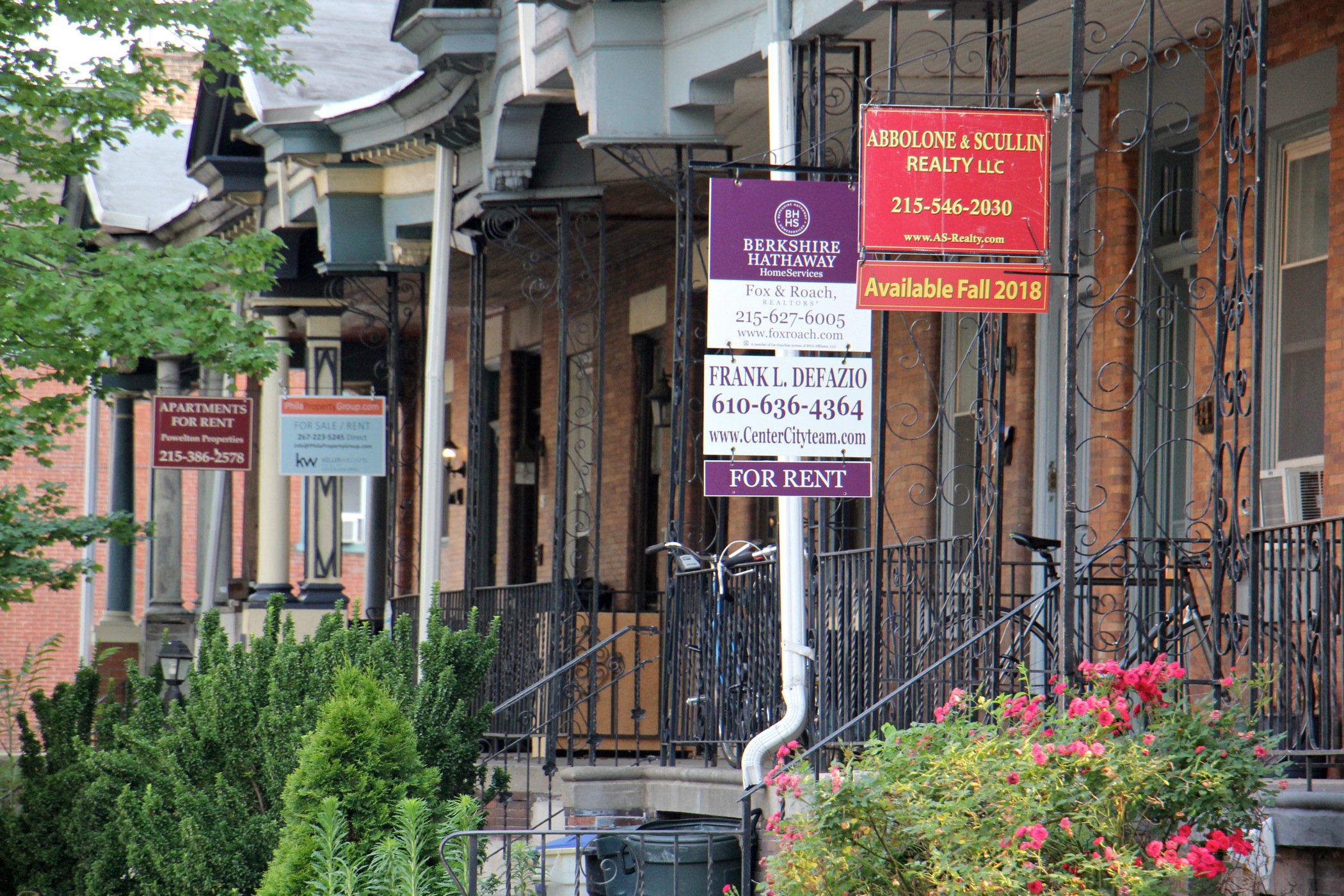
As part of a broader campaign, housing advocates in Philadelphia are pushing to restrict how property managers use artificial intelligence to operate apartment buildings.
The nascent effort has two main targets.
Advocates want to bar property managers from using AI for maintenance requests, which they say can misrepresent those requests and leave tenants without an accurate paper trail.
They’re also fighting to stop property managers from using artificial intelligence to tabulate rental arrears, which anecdotally has left tenants being accused of delinquency or assessed late fees.
The grassroots campaign, launched by the Philadelphia chapter of the Democratic Socialists of America, is rooted in improving accountability and transparency amid an affordable housing crisis that has made moving increasingly difficult for low-income tenants.
It also comes as a resurgent tenant movement continues to grow and gain political influence in a city where nearly half of all residents are renters.
“They’re obviously doing this to cut down on costs, so they don’t have to spend money on a property manager or a maintenance worker talking to a tenant. But the tenant’s not getting any of the benefits,” said Vincent Montoya, an organizer with Philadelphia DSA.
Advocates, including members of DSA’s Citywide Tenant Union, are working with City Council members to draft legislation they hope to get introduced this session, potentially after the body’s holiday break.
In the meantime, here’s what else to know about the use of AI in property management in Philadelphia.
AI not meant to replace human touch
It’s hard to pinpoint exactly when property owners in the city first started incorporating AI into their businesses, but it’s been at least a few years.
These days, housing advocates say it is increasingly common for renters — existing and prospective — to use artificial intelligence to complete property management tasks that were traditionally handled entirely by humans.
In some buildings, AI processes rent payments and makes maintenance requests. Property managers also use it to respond to renters looking to schedule a building tour, as well as during the application process.
“Prospects want an immediate response. And generally, that’s who they’re going to go with — who responds quicker,” said Kelli Tomczak, vice president of property management at the HOW Group.
The company, which operates 25 apartment buildings in Philadelphia, also uses customized AI software to send reminders to delinquent renters, and to field questions and requests that may require a work order so a repair can be scheduled.
In most cases, the technology is used to start tasks that are ultimately handed off to someone on Tomczak’s team.
“We’re not trying to essentially replace people,” Tomczak said. “We’re just trying to reduce the amount of tasks our people have.”
That’s particularly true for repetitive administrative tasks.
For now, AI is mostly being adopted by larger property management companies in Philadelphia.
Steven Chintaman, vice president of government affairs for the Pennsylvania Apartment Association, said the property managers his group represents are turning to AI to make their businesses more efficient.
That way, he said, they can free up staffers to focus on tasks that require human judgment. That includes responding to and resolving tenant complaints and disputes, as well as issues tied to screening prospective renters and prioritizing maintenance requests.
“We expect the role of technology to grow, but housing remains a people-centered business first and foremost,” Chintaman said. “We’re always going to require our employees to have that human relationship, that relationship building, that one-on-one conversation with our property management companies and our renters.”
Tenants say AI is problematic for property maintenance
Housing advocates don’t see it that way and argue that some property managers use AI to sidestep certain interactions with tenants, especially when it comes to addressing urgent maintenance requests.
“This creates a wall between property managers who are responsible for coordinating their repairs and the tenants who are suffering from the repairs not being completed,” Montoya said.
Advocates are concerned about the accuracy of property maintenance requests made using AI software, but also instances where there is no written record of the requests being made.
Inaccuracies can delay repairs if, for example, the property management company sends someone to fix a different issue and they aren’t prepared to make the requested repair.
The absence of a paper trail could come into play if a tenant needs to prove to a judge that they were entitled to withhold rent — and make necessary repairs — because their landlord violated state law.
“When you input a repair request, it should be recorded exactly as you inputted it into the system and then stored,” Montoya said. “That way if you end up in a legal dispute down the road, you can point clearly to your maintenance portal and say ‘I complained about this issue in my own words.’”
By law, every rental lease in the state has what’s known as an “implied warranty of habitability.” That means landlords must ensure their rental units are safe and habitable, which includes a requirement to make any noncosmetic repairs needed to maintain those conditions.
If a landlord breaches the implied warranty, tenants can withhold rent, pay for the necessary repairs themselves and deduct the cost from any future payments.
Larice Hill, a renter at Kings Ferry Square Apartments in South Philadelphia, said she recently paid for her own exterminator after months of waiting for her property manager to respond to a mice infestation.
She said it’s been “hell” getting maintenance requests completed since her building started using AI software a few months ago.
“Nobody gets your message. Nobody calls you back. Not unless you go to the office between their new hours,” Hill said.
That may change if the city’s growing tenant movement is able to secure another round of legislative victories next year.
WHYY is your source for fact-based, in-depth journalism and information. As a nonprofit organization, we rely on financial support from readers like you. Please give today.
In-depth, original reporting on housing, transportation, and development.
Related Stories
 AI News
Big things brewing for Steinbach AI company
6 minutes ago
 AI News
Beijing's service hotline empowers AI startups
1 hour ago
 AI News
Anthropic’s Claude AI gets Chinese
1 hour ago
 AI News
Artificial intelligence: key updates and developments (24 Sep
2 hours ago
 AI News
AI agent emailed hundreds of researchers for help, raising questions over autonomy
3 hours ago
 AI News
Art Basel UBS Survey 2026 Finds Collectors Embracing Artificial Intelligence
3 hours ago
 AI News
Anthropic reveals Haiku 5.5 model as AI pricing war intensifies
4 hours ago
 AI News
The Future of Data Analysis in the Age of Artificial Intelligence
4 hours ago