
Quebec’s secularism laws upended their lives. They fear what comes next could be worse
Quebec’s secularism laws upended their lives. They fear what comes next could be worse
Protest group says party leaders’ recent talk show appearance a glimpse into what’s to come
Unjust laws breed more injustice.
That's what comes to mind for Asma Boumar when it comes to the widening scope of Quebec’s secularism laws.
Over the last seven years, the provincial government passed a series of laws — bills 21, 94 and 9 — prohibiting public servants from wearing religious symbols at work.
Last year, one of those laws changed Boumar's career and life very suddenly.
One moment, she says, she was employed at a school and able to wear her hijab in the workplace. The next, she had lost that right, was out of a job and fighting to return to work.
Secularism hasn’t come up much this election. We asked the 5 main parties where they stand
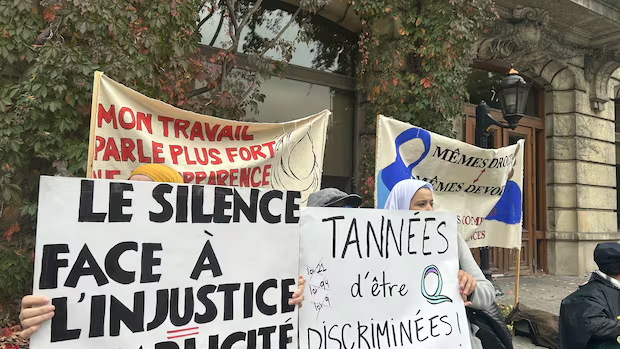
Every Monday for the last four months, Boumar has been protesting outside the premier's downtown Montreal office with a group called Québécoises musulmanes tannées, which translates to "fed up Quebec Muslim women."
The group will do one more sit-in this Monday, the same day voters head to the polls to elect Quebec’s next government.
Boumar is bracing for what she expects will be further encroachment by the state into how she chooses to exist as a Muslim woman.
"Unfortunately, the targets are always the same; it is always the same category of citizens," she said.
Boumar was working as an educator when she agreed in the fall of 2025 to take on a second role and replace a teacher at her school. It was the same year Bill 94 became provincial law and barred all school support staff — not just teachers — from wearing religious symbols.
A few months later, her school service centre told her that because she had taken on a new role, she was no longer exempt from the law. Boumar’s decade-long stint at the school came to an end soon after.
"But do we simply bow down to a law that is discriminatory?” she said.
“Today it is this law; tomorrow, we don't know who else might face injustice if we don't speak up now.”
The Supreme Court of Canada is expected to issue an historic ruling this fall on the province’s original religious symbols law.
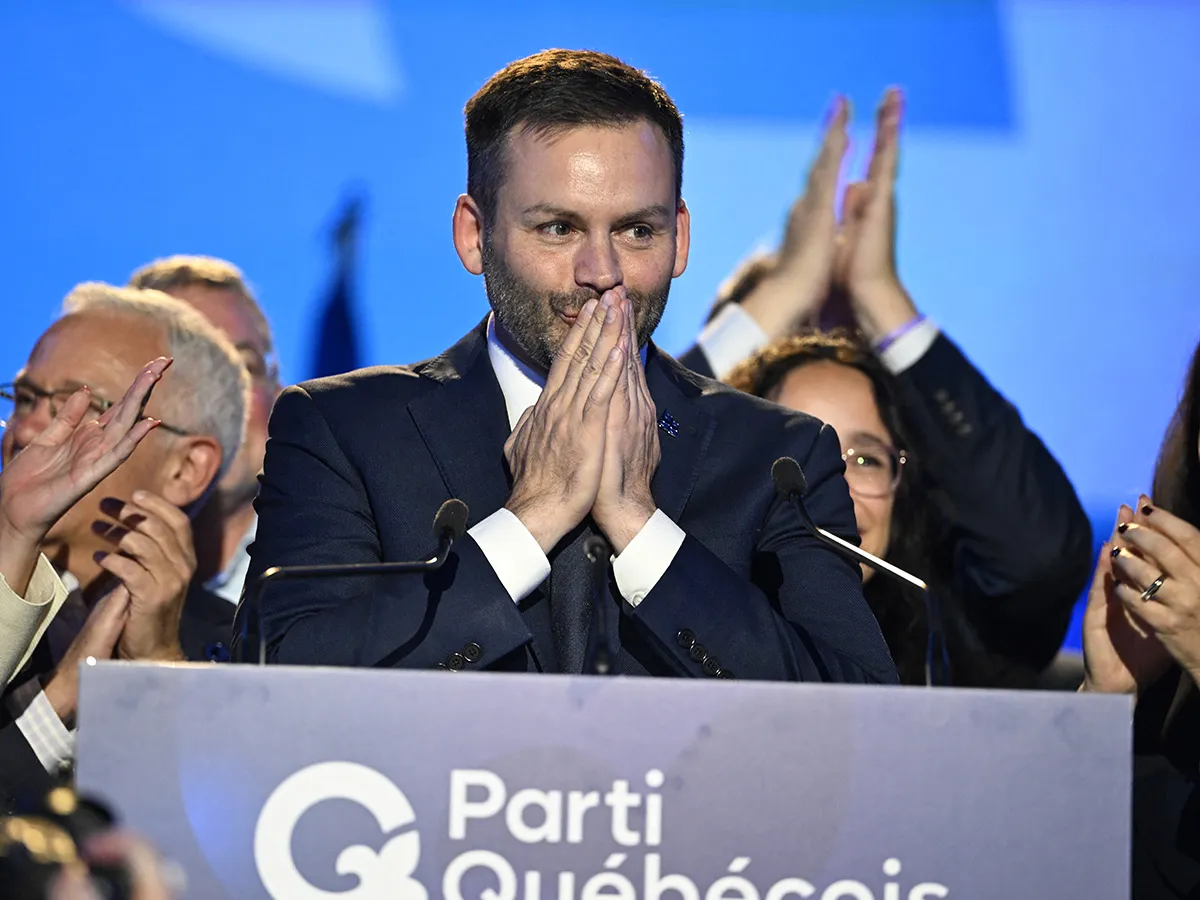
Paul St-Pierre Plamondon of the Parti Québécois, the party favoured to form the next government, has said he would oppose any Supreme Court decision that invalidated key elements of Bill 21.
6 key moments from the Supreme Court challenge of Quebec's secularism law
He’s also promised to bar children in primary school from wearing “ostensible ” religious symbols.
Quebec Liberal Leader Charles Milliard has said he wouldn’t modify the secularism laws if his party was elected, instead waiting on the Supreme Court to lay down the ground rules.
Coalition Avenir Québec Leader Christine Fréchette, whose party passed those laws, has maintained the notwithstanding clause, which protects those secularism laws from legal challenges, is vital to Quebec’s democracy.
How public institutions — like schools and the STM — are handling Quebec's new secularism law
Boumar said she wonders whether she has any viable option at the ballot box on Monday to have her voice heard.
“It’s the only electoral campaign where it’s not so clear,” she said.
Mouna Bordji, another member of the group and former early childhood educator assistant, says it feels like those in power are avoiding talking about the impact these laws have had on women like her during this election.
She says she's been jobless since April when Bill 9 — which expanded the ban on religious symbols to daycare workers and set limits on public prayer — came into effect. Since then, she's struggled to find work both inside and outside her field, and has had to rely on her husband's salary.
Compare the promises of Quebec’s major parties in the 2026 election
She spends part of her Mondays standing outside the office building on Sherbrooke Street. W. surrounded by allies and women in the same predicament.
"We do it so people can see us,” she said. “Because we're invisible."
The Québécoises musulmanes tannées say that despite requesting a meeting with current premier Fréchette, no one from her office has heard them out. She did not return a request for comment for this story.
‘Wearing the hijab in public, yes or no?’
A proposal from the far-right National Rally (RN) party to ban Muslim women from wearing the hijab in public has sparked a controversy in France, a country whose secularism model has served as a blueprint for Quebec legislators.
During last Sunday’s episode of popular Radio-Canada talk show Tout le monde en parle, host Guy A. Lepage gave the five major party leaders a chance to weigh in.
“Wearing the hijab in public, yes or no?” host Guy A. Lepage asked the party leaders, who needed to answer by either raising a “for” or “against” sign.
Four of the five said “for,” but St-Pierre Plamondon hesitated — and abstained.
The next day, he chalked up his hesitation to misunderstanding the question and insisted his platform shouldn’t be judged on the basis of a television segment that “was about having fun.”
"Look up our platform and there's no question of forbidding religious signs in public, it's never even been discussed," he said.
Radio-Canada host asks Quebec party leaders about people wearing hijab in public
For Boumar, the PQ leader’s silence spoke volumes.
“[Sunday] was the real thing – what he was actually thinking,” she said. “The next day is when wisdom kicks in; that is, we reflect on our actions.”
Human rights lawyer Pearl Eliadis says the PQ leader’s choice to abstain was consistent with the party’s shift to the right that would make its founder, René Lévesque, “turn over in his grave.”
Eliadis also pointed to a comment by Fréchette earlier this week qualifying her decision to prioritize "Quebecers" when allocating subsidized daycare spots as a feminist one, despite the fact that it flies in the face of recent Supreme Court ruling.
Supreme Court rules Quebec asylum seekers eligible for subsidized daycare
“This is about playing to an exclusionary ethno-nationalism that I think is contrary to everything Quebec and Canada stand for,” said Eliadis.
Boumar anxiously awaits the Supreme Court decision. Bordji says she’s starting to consider moving back to Algeria.
Another woman part of Québécoises musulmanes tannées, Nora Ben Mohamed, also fears the scope of Quebec’s secularism laws will continue to grow.
Why some say Quebec politicians helped fuel the racism they unanimously denounced
She says she has several family members – her daughter, her cousin – whose future hinges on the Supreme Court’s decision expected to drop in the coming months.
“It’s becoming really restricted for our community,” she said.
Her group fears those restrictions could only get tighter, more exclusionary. And from their perspective, all of it is uncalled for.
“We see secularism differently,” said Boumar. “Secularism is state neutrality; it’s not up to the state to butt into people’s choices in attire, in the convictions of others.”
Cassandra Yanez-Leyton is a journalist for CBC News based in Montreal. You can email her story ideas at cassandra.yanez-leyton@cbc.ca.
Related Stories
 Canada
How the separatist Parti Québécois took back power in Quebec
15 minutes ago
 Canada
Ahead of friendly vs. U.S., Canada men's soccer coach Jesse Marsch not shy about speaking his mind
1 hour ago
 Canada
Vermont cheesemaker says Canada, U.S. trade war hitting border state businesses
1 hour ago
 Canada
Secessionist party wins Quebec election in Canada
1 hour ago
 Canada
What to expect from a Parti Québécois government
2 hours ago
 Canada
Separatist party projected to win Quebec election, adding new test to Canada's unity
2 hours ago
 Canada
U.S. Coast Guard names Canadian crew on missing Ontario air ambulance flight
2 hours ago
 Canada
Bond markets are demanding 'credibility' and could compel the Bank of Canada to hike rates this year, says KPMG
3 hours ago