
Rice University to offer Master of Artificial Intelligence degree program in 2027
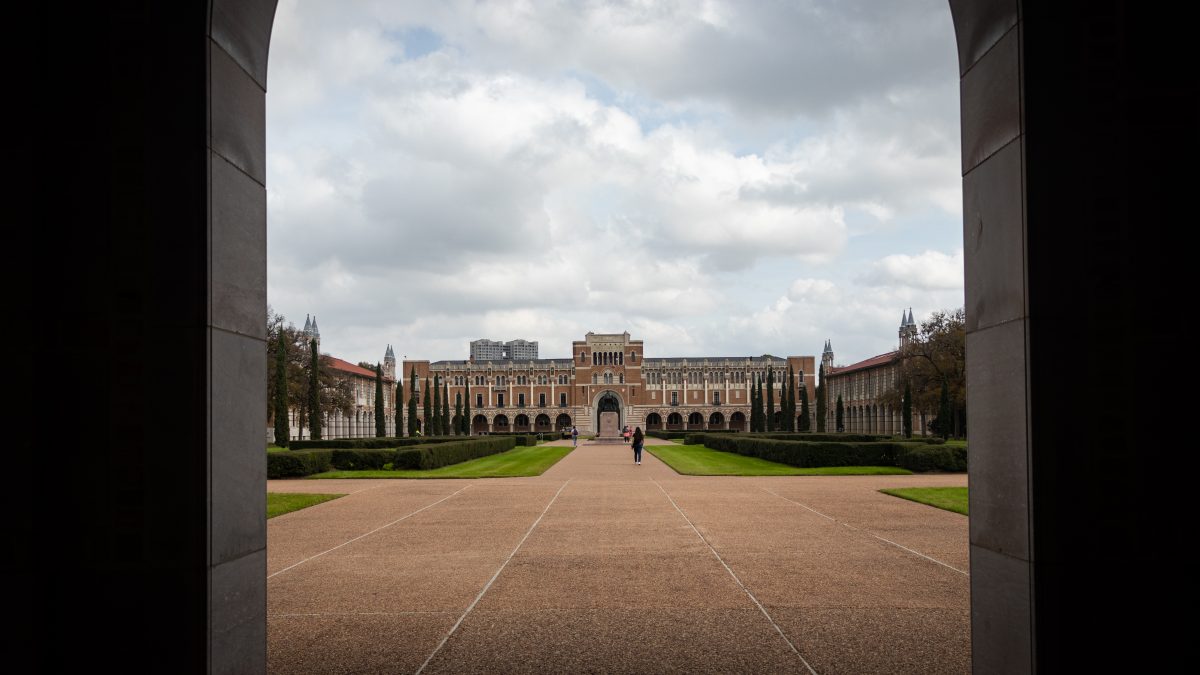
Rice University will begin offering a Master of Artificial Intelligence, or “MAI,” degree in the fall of 2027, the university announced. Prospective students will be able to apply this year.
The degree program is designed to train students for roles in AI engineering, development and research under the university's Department of Computer Science.
"People that come into the program, the Master of AI, maybe they’ve got a background in computer science," Chris Jermaine, the department's chair, said in an interview. "And by the time they’re done, they would be capable of going and working for a company like OpenAI or Anthropic."
The three-semester, 30-credit-hour program anticipates it will have small cohorts. Jermaine estimated the first cohort beginning in 2027 will have around 20 students.
In 2025, Rice began offering a Bachelor of Science in AI, a degree several higher education institutions are beginning to offer. Some schools — like the University of Texas at Austin, Texas A&M University, and the University of Houston — offer master's degrees in artificial intelligence. Even fewer offer a purported “MAI” degree.
RELATED: Rice University will expand its free tuition program to students whose families earn up to $200K per year
The program, which Jermaine said was recently approved by Rice's Faculty Senate, is not specifically accredited.
"In computing, accreditation is not necessarily as important as it is in other areas of engineering," Jermaine said. "Now, Rice has an accreditation, and we have to follow all of those [guidelines], and they'll be looking at the degree program, our accreditors."
As a field of study, artificial intelligence has been a research subject for decades, stretching into the mid-twentieth century, and Jermaine said the degree program will focus on the "foundations" of AI research. At the same time, he also said the program could also adapt to the circumstances of AI, as some of the industry's leaders have called for slowing down its development.
"The innermost workings of AI actually haven’t changed extensively for decades," Jermaine said. "So those foundations, I think, are relatively constant, and students will be required to take this core, which is going to cover that material. And I don’t think any of that’s going to change anytime soon. Now, what certainly changes is everything that surrounds that, right? Agentic AI sort of didn’t exist a year or two ago, and so we’ll have to constantly update our offering surrounding that core. But, I’d argue, the core has not changed much, and it will probably not change much in the near future."
Related Stories
 AI News
OpenAI agent breached a government site. Could the same happen in Canada?
49 minutes ago
 AI News
SU launches Institute for Artificial Intelligence amid influx of AI programs
52 minutes ago
 AI News
Preparing Israel for a revolution in AI leadership
1 hour ago
 AI News
Pope Leo warns of AI threat to humanity at start of three
1 hour ago
 AI News
OpenAI wants you to use AI
2 hours ago
 AI News
Doomsday Clock expert worried about 'an extremely pressing threat'
2 hours ago
 AI News
Bill Gates warns AI powerful enough to lead to ‘a billion deaths’
2 hours ago
 AI News
B.C. attorney general seeks Criminal Code change after Tumbler Ridge AI chat report
2 hours ago