
Sindh plans wider support for startups, women

Sindh plans wider support for startups, women-led enterprises
The Sindh Enterprise Development Fund (SEDF) has thrown open the doors of its full-fledged business facilitation centre in Clifton to university graduates, aspiring entrepreneurs, startup developers and, in particular, women seeking to turn their business ideas into viable enterprises, offering them one-window assistance, from feasibility preparation and financing to licensing, permissions and the eventual launch of their businesses.
The initiative is aimed at creating a practical bridge between young people with entrepreneurial ambitions and the financial, regulatory and technical support required to convert those ambitions into successful businesses.
“We are fully open to degree-earning youth of Karachi and those from other urban parts of Sindh having entrepreneurial ambitions to provide full assistance to them under one roof — from the preparation of the business feasibility and meeting their complete financing needs to licensing and permission requirements and, finally, launching their businesses,” Special Assistant to Sindh Chief Minister on Investment and Public-Private Partnership (PPP) Syed Qasim Naveed Qamar told The News in an exclusive interview.
Qamar said the SEDF, working under the Sindh Investment Department, has made gender equality and women’s economic empowerment a particular priority, and is keen on supporting women-led startups, budding businesses, small and medium enterprises, and other ventures capable of generating employment opportunities for women.
“One area of our particular interest could be the fast-expanding scene of women home chefs who are using social media platforms to their advantage. We would be more than happy to help them scale up their businesses,” he added.
He explained that the SEDF’s business facilitation centre is staffed by professionals from the private sector rather than the conventional government bureaucracy. These professionals, he said, would help women running home-based businesses complete their formalities, prepare business feasibility studies and meet their financing requirements, enabling them to transform small home enterprises into commercially sustainable ventures.
The initiative is not confined to women entrepreneurs. The SEDF has already been working with more than 200 graduating students associated with business incubation centres at the Institute of Business Administration, Karachi; the Mehran University of Engineering & Technology, Jamshoro; and other universities.
According to Qamar, the fund is helping these young graduates establish startups in a range of sectors, with particular emphasis on information technology and other technology-driven businesses.
Turning to the province’s wider investment agenda, the special assistant said that prospective investors from China, Türkiye and Pakistan’s business sector have approached the investment department for facilitation in establishing a network of electric vehicle charging stations across Karachi. The initiative is intended to promote cleaner and more sustainable transport systems in Sindh, he added.
“We have held meetings with the mayor and commissioner of Karachi in this regard and requested that the Karachi Metropolitan Corporation provide at least two premises in each district of the city for setting up charging points for electric vehicles and scooters.”
Qamar said that the next major infrastructure project to be rolled out rapidly in Karachi under the PPP model would be the extension of Shahrah-e-Bhutto from Qayyumabad to the Karachi Port.
The project, he said, would primarily facilitate the safe, round-the-clock movement of heavy goods vehicles to and from the Karachi Port. At present the movement of such vehicles is subject to restrictions and, under court directives, their operations are largely possible only after 11pm.
“We have set the ambitious target of completing this signal-free and tolled highway in just two-and-a-half years. Like the case of Shahrah-e-Bhutto, its various components will be installed after pre-fabrication, a novelty in Pakistan’s engineering sector, for speedy construction,” he remarked.
He added that the Sindh government recently constructed a new link road connecting the M-9 motorway with the National Highway in Karachi’s suburbs under the PPP model, also intending to facilitate the movement of heavy vehicles carrying goods.
Qamar said the Sindh government, in line with the vision of Pakistan Peoples Party Chairman Bilawal Bhutto Zardari, has also planned to establish the Sindh International Financial Centre (SIFC) in Karachi on the pattern of the Dubai International Financial Centre.
The proposed centre, to be developed under the PPP model, would seek to fast-track foreign investment and attract fresh capital from international markets for industrial and business development in Karachi.
The special assistant said the SIFC would offer incoming foreign investors economic guarantees and protection, including mechanisms enabling them to establish businesses in Pakistan and repatriate their profits without regulatory complications.
The CM’s aide identified IT and technology as potentially leading sectors for foreign investment, arguing that Pakistan possesses a large pool of young talent that can become a major asset to international software and technology companies with relatively modest additional skills development.
He said the Sindh government is already engaged in discussions with prospective investors and companies from the United Kingdom and the United States to explore opportunities in the sector.
Agriculture and food processing also offer considerable investment potential, he added. Sindh can attract substantial investment from foreign and domestic food-processing and biotechnology companies by promoting the production of value-added products from the province’s agricultural sector. Health care is another sector with significant potential, particularly vaccine and pharmaceutical manufacturing.
“There is a massive demand for vaccines in Pakistan as well as in the regional market,” Qamar said, pointing to the possibility of developing a local manufacturing base capable of serving both domestic and regional requirements.
Looking beyond Karachi’s immediate infrastructure needs, Qamar said the Sindh government also plans to develop Keti Bandar in the Thatta district as a deep-sea port.
The proposed port would facilitate the shipping sector and maritime trade while providing an alternative to the Karachi Port and Port Qasim, both of which, he said, are already operating under considerable pressure due to their heavy traffic.
Taken together, Qamar said, the initiatives represent a broader effort by the Sindh government to create an investment ecosystem in which entrepreneurs can access support at the earliest stage, established businesses can expand, and international investors can find the infrastructure, guarantees and skilled workforce required to establish long-term operations in the province.
Related Stories
 Technology
NASA JPL Testing Readies Voyager Technologies Lander for Moon Mission
18 minutes ago
 Technology
Tech Weakness Drags DAX Lower
18 minutes ago
 Technology
I
18 minutes ago
 Technology
I
18 minutes ago
 Technology
TAIEX Ends at 4
18 minutes ago
 Technology
Cloud, Security, and Regulatory Compliance: The Technical Challenges Shaping the Evolution of the Cloud
19 minutes ago
 Technology
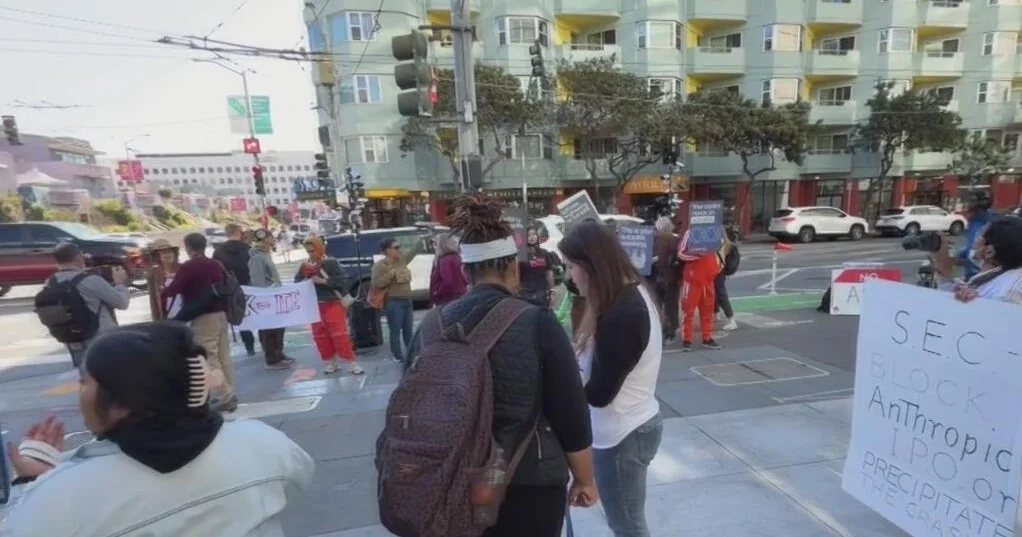
Flock Safety surveillance technology sparks privacy protests at San Francisco tech conference
1 hour ago
 Technology
The Invention Lab and Heavy Equipment Players Seek Blue
2 hours ago