
Sovereign tech push spurs specialist deep

MC EXCLUSIVE Sovereign tech push spurs specialist deep-tech funds targeting chip, AI and space startups
The government's push for sovereign capabilities in semiconductors, defence, space and AI is spawning a new generation of specialist deep-tech funds, as investors position themselves to back startups benefiting from policy incentives, rising strategic spending and shifting global supply chains.
Fund managers and analysts say initiatives, including Semicon 2.0, the India AI Mission and defence indigenisation programmes, have de-risked strategic technologies for private capital while creating domestic demand, making sectors such as semiconductors, AI, aerospace and cybersecurity attractive investment opportunities.
"One of the reasons we entered this space was because we could see the policy direction changing three to four years ago. Today, that conviction has played out," Raj Sethia, founder and managing partner of MountTech Growth Fund, told Moneycontrol.
The Ukraine war, supply-chain disruptions, China-plus-one strategies and rising geopolitical tensions have highlighted why countries need technological self-reliance.
"Investors are not just looking at financial returns anymore; many also want to back businesses that contribute meaningfully to the country's long-term strategic interests," he said.
Strategic tech investment gaining ground
Ajay Modi, director at Piper Serica, said government policy, capital availability and India's engineering talent have created the right conditions for specialist deep-tech investing.
"We've always invested in engineering-led businesses but government policy, institutional support and India's engineering talent are now creating a compelling opportunity in strategic technologies," Modi said.
The shift is reshaping venture capital allocations. Mumbai-based Piper Serica, which manages over Rs 1,400 crore, recently launched the Bharat Tech Fund, a Category II Alternative Investment Fund (AIF) targeting Rs 600 crore with a Rs 200 crore greenshoe option.
New Delhi-based MountTech Growth Fund (MGF Kavachh), a SEBI-registered Category II AIF launched in 2024, expects to close its maiden fund at around Rs 500 crore, double its target, reflecting growing investor appetite for sovereign technologies.
Modi said India's manufacturing ecosystem is moving beyond assembly-led production towards IP-led innovation.
"We have seen India build strong manufacturing ecosystems in electronics and defence. Once that foundation is created, the next opportunity is backward integration through IP-led companies supplying technologies and critical components into these value chains," he said.
Drawing parallels with the automobile industry, he said electronics and semiconductors are entering a similar phase, with opportunities spanning chip design, packaging, fabrication, sensors, AI compute, photonics and neuromorphic computing.
Modi said the fund aims to build globally competitive companies rather than businesses serving only the domestic market.
"Most founders want to build global companies. India is the first market because of its scale, but Europe Southeast Asia and the Middle East also lack strong domestic deep-tech capabilities. We want to back companies that can build in India and compete globally," he said.
The Bharat Tech Fund will back Series A startups that have commercialised their technologies and are ready to scale.
MountTech invests across defence, aerospace, space, semiconductors, cybersecurity, critical communications and strategic materials, with preference for dual-use technologies serving both commercial and defence markets.
"The government has not focused on just one part of the semiconductor value chain. It has supported manufacturing, components, PCB assembly, design incentives, OSAT and semiconductor packaging," Modi said.
This ecosystem approach gives private investors much greater confidence because companies are no longer building in isolation, he added
The next challenge is growth capital.
"There is adequate grant funding and seed capital. The real gap comes when startups need Series A or Series B capital to build manufacturing capacity or scale internationally," Sethia said. Startups also need predictable demand because investors value sustained order flows over one-off contracts.
Modi said semiconductor startups, in particular, require larger pools of private capital.
"This is no longer a leap of faith," he said. "We've already seen companies move from laboratory research to commercial products and sell to leading Indian and global customers. That gives us confidence that India's deep-tech ecosystem is entering a very strong phase of growth."
Discover the latest Business News, Sensex, and Nifty updates. Obtain Personal Finance insights, tax queries, and expert opinions on Moneycontrol or download the Moneycontrol App to stay updated!
Find the best of Al News in one place, specially curated for you every weekend.
Stay on top of the latest tech trends and biggest startup news.
Related Stories
 Technology
When Tech Companies Die, What Happens To The Products They Leave Behind?
2 days ago
 Technology
Two Finns supplying Russia with missile tech worth tens of millions
2 days ago
 Technology
Drones with pepper spray, four
2 days ago
 Technology
Micron Technology stock pre-market at EUR 800.50: memory storage - ad
2 days ago
 Technology
TAIEX Ends at 4
2 days ago
 Technology
ZAWYA: Technology, start-ups can double India
2 days ago
 Technology
Czech government to consider CZK 1 billion fund for startups
2 days ago
 Technology
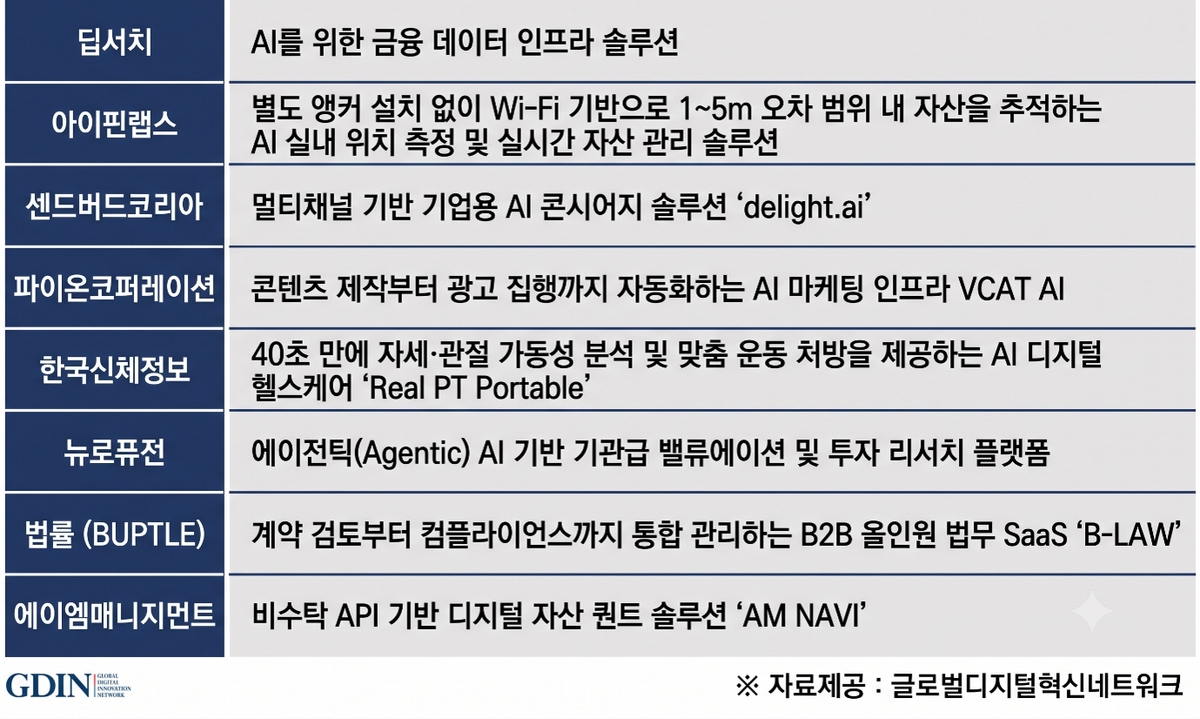
GDIN Supports Eight Startups at CEATEC 2026 in Japan, Opens Door to Local Investor Collaboration
2 days ago