
Trump beats his own record for strategic backflips on Iran
Donald Trump's actions in Iran this week show the world he's run out of options
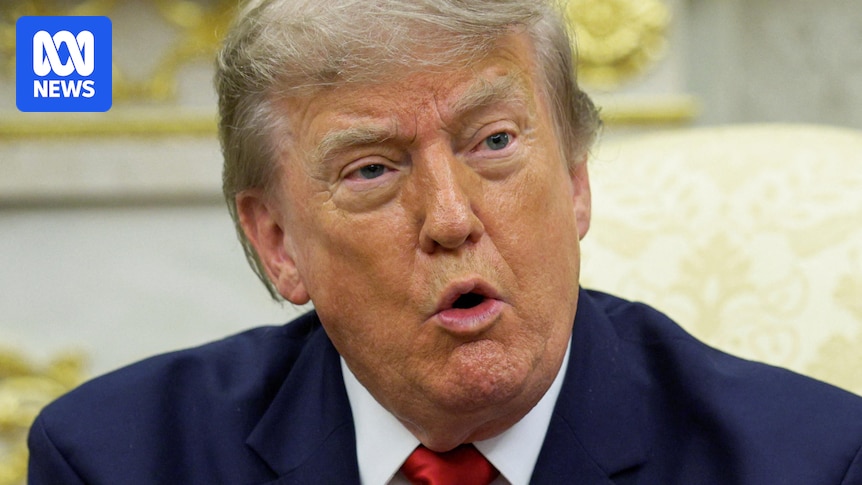
Donald Trump's war aims in Iran have either failed or aren't mentioned anymore. (Reuters: Evan Vucci)
The one consistent theme in Donald Trump's increasingly delusional bluster about the conflict with Iran in which he enmeshed his country on February 28 is his assertion of the ultimate invincibility of US military power.
"This regime will soon learn that no-one should challenge the strength and might of the United States Armed Forces," Trump told the world from Mar-a-Lago that night.
"I built and rebuilt our military in my first administration and there is no military on earth even close to its power, strength or sophistication."
Most days now, Trump emerges to say, time after time, that the US is going to "bomb them to hell".
And in response, Iran unleashes more firepower on US military assets and other infrastructure in the Gulf states stuck in the middle of this conflict, apparently having (once again) not been bombed to hell.
Almost five months into a war that was supposed to last four to six weeks at most, it seems the invincibility of US military power — and the efficacy of an air war — seems a very shop-soiled proposition.
Instead, that lack of invincibility, combined with the most hopeless failure of deal making and diplomacy many analysts have ever seen — from the man whose calling card is a deal maker — saw Trump beat his own record on strategic backflips this week.
He declared on Tuesday that the United States would charge fees for ships to transit the Strait of Hormuz. Then he changed his mind within 24 hours.
The gobsmacking nature of the reversal was only greater because a key reason the US–Iran conflict still persists is the US insistence that Iran can't control the strait and can't charge fees for transiting through it.
The war has drifted from Trump's aims
Almost everything else that Trump stated as aims when he launched into what has now been a disastrous war for the Gulf, for the world economy and for US prestige on the international stage, has either failed to materialise or is not mentioned anymore.
"This terrorist regime can never have a nuclear weapon," Trump said on February 28.
"For these reasons, the United States military is undertaking a massive and ongoing operation to prevent this very wicked, radical dictatorship from threatening America and our core national security interests.
"We're going to destroy their missiles and raze their missile industry to the ground. It will be totally again obliterated.
"We're going to annihilate their navy.
"We're going to ensure that the region's terrorist proxies can no longer destabilise the region or the world and attack our forces."
And, he said, in what was widely understood to be a call for regime change, "to the great proud people of Iran, I say tonight that the hour of your freedom is at hand".
"America is backing you with overwhelming strength and devastating force. Now is the time to seize control of your destiny," Trump said.
Not only are these goals not in range (depending on whether you think Iranian speedboats should be defined as a navy), but have failed, or were confirmed to be put on the backburner, in the memorandum of understanding signed on June 17.
Instead, that MOU was primarily designed to solve a problem Trump had failed to anticipate: the ramifications of Iran's closure of the Strait of Hormuz, and the US's ability to stop it.
The US said its naval blockade of Iran came into effect on Wednesday morning, preventing traffic from leaving or entering Iranian ports. (Reuters)
The MOU, in turn, was a recognition that neither air and missile attacks, nor a naval blockade, had managed to wrest control of the strait from Iran.
The MOU formalised the ceasefire and ended the US naval blockade, and saw Trump make a series of humiliating and costly concessions to drop sanctions against Iran, including on oil sales, that had been in place for decades.
He bragged that it "achieves everything we set out to accomplish".
But it turned out the wording of the MOU was so flawed that Iran could drive multiple warheads through it, and did.
The deal only said Iran needed to use "its best efforts for the safe passage of commercial vessels, with no charge for 60 days only" and did not rule out the possibility that Iran could enact "service fees" down the road.
Iran argued the language recognised its right to maintain some degree of control over the strait.
As a result, it says that the US breached the deal when it allowed commercial ships to navigate through the Omani corridor of the strait without getting approval from Iran.
Just a week after the deal was signed, Iran launched a drone strike against the Singapore-flagged container ship Ever Lovely, which the US said was a violation of the deal and started a process of tit-for-tat strikes against Iranian targets and, in return, on targets in Bahrain and Kuwait.
Both sides have made a mockery of the MOU
Whoever broke the ceasefire first, the reality is that both sides have been making an escalating mockery of it almost since the day it was signed.
On Monday, Iran declared the strait officially closed.
On Tuesday, Trump announced he was "appointing" the United States "the Guardian" of the strait, ensuring the free passage of shipping.
But it was his pronouncement that "as a matter of FAIRNESS" the US would be demanding a payment of 20 per cent of the value of all shipping cargo that really marked the end of any coherent rationale to the US position.
The sheer hypocrisy of this position forced the US president to back down within 24 hours and suggest the Gulf states had instead suggested they just pay the costs of the US "guardian" position in the form of investments in the United States.
Whether that can really be seen as "toll-free" transit for all the Gulf states is questionable.
Given the way so much of the Trump administration's diplomacy, and even domestic policy, now seems driven by little more than graft, these "investments" also look particularly sordid.
That is if they are actually a real proposal.
No Gulf states have actually confirmed they have made any such commitment.
Donald Trump's actions this week have only confirmed to a jaded world that he has run out of options and is now engaged in a simple war of wills — and calculations on who will run out of munitions first — with an enemy that he has underestimated from the start.
He has damaged his own position in negotiations on Iran charging fees — since he has shown he was prepared to do exactly that — and there are now also signs that Iran will finally enlist its Houthi allies in Yemen to also close another trade choke point, Bab el-Mandeb on the Red Sea.
Beyond the implications for world trade, that would mean the United States and Israel are now fighting Iranian proxies in Lebanon (Hezbollah) as well as in Yemen as the war has ever widened, destabilising the Gulf and spreading across the region.
There is now open speculation among policy analysts and in the US media that an increasingly irrational, angry and desperate Donald Trump will do something really stupid.
That's always a strong likelihood when you have entered a war without a strategy or an exit ramp.
His threats in a Fox television interview to bomb Iranian civilian infrastructure, including bridges and power plants, in breach of international law, supports the view that he is running out of options.
The threat only increases the concern about what he might do next — and the retaliation in kind it could mean for civilians in the Gulf.
Related Stories
 AI News
Colombia faces an invisible crisis of displacement
17 seconds ago
 AI News
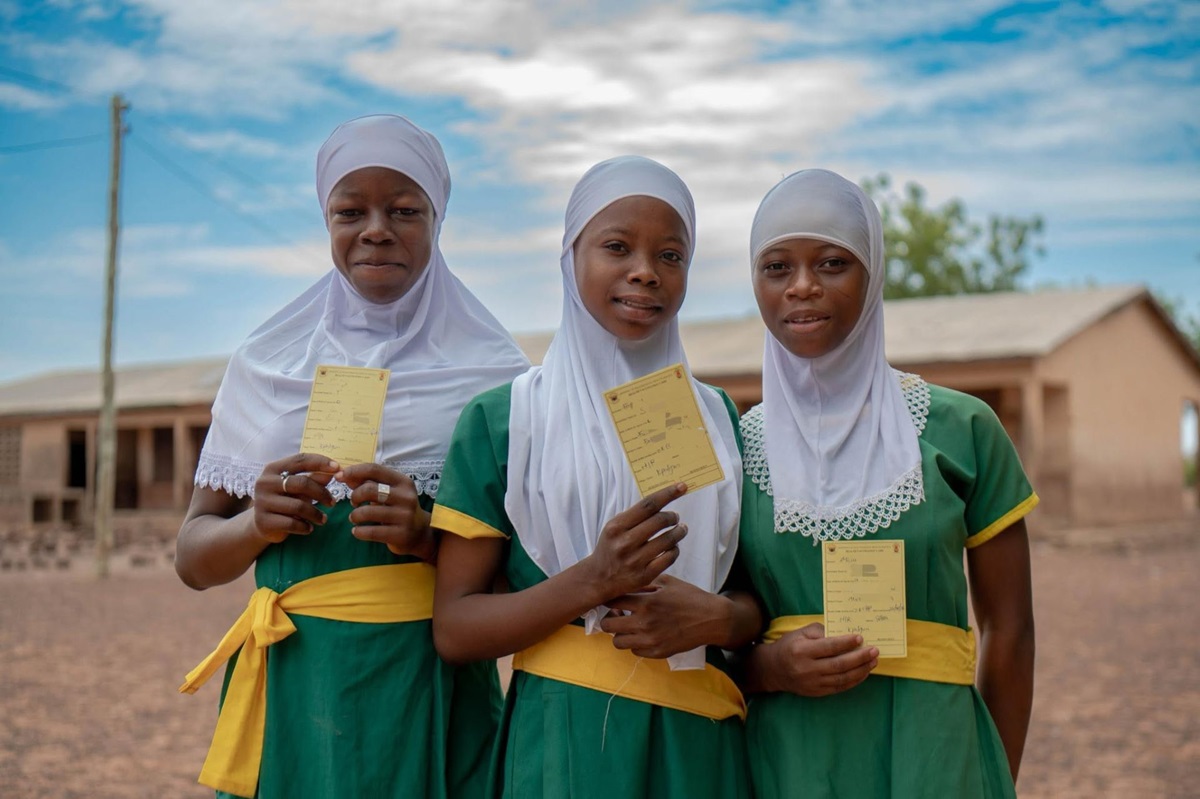
Global childhood immunization coverage inches forward despite conflict and hesitancy
25 seconds ago
 AI News
Human rights campaigner finds solace in Jersey
1 minute ago
 AI News
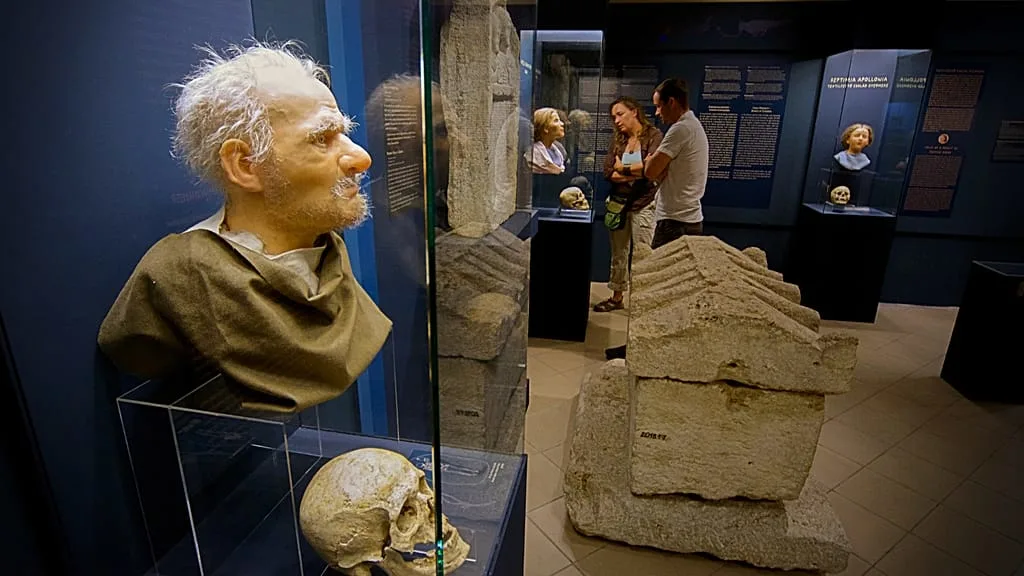
Most realistic ancient roman faces revealed at Budapest exhibition
1 minute ago
 AI News
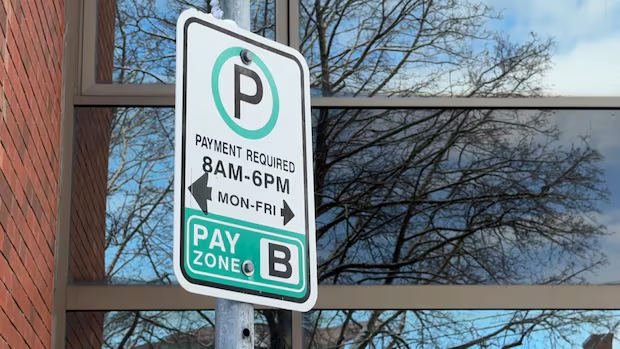
It now costs more to park on streets in Halifax | CBC News
1 minute ago
 AI News
CPKC crews remain on scene after Monday train derailment
2 minutes ago
 AI News
After more than 100 days as NDP leader, has Avi Lewis moved the needle?
2 minutes ago
 AI News
The incubator launching Scotland’s next generation of tech: ‘We need to pull the bigger players into the Scottish market’
9 minutes ago