
Trump withdraws Hormuz tolls threat but says US will continue to blockade Iran
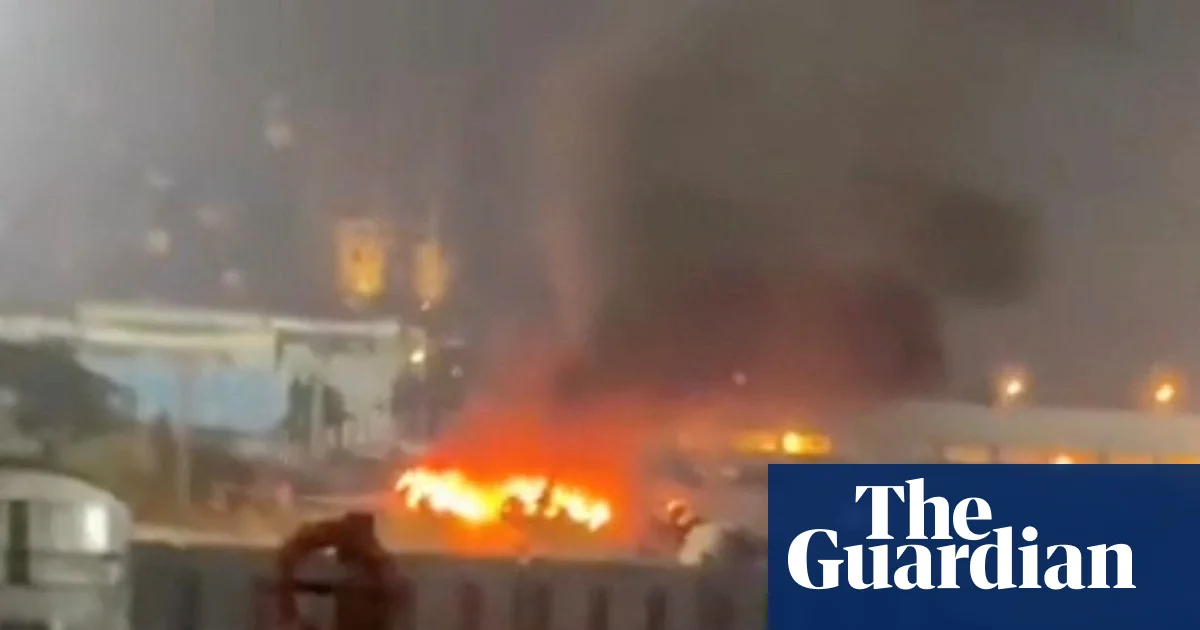
Donald Trump has backed down from a threat that ships would have to pay a 20% fee to the US for “security” in the strait of Hormuz, replacing it with what he described as investment and trade deals with Gulf Arab states as US and Iranian airstrikes resumed for a third day.
The US president said he had decided to scrap the toll “based on highly productive conversations with Middle East leadership”, and touted “massive” investments, just five hours before the toll was due to come into effect. He said the US would continue to blockade Iranian ports.
He said in remarks as he met the Iraqi prime minister, Ali al-Zaidi, in the White House that he did not believe anybody should charge a fee “but at the same time, it’s not fair that we’re protecting this strait for the entire world”.
The abrupt U-turn came after three days of US strikes and Iranian retaliation on US allies in the Middle East, in the fiercest exchanges in weeks which threatened to pull the region back into all-out war. It further dimmed prospects for negotiations meant to lead to a permanent truce.
The Israeli prime minster, Benjamin Netanyahu, also warned Iran against striking it, threatening a powerful counterstrike. “I will say it to the leaders of Iran: do not count on things remaining quiet if you attack us,” Netanyahu said at a conference in Dimona, southern Israel. “The days are over when someone strikes us and we don’t hit back with a decisive blow.”
The US military launched strikes on Iran starting early on Tuesday morning and continuing until midday. The US military said its five-hour operation early on Tuesday hit targets across Iran, including in the port cities of Bushehr and Bandar Abbas. It shared videos of strikes that it said were meant to “degrade Iran’s ability to attack commercial shipping”.
More explosions were heard around noon on Tuesday west of Bandar Abbas, as well as in Bushehr and Choghadak, according to Iranian state TV. Blasts were also heard later on Tuesday on the Iranian island of Qeshm near the strait of Hormuz.
Iran targeted Bahrain, which houses the US Navy’s fifth fleet; Jordan, which hosts US air force assets; and two tankers associated with the United Arab Emirates in the strait of Hormuz. Kuwait’s army also reported intercepting “hostile” projectiles on Tuesday evening.
Bahrain said it had intercepted several of the attacks and accused Iran of targeting civilians after explosions were heard in its capital, Manama. Jordan said it intercepted four missiles from Iran.
The attacks are a significant block to efforts to reopen the strait. Iran in effect closed it during the four-month war with the US, and the US imposed a naval blockade of Iranian ships in response. A memorandum of understanding (MoU) between the two countries was supposed to reopen the strait but flares in violence and breakdowns in negotiations have hindered free navigation in the waterway.
The two countries are now almost halfway through the 60-day period set out by the MoU for negotiations to reach a final truce, making little progress on key matters such as the strait, Iran’s disputed nuclear programme and regional issues.
On Monday, Trump had said the US would control the strait and charge ships up to a 20% toll for safe passage, which would have been a reversal of the previous US position that no country was allowed to charge tolls through the international waterway under the rules of freedom of navigation.
Analysts have said that reopening the strait by force would require a military campaign involving tens of thousands of US troops.
US attacks on Iran have killed at least 28 people since last week, according to a tally by Agence France-Presse.
The Indian foreign ministry meanwhile said it was lodging a strong protest with Iran and summoned its deputy ambassador after one Indian seafarer was killed and 10 other Indians were seriously wounded by Iranian attacks on two tankers.
The European Union Aviation Safety Agency issued a warning for airlines on Tuesday, telling them to avoid flying over the airspace of Bahrain, Kuwait, Qatar, the UAE and above the Gulf of Oman. It said “unpredictable military developments” created a risk to civil flights.
Iran has insisted the US will have no role in the strait. Its foreign minister, Abbas Araghchi, said Tehran would be the guardian of the strait “for ever”. On Trump’s threat, Araghchi said on X: “20% is of course too much. We will be fair.”
The price of crude oil rose to a four-week high of more than $86 a barrel on Tuesday but prices are still below their peak during the war, when they hit nearly $120 a barrel.
Lebanese and Israeli delegations were due to meet in Rome on Tuesday to continue US-mediated negotiations. Lebanon is seeking an Israeli withdrawal from the more than 600 sq km of the country that it occupies, though hopes for a swift withdrawal were low.
Last month Lebanon and Israel announced they had reached a “framework agreement” under which Israeli troops would withdraw from “pilot areas” in south Lebanon. The Lebanese army would then enter those areas, with the promise that they would prevent Hezbollah from returning and continue to dismantle the armed group’s infrastructure there.
Israel’s foreign minister, Gideon Saar, told reporters in Tel Aviv on Tuesday that it was ready to move forward in implementing two pilot zones, and that the framework agreement was “the only way forward”.
The office of the Lebanese president, Joseph Aoun, said in a statement on Monday that he had tasked the Lebanese delegation to demand the immediate start of Israeli withdrawal from the two pilot zones before any other discussions were held.
A US military delegation was in Lebanon over the weekend to discuss the pilot zone plan in detail, according to Reuters.
The negotiations are between the Lebanese government and Israel. Hezbollah is not a party to the talks. Hezbollah has repeatedly called on the government to stop the talks, framing the direct negotiations as a surrender. It is unclear how agreements from the talks would be implemented on the ground without Hezbollah’s cooperation.
Related Stories
 World
World
The trail of clues that suggest our planet might be heating faster than we realised
21 minutes ago
 World
World
Trump says firefighters near ground zero carried him to safety ‘right after’ 9/11 attacks
21 minutes ago
 World
World
Ultimate preview: men's 400m hurdles
21 minutes ago
 World
World
Ultimate preview: women's 400m hurdles
1 hour ago
 World
World
Ultimate preview: men's javelin
1 hour ago
 World
World
Ben Shelton beats defending champ Carlos Alcaraz in U.S. Open match that ends after 3:30 a.m.
2 hours ago
 World
World
Singaporean prime minister, world’s highest
3 hours ago
 World
World
World Athletics launches new official app | News | Budapest 26 | World Athletics Ultimate Championships
3 hours ago