
US
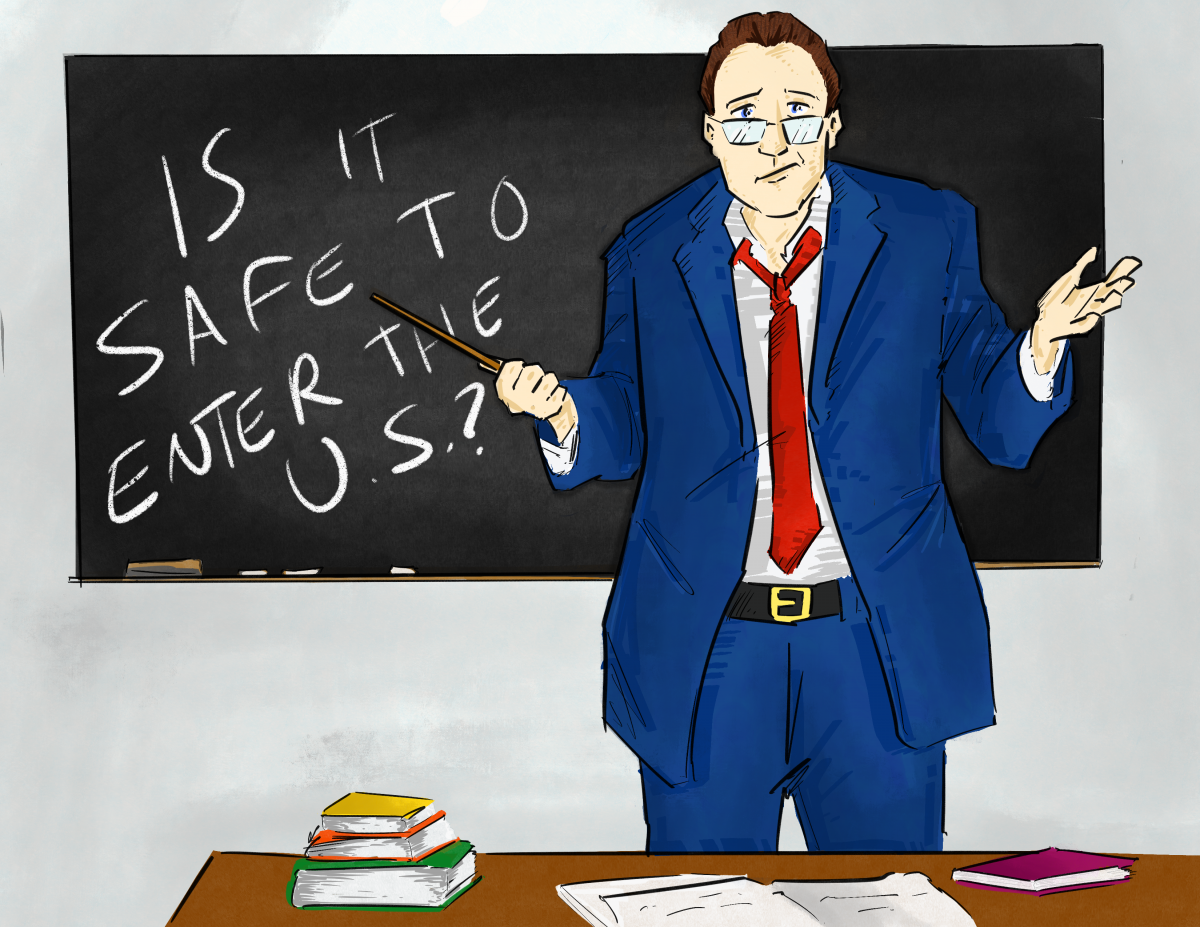
US-Canada tensions and their effects on Academia
Academic institutions adapt to recent political developments amid ongoing trade disputes
News Nathalie Bucur — Published October 6, 2026 4 minutes
Tensions between the United States and Canada have recently been on the rise. These include, but are not limited to, threats to Canadian sovereignty made by U.S. President Donald Trump and the destabilization of trade relations due to the tariff war.
Both countries also possess a deeply intertwined academic world that is adapting to the aftermath of these political realities. These disturbances in a once-long-standing, trusted relationship have rippled into academia, for professors and international students alike.
“I gather that some Canadian academics, like many Canadians, are avoiding the U.S. these days," Concordia University political science professor Graham Dodds said, whose specialty is American politics. "I think that Canadians who might, in normal times, go south to the U.S. for a conference, might be thinking twice about it."
Historically, Canada and the U.S. have had close trade relations, dating back more than 175 years, according to the Canadian Global Affairs Institute.
However, with Trump’s re-election in 2024, this relationship was once again put into question.
The then-President-elect infamously suggested making Canada the “51st state” of the U.S. in December 2024, during a meeting with former prime minister Justin Trudeau at Mar-a-Lago.
Trump has not stopped making allusions to Canada being the “51st state” since being sworn into office, bringing up Canada’s annexation as recently as June 2026.
Dodds noted that Trump has done a good job sowing confusion and anxiety regarding entering and exiting the U.S.
"People who are maybe not American citizens, and are rather on a student visa, are concerned they may not be let back in," Dodds said. "Whether that is a justifiable concern is beside the point, since I think that it’s a concern that people have, regardless of the basis for it."
Trump also targeted North American trade relations in his first term, dismantling the North American Free Trade Agreement (NAFTA) between the U.S., Canada and Mexico in June 2020. Shortly after, the Canada-United States-Mexico Agreement (CUSMA) replaced it, but in 2026, its renewal became subject to an annual review.
In Trump’s second term, however, economic relationships between the U.S. and its North American neighbours have soured beyond trade agreements. Notably, he dubbed April 2, 2025—the day he instituted numerous tariffs against trade partners such as Canada, the European Union and China—as “Liberation Day.”
In the academic sphere, this turmoil translates to fewer opportunities and less collaboration between the two countries, according to Dodds.
“Just like how many Canadians are saying they won’t go to Disney World or Florida, I think similarly, that affects some professional decisions by academics,” Dodds said.
According to Dodds, Trump has affected academics' travel to conferences, not just through recent trade issues, but also through broader immigration policy. For example, the American Political Science Association held a conference in Vancouver a little over a year ago, and relatively few people attended.
Vermont-born Concordia student Isabella Lenart, who has previously lived and studied in Quebec, believes that international students are already having a hard time and that these tensions have made it harder for them.
“As an international student, what concerns me most is that tensions are arising between Canada and the United States in general,” Lenart said.
According to Lenart, her studies have not been directly impacted by the political turmoil between the two countries, but she perceives a cultural shift in attitudes against Americans.
“It’s really embarrassing to say you’re American, but we’re not being punished,” Lenart said. “It’s crazy to be seeing this happen right before our eyes, falling apart more and more, and it’s pretty worrying.”
This anxiety has carried over to Canadian students as well, as many would be interested in opportunities and programs offered beyond the border.
University of Ottawa criminology student Jasmine Cordea is Canadian, and travelled to New Orleans, Louisiana last year to do field research on the criminal justice system for one of her courses with other University of Ottawa students.
“Before my departure to Louisiana, our professor had warned us that she would have cancelled the course had she known that Trump would have gotten elected for a second time,” Cordea said.
While her stay in New Orleans was positive, Cordea says she was cautioned against starting political debates or discussions to avoid any conflicts or further escalation.
Despite occasional negative interactions, she notes that she met many Louisianans interested in learning more about Canada.
“Most Louisianians were interested in learning about our own governments, both federal and provincial, rather than discussing the situation,” Cordea said.
For her, these tensions should not discourage Canadian students seeking new experiences abroad.
“I wouldn’t say I have been discouraged from visiting the U.S.," Cordea said. "I would say you make your own experience, depending on how you interact with people and the environment you find yourself in."
This article originally appeared in Volume 47, Issue 3, published October 6, 2026.
Related Stories
 Canada
Emera to acquire Canadian Utilities in $14.3B all
56 minutes ago
 Canada
Canada’s trade surplus widens to more than 4-year high in August, as front-loading ramps up
56 minutes ago
 Canada
Oakville pilot among 4 Canadian crew members on missing air ambulance flight
56 minutes ago
 Canada
4 Canadians on lost medical air transport jet out of Hamilton identified by U.S. Coast Guard
56 minutes ago
 Canada
Former head of German foreign intelligence suspected of 'treasonous espionage'
1 hour ago
 Canada
‘Spit on our sacrifice’: Canadian veterans fume after Trump and allies take jibes at military
1 hour ago
 Canada
Emera to acquire Canadian Utilities in $14.3B all
2 hours ago
 Canada
Giant underwater Kelvin wave could 'pack a punch' for B.C. in mid
2 hours ago