
Welfare Ministry and Sheba to establish $25 million innovation arm
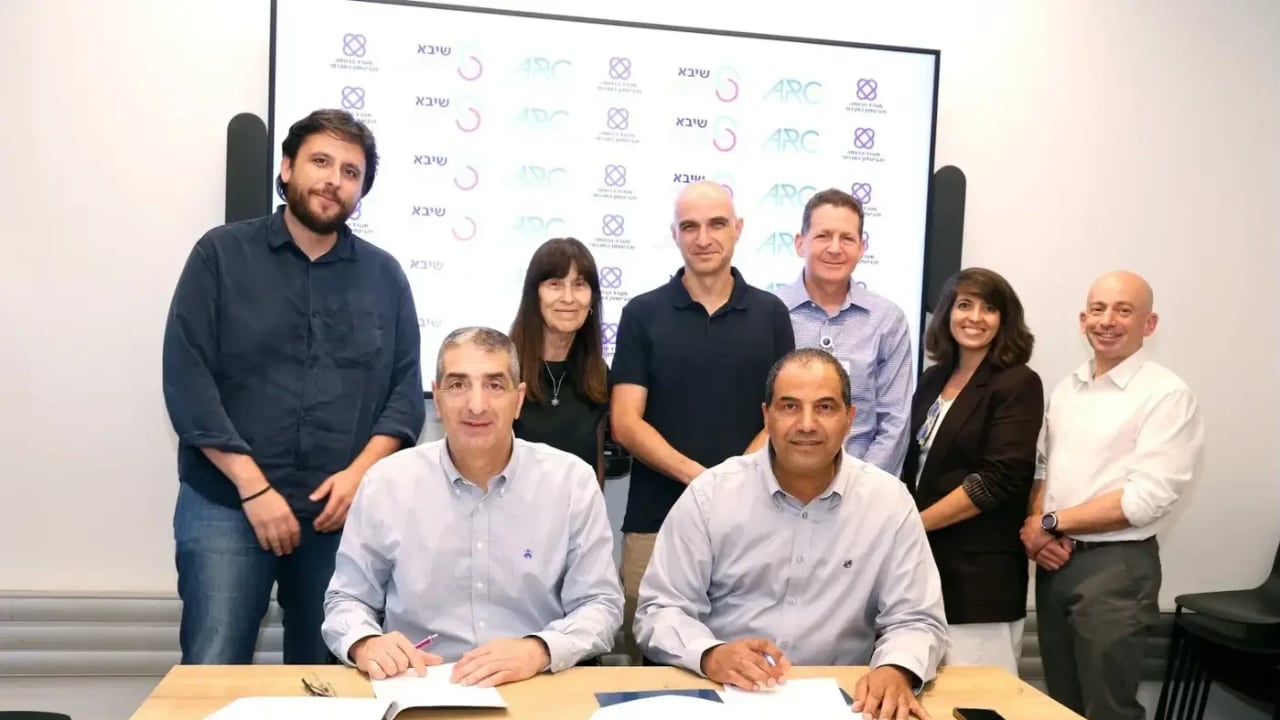
The Labor, Social Affairs and Social Services Ministry will invest NIS 25 million to establish a new innovation arm operating under the ARC model of Sheba Medical Center. The stated goal of the move is to integrate advanced technologies, artificial intelligence, and tech-based solutions across Israel's welfare services system.
The project, which will be called ARC Welfare, will be established in strategic cooperation with Sheba. The move comes against the backdrop of current manpower shortages, growing workloads, and complex social challenges facing the system, with the aim of turning the welfare sector into a professional and economic growth engine.
According to ministry data, the innovation arm will be based on the ARC model currently operating at Sheba, which aims to transform public organizations into innovation hubs by connecting field professionals, startups, academia, and the investment community. The ministry estimates that the initiative will affect the work of more than 120,000 welfare sector professionals, including social workers, allowing them to develop technological solutions for various needs arising from the field.
The deployment of the model will be based on three main tracks:
In addition, as part of the initiative, an infrastructure will be established to enable the future commercialization of developments and patents originating within the welfare system. This model is based on mechanisms currently existing in the medical field, aiming to reward professionals who develop innovative solutions and help reduce burnout in the profession.
Ministry Director-General Yinon Aharoni said: "As part of the ministry's roadmap, and out of a deep understanding that growth in the welfare field will come through innovation and field-driven initiatives, we led a strategic move for cooperation with Sheba's ARC under the title ARC Welfare. This is a significant and historic breakthrough that will empower both social workers and all other professions in the welfare field to reshape the future of care. I would like to heartfeltly thank Sheba Director-General Prof. Yitshak Kreiss, Avner Halperin, CEO of Sheba Impact and head of ARC, and Adanim CEO Rani Dudai for true partnership and a groundbreaking vision."
Avner Halperin, CEO of Sheba Impact and head of ARC Sheba, said: "Sheba has proven to the entire world that field care personnel are the most effective drivers of innovation, and in this way built the world's leading ecosystem for medical innovation. The ARC innovation arm at Sheba has already created thousands of jobs and billions of dollars in economic value. As the entity leading processes for the distribution and implementation of AI and innovation, we view health through a broad 360-degree perspective, where health, welfare, education, society, economy, and environment are interwoven. We are turning Israel into a global model for imitation in innovative AI-based welfare and other tools, and we will also generate thousands of jobs in innovation from this sector. This collaboration is the opportunity to prove that the innovation model developed at Sheba is relevant far beyond the world of medicine. The best solutions to problems in the welfare field are already today in the hands of social workers and professionals who are in the field facing the populations. Our role is to give them the tools and infrastructure to turn this knowledge into practical innovation, thus creating better care for target populations and an engine for economic growth."
Rani Dudai, CEO of the Adanim Institute, concluded: "The launch of ARC Welfare is not the launch of another innovation center or accelerator program, but rather the laying of infrastructure for a new, permanent capability within the welfare system. Innovation in welfare must start with the problem, not the technology, and rely on the knowledge of the workers who encounter reality every day. The move will make it possible to distribute and even commercialize valuable knowledge and developments, improve welfare services, and create a mechanism that will reward employees for developments originating within the system, as is customary in other public systems."
Related Stories
 Technology
PM Modi meets CEOs of 20 space startups, ask them for wider applications of space tech to improve people
2 hours ago
 Technology
Studies show year-round shipping potential from Manitoba’s Port of Churchill
3 hours ago
 Technology
Does Nova Scotia need shark
3 hours ago
 Technology
PM assures support to space startups
4 hours ago
 Technology
'Startup Paradise': How Hawaii Is Trying to Set the Stage to Create a '30 or 50' New Tech Millionaires
5 hours ago
 Technology
Law on Enterprise Uzbekistan International Digital Technology Center signed. Details
5 hours ago
 Technology
What's Going On With Marvell Technology Stock Friday?
6 hours ago
 Technology
New Bedford City Council becomes unruly as Flock technology discussed
7 hours ago