
Artificial Intelligence Has Flooded arXiv with Junk
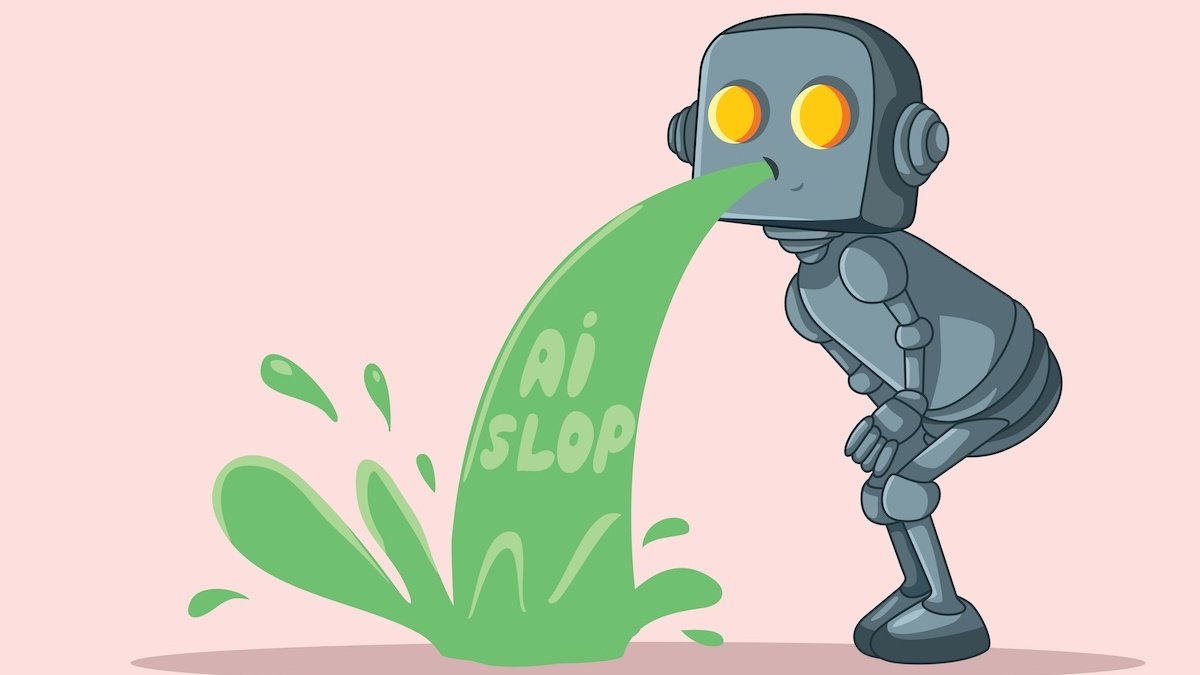
© ROOT-NATION.com - Use of content is permitted with a backlink.
The academic resource arXiv, where researchers publish preprints of scientific papers, has announced limits on the number of submissions because of a mass influx of AI-generated text. From now on, a researcher may submit only two papers per calendar month, with no more than three active submissions at a time. In its official blog, the repository said that AI has made it too easy to distribute spam, overloading its team of volunteer moderators.
Thomas Dietterich, professor emeritus at Oregon State University and chair of arXiv’s editorial advisory board, emphasized in his statement that the review and filtering of low-quality work relies on numerous volunteer editors. He expressed his deep gratitude to these people for their daily sacrifice of time and expertise. However, a relatively small group of authors is submitting a huge number of weak papers, consuming a disproportionate share of moderators’ working hours. As a result, legitimate researchers suffer, with their high-quality work forced to wait weeks for review.
According to arXiv’s official statistics, the repository received 9,869 submissions in September 2016, 20,569 in September 2024, and 40,363 in September 2026. Over the past two years, the total number of submissions has doubled, while the computer science category has grown sixfold.
AI is driving this surge in several ways. Researchers use large language models to process vast amounts of information, create program code, and design individual stages of experiments – and in some cases, to write the papers themselves. The platform’s management emphasizes that arXiv’s policy allows AI to be used as an assistive tool in research, provided that its use is disclosed and the work meets standards of academic interest and progress in a particular field. However, a significant share of current submissions fails to meet these requirements.
The platform is seeing a surge in superficial papers on narrow topics, as well as so-called “salami publications,” in which researchers artificially split a single study into numerous short papers. It has also recorded a sharp increase in dense texts written with the help of AI. Such technologies allow authors to flood arXiv and similar repositories with low-quality content.
Submission limits already existed in the resource’s rules, but previously the decision was left to the discretion of each individual moderator. The updated rules are intended to distribute fairly the demanding and valuable work of volunteers who monitor compliance with established standards.
This step is the latest stage in the publication’s long-running fight against digital spam and AI-generated junk. Less than a year ago, the archive stopped accepting review articles and conceptual papers in computer science, citing an influx of rudimentary material created with language models. In January, the administration required new authors to obtain an endorsement from existing members of the system, whereas previously an academic email address was sufficient for registration. In May, the platform tightened its measures by announcing a one-year ban for researchers who submit AI-generated junk.
Read also: Has the Ethical Line Been Crossed? Scientists Grow a Hybrid Human-Mouse Brain for the First Time
Related Stories
 AI News
These young founders just raised $5.2 million from Gradient to teach AI agents how companies work
51 minutes ago
 AI News
AI data centers could get liquid cooling using energy
51 minutes ago
 AI News
From invisible to recomended: How tech startups can win AI search
1 hour ago
 AI News
Incat Crowther Joins HII on U.S. Navy ROMULUS USVs
1 hour ago
 AI News
Building the Finance Data Foundation for the AI Era
1 hour ago
 AI News
Paul Deegan: Real journalists matter in an AI world
2 hours ago
 AI News
California Enacts Laws Regulating Artificial Intelligence in Employment, Healthcare and Biosecurity
2 hours ago
 AI News
Artificial intelligence: the big bad
2 hours ago