
Claude Code Gets Major Update: AI Sessions Can Now Communicate Autonomously, Marking a Key Step in Multi
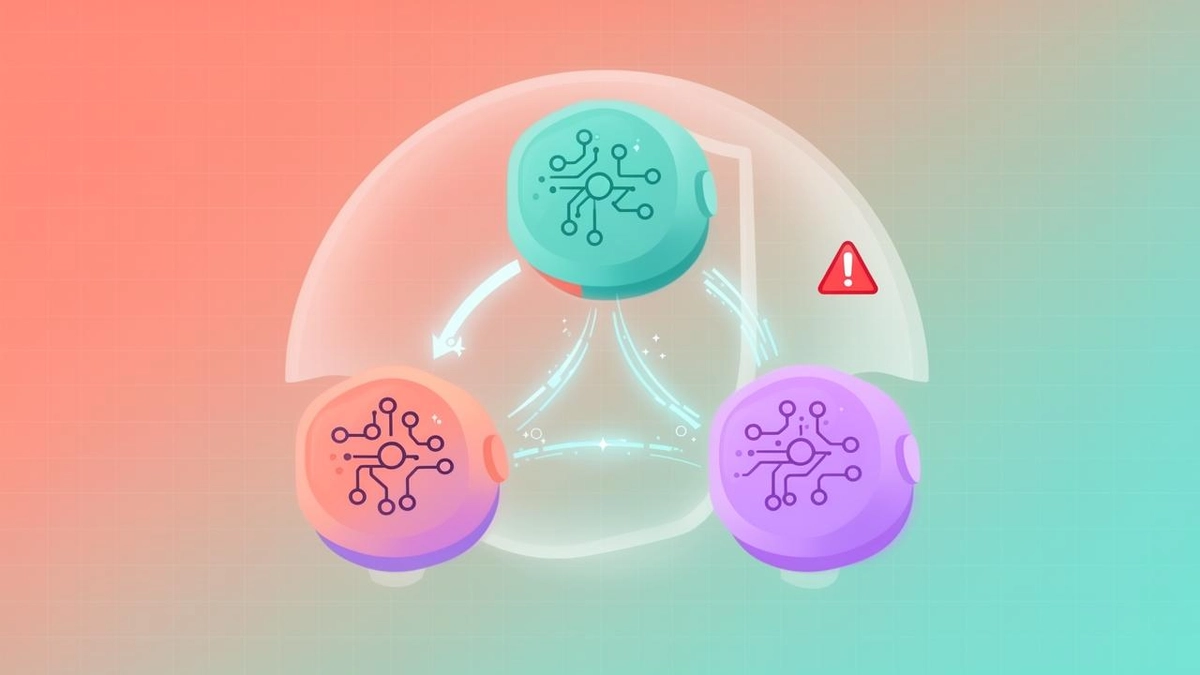
Alongside the launch of cross-session communication, Anthropic also announced another important security update.
According to IT Home, Anthropic issued a notice stating that starting August 14, for Pro, Max, and Team subscribers, Claude Code's default permission mode will be adjusted from traditional manual approval to Auto Mode.
The core of Auto Mode is an independent AI classifier that evaluates every tool call and Shell command in real time: allowing safe operations while automatically blocking destructive, irreversible, or unauthorized actions.
Anthropic released a set of comparative test data highlighting Auto Mode's effectiveness. In tests conducted with 1,053 paying beta testers, the traditional manual approval mode identified only 13.6% of dangerous commands, while Auto Mode was able to identify 89% of dangerous commands.
In defense tests against prompt injection attacks, the results were even more striking. Security assessment firm Trajectory Labs used 72 scenarios, running 10 tests per scenario for a total of 720 attack attempts, covering Claude Code v2.1.205 and Codex v0.144.5. The test results showed: Claude Fable 5, Opus 5, and Sonnet 5 all blocked attacks completely in Auto Mode, achieving a 0% attack success rate. GPT-5.6 Sol had a 5.83% success rate under Codex's Auto-review mode and a rate as high as 19.03% under Full Access mode.
Anthropic also noted that the bypassPermissions mode without additional safeguards had an average attack success rate of 0.09%, but the new Auto-review version OpenAI released last week could change this result.
In terms of coverage, Claude Enterprise, Claude API, Claude Platform on AWS, Amazon Bedrock, Google Cloud's Agent Platform, and Microsoft Foundry currently remain in an opt-in state. Anthropic plans to roll out adjustments across these platforms within the next month, setting Auto Mode as the default option and removing associated overhead.
Viewed together, these two updates show Anthropic building a more complete collaboration framework for AI coding tools. Cross-session messaging breaks the current limitation of AI Code Agents working in isolation, advancing Claude Code into a new paradigm of multi-agent coordination. It not only eliminates the friction of context transfer but also saves token consumption in long-task scenarios, enhancing collaboration efficiency between AI agents.
Auto Mode, meanwhile, provides a safety guarantee for this multi-agent collaboration. When multiple AI sessions can autonomously communicate and send instructions to each other, an automated security layer capable of identifying and intercepting dangerous operations in real time becomes indispensable.
This series of moves by Anthropic also reflects how competition in the AI coding tool arena is shifting from pure code generation capability toward more complex engineering collaboration capabilities and security governance capabilities. When developers can manage multiple AI agents like managing a real development team—assigning tasks, aligning progress, and issuing mutual warnings—the role of AI in software development is evolving from tool to collaborator.
As Anthropic stated in its official documentation: "When one of your sessions gets information that another session needs, Claude passes it along automatically—no copying and pasting between terminals required." This perhaps signals that the efficiency of AI development teams is about to experience a qualitative leap.
Related Stories
 AI News
Trump says datacenter opponents ‘want to end up being backwards and poor’
33 minutes ago
 AI News
NVIDIA GPU price rise pushes up AI infrastructure costs
36 minutes ago
 AI News
Sony, Warner Music sue Anthropic, saying it pirated songs to train its AI
36 minutes ago
 AI News
Intuit and Perplexity Team on AI Integrations
36 minutes ago
 AI News
Can AI Map Wall Street’s Genome?
36 minutes ago
 AI News
Clients prefer AI to human advisers when the details are embarrassing
37 minutes ago
 AI News
A short postscript to my AI company adventure
1 hour ago
 AI News
Hurricane model developed by Google boosted with artificial intelligence showing promise
1 hour ago