
Corgi has become insurance's wildest startup. Internal messages reveal the drama behind the scenes.
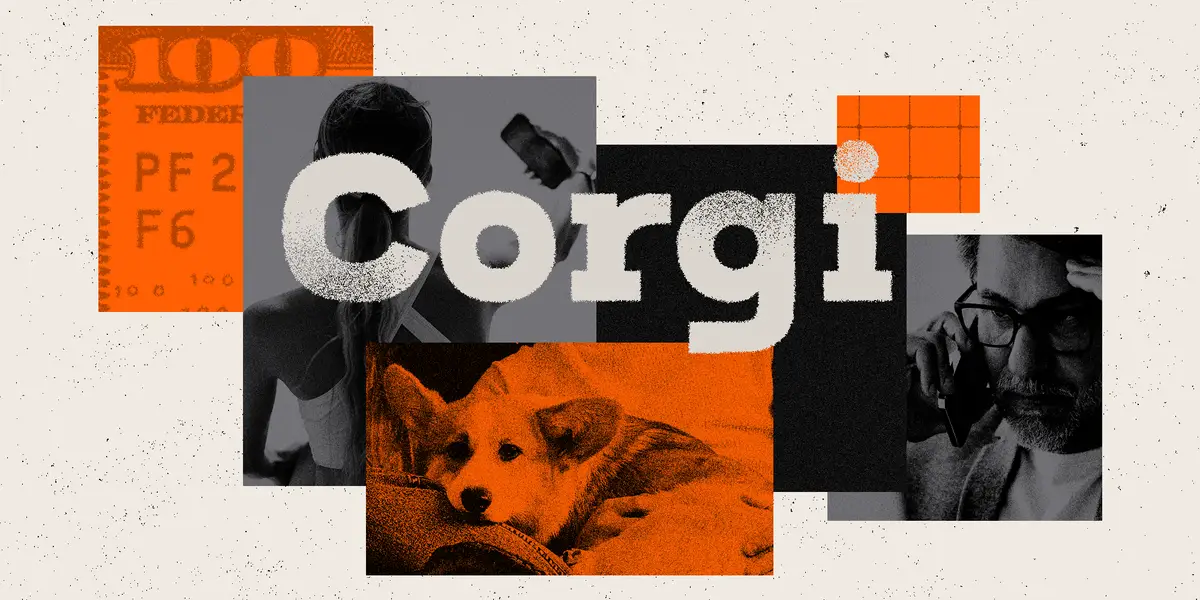
"If you can't raise a dog, you cannot run an office."
That was the message Nico Laqua, cofounder and CEO of buzzy insurance startup Corgi, sent to staff in the New York office about one of the company's short-legged mascots. A vet had told the employees that the puppy, Hamilton, should not be outside because he wasn't fully vaccinated, so they were using pee pads in the office.
After Laqua, based in San Francisco, heard that workers were not walking Hamilton, he laid down the law in a July 19 missive.
"Buying pee pads of any sort for Hamilton is a fireable office [sic], on the spot," he wrote in the message. Those who refused to take the corgi to the street should book a one-on-one. "The best case scenario for this meeting will be a PIP," he said, using shorthand for the disciplinary process known as a performance improvement plan.
It's hard to imagine this kind of C-suite drama playing out at Liberty Mutual, Berkshire Hathaway, or other giants of the buttoned-up commercial underwriting industry. But Corgi is decidedly not your granddaddy's insurance company.
The CEO is loudly online, bragging his way across X while communicating with his staff on the messaging app Telegram. A squad of young women dubbed "Corgi girls" relentlessly promotes the company and their own hot takes on social media. It recently embarked on a massive expansion of a curious side hustle: a chain of 24-hour Corgi cafes.
The startup is constantly announcing new products and ventures; it has an exchange-traded funds arm, a plaintiff's legal firm, and file-sharing software, but the core product is insurance. Corgi markets its startup business insurance in the forefront, and offers the usual options, too: insurance for your apartment, your truck, your bar.
"We want to be a one-stop shop," Jeremy Eisemann, senior vice president, told Business Insider.
The frenetic pace carries over to its financials. It's raised over $431 million; in May, it announced a $106 million round three weeks after a $160 million unicorn round. The company is now valued at $5 billion, according to a person familiar with the matter.
Haden Kirkpatrick, a longtime insurance tech advisor and investor who is not involved in Corgi's business, said he'd never seen an insurance company raise money like it. "The companies that hold risk in this space — that actually have a premium on paper that they have to reserve against — don't come anywhere near that," he said.
The raises impressed Kirkpatrick, who said he understands why investors were excited. Corgi had that Silicon Valley ethos. "If you're a technology company, you're at warp speed," he said. "If you're an insurer, you're crawling."
Business Insider spoke with current and former employees, analysts, investors, and prospective customers about Corgi's trajectory, and reviewed dozens of documents. One thing was clear: Corgi is speedrunning in a sleepy sector. Some say it's disrupting a business that needs a shake-up. Others caution it's been tried before: Lemonade, Hippo, and Root vowed in the 2010s to upend the status quo, then fizzled.
"It's not so much that they failed and went away," said Nathan Golia, a senior analyst at Celent. "It's that the idea that insurance was ripe to be picked off by a tech company turned out to not really be correct."
Neither of Corgi's cofounders had insurance experience. They knew how to make Roblox games.
Laqua, now 26, met Emily Yuan during her sophomore year at Stanford, before she dropped out. They created the social app Picnic and scaled it into the gaming studio Basket Entertainment, earning glossy magazine stories and a spot on the Forbes "30 Under 30" list. After they got into the startup accelerator Y Combinator, Laqua and Yuan obtained insurance licenses and launched Corgi in 2024.
Take a smarter break in your day - and see how far you get.
Add BI in Google so our reporting is easier to find when you’re searching for what matters.
The new company quickly spent $30 million on YRIG, an Alabama-based tenant liability insurance company, according to people familiar with the matter. "How do you buy a $30M insurance carrier with just $500K from YC?" Jared Friedman, a YC partner, said in an investor's blog post. "It seems impossible. And yet, Nico and Emily pulled it off."
YRIG isn't a traditional insurance agency but a risk retention group. Corgi also operates through the Arizona-based risk retention group TRRG. That means if Corgi were to fail, policyholders under YRIG and TRRG wouldn't be guaranteed payouts by the state. Corgi said that the company operates through many insurers, including admitted or fully licensed carriers, and that RRGs are "industry standard for certain types of risks."
YRIG is also unrated, and Corgi said it does not plan to seek a rating for it. Corgi's Eisemann said the unrated status didn't diminish customer trust and that Corgi has more than enough funds to meet operational requirements. "We will be there when a covered claim is filed," he said. "The money is on the balance sheet. We have it sitting in the bank."
Corgi grew its ranks quickly, opening eight offices, including San Francisco, Atlanta, Salt Lake City, Chicago, Dallas, New York, and London. It now has about 400 employees.
Former employees of Corgi, which has a seven-day workweek, describe a hyper-competitive culture. Throughout the day, Laqua uses Telegram to rank workers and offices against each other on who has performed the most insurance demos, messages seen by Business Insider show. Laqua told Business Insider that it has a "bot that tracks revenue activity, like most companies do."
The sales team's approach isn't always appreciated, based on social media posts by prospective customers complaining about an onslaught of calls, texts, and even FaceTime outreach.
Ari Ramdial, the San Francisco-based founder of the stablecoin wallet Guap, thought Corgi's coverage might be a fit for his startup. Seconds after entering his information on the company's site in May, his phone began blowing up with calls and texts from employees — a startling deluge even for a sales-based industry.
"At one point, I was getting two calls from two different Corgi numbers simultaneously," he told Business Insider.
He responded to one email, saying it was "incredibly annoying," and requested that they "please stop calling me repeatedly." A Corgi rep responded by apologizing and offering an "apology gift," which he did not accept. Asked about Ramdial's complaint, Corgi told Business Insider that "customers appreciate responsiveness," and that those who ask not to be contacted are put on a no-call list.
i signed up for Corgi out of curiosity after seeing their fundraise announcement.tell me why i got bombarded with 6 calls and 5 text messages all from different people within a 1 minute time span. yikes https://t.co/cqONSnvpzn pic.twitter.com/lXgjNqtVW7
Corgi's sales pitches to potential clients have also been the subject of litigation. AppFolio, a leading property management system, sued Corgi's property insurance subsidiary, Beagle, in December, alleging that it deceptively told customers it was associated with AppFolio, then took over customers' accounts and switched their insurance. Beagle is "named for a pet, but its business runs like a parasite," AppFolio wrote in the suit.
Beagle denied many of AppFolio's claims and countersued, alleging that AppFolio engaged in a "systematic campaign to destroy Beagle's business," which AppFolio denied. The lawsuit is ongoing.
In February, a Beagle account executive posted in the company's Telegram chat that another employee told a prospective customer that they "directly integrate" with AppFolio. "We do not," the account executive wrote in a message viewed by Business Insider. "We are literally getting sued bc of this."
A business development representative chimed in to ask whether they could say they "work with" AppFolio. "That's what I say," he said. Beagle CEO Anthony D'Angelo responded that it's a "Soft integration."
Beagle said in a statement to Business Insider that it is not an AppFolio partner and that "soft integration" referred to scheduled reports that Beagle clients set up in their AppFolio accounts.
Since its founding, Corgi has filed at least five other lawsuits, including one involving a former executive who accused the company of age discrimination.
The legal dispute began when the company fired Grant Bigler, a vice president, last October. He responded with a demand letter to the company that called it "youth obsessed," according to court documents. Bigler didn't sue, but in a preemptive strike, Beagle went to court and asked for a declaratory judgment that his dismissal was not related to age. Beagle amended the suit, which is pending, to include an allegation of theft of trade secrets, which Bigler denies.
Current and former employees told Business Insider that the company, like many startups, runs young. Dominique Sutton, 30, said she felt like a "grandma" during her eight months working in operations at Corgi. While she loved her time there — she called it exhilarating — she said it was a culture shock adjusting to a company where "everyone there is between 18 and 21." Corgi said it did not have that data on the age of its workforce.
The employees were smart, Sutton said, but they acted like kids. She recounted them saying, "Let's get a dart board. Let's get a gong. Let's get the most asinine things a young teenage boy would need."
As Business Insider previously reported, a "little red book" purporting to contain Corgi's philosophy included the declaration that "boomers are slow and bad" and that "the best athletes, warriors, and chess grandmasters are 19-30 years old." Corgi said the book was created and given to them by an outside investor and that it does not endorse its full contents.
One upside of a younger employee base is social media savvy, and Corgi is highly online. The company posts leadership lessons on LinkedIn and newsletters on Substack. Internally, staffers are ranked on a leaderboard for social media engagement, with prizes promised for top performers, Telegram messages show. Corgi told Business Insider it didn't create the leaderboard and that it has no incentives for social media posting beyond one competition, where the winner got to "help up a new office."
The most eye-catching of the company's social media presence: the Corgi girls, as the twitterati call them. These employees post less about the nitty-gritty of insurance and more about their lives — everything from travel to matcha. There are cleavage-baring selfies and the occasional double entendre. "1 girl / 14 guys / 1 founder house," one posted with a revealing photo. "wonder where I've seen that film before."
The San Francisco slang dictionary, SF-isms, defines Corgi girls as "the attractive, extremely-online women Corgi (the YC S24 AI insurance unicorn) hires for marketing, growth, and events. Their hiring announcements flooded tech X and started a debate about hot people as B2B marketing strategy." SF-isms author Mehul Agarwal told Business Insider the insurance firm's quest for virality seems like a smart business move. When he moved offices, the real estate agent told him, "Get Corgi."
"He used Corgi instead of saying, 'Get insurance,'" Agarwal said. "That is a clear indication that something here is working."
As the company's head of community, Brooke LeBlanc leads the march of the Corgi girls. She set off the most recent company kerfuffle by posting to X her list of non-negotiables in a man, which included "provider/protector mentality" and being "post-economic."
The September 17 post went viral, and the New York Post called it "cringeworthy." Corgi staffers rushed to LeBlanc's defense, and Laqua rang the "cancel culture" alarm. When one X wag opined that Corgi girls had "Hooterized themselves," an employee called the commenter a "fake looking bitch" who "has her tits out" and later, in a defense of free speech, wrote that she would not "attempt to police" anyone who used the N-word. (Corgi said it does not "endorse or support any use of profanity, slurs, or unprofessional conduct.") In the midst of the furor, LeBlanc did the unthinkable for a Corgi girl: She deactivated her X account.
Sutton doesn't get all the fuss about Corgi girls. "I love how it ruffles everyone's feathers who are not used to being comfortable around women," she said. Eisemann said he was too busy to follow the drama but believes in "freedom of speech." Others are turned off — Guap's Ramdial said that he wants an insurance provider to be "good and boring."
Boring is not in the CEO's lexicon. In one tweet, Laqua is telling convicted fraudster Martin Shkreli that he and his friends wrote him letters in prison when they were teens; Laqua later said he did not write any letters and deleted the post. In another post, Laqua is trashing well-liked investor Sheel Mohnot over a mild observation on X. In one May post, he touts Corgi's then-$1.3 billion valuation. The next day, he's alerting his followers that there's a 50% off sale at the Corgi Cafe.
The cafes started with a single location in San Francisco, then spread throughout the city. This summer brought the announcement that it planned to open 100 around the world within a year. The all-night coffee shops have sparked memes and drawn one small protest. One recently made headlines after being shuttered for operating without a permit, and the executive behind the expansion has reportedly left the company.
Caribou Honig, a longtime insurance tech investor who has no money in Corgi, said he was reminded of the Capital One Cafes. Corgi is trying to turn insurance into a "high-engagement experience," he said — but wondered if that's what its core business customers want.
I visited New York's Corgi Cafe five days after it opened in August. Barista Mirta Atemis, who said she was making a healthy $23 an hour, told me customers were mostly Corgi employees who work upstairs and the occasional curious local. "I think people don't know whether we're open or not," she said.
The back of the shop was a coding zone. There are phone booths for calls, and small circular tables for locked-in work sessions. Anish Basu, the 43-year-old founder of Worthy, said he heard about the cafe on X and came by, excited by the idea of meeting other founders while working.
There was only one other customer that day — a grad student, not a founder. "Give it a couple months," Basu said. When I returned last week, there were at least a dozen people working in the back room on a weekday afternoon.
One thing not seen on either visit: Corgi's famous corgis. The company is named after Laqua and Yuan's first office pet, Trudy, and it now has other corgis in various offices.
There's a long history of friendly insurance animals: the Geico gecko, the LiMu Emu. Tom Amico, who created the Aflac duck with Eric David, because the company name sounded like "quack," is puzzled by Corgi's choice of mascot.
"Don't ask me what corgis, or Queen Elizabeth's dogs, have to do with startup insurance," he said. "I guess it's cute."
Well, not always. Having a company pet is all fun and games — until it poops on the floor, as one former employee said Trudy often did. The company later set up a Telegram bot to ask employees to walk her.
Laqua may run a billion-dollar business with hundreds of employees, but the corgis can be top of mind. In early July — while Corgi revved up for Y Combinator events to recruit interns, according to one insider — Laqua told the New York office he wanted puppy Hamilton flown to San Francisco, a Telegram message shows. A few days later, Laqua had another demand about the 6-week-old: "No pee pads or he will be trained to pee inside on every carpet forever."
Staffers were worried about the pup going outside or on a plane. "Can we take hammy to the vet and maybe get his shots early or just check up if hes okay to fly?" one asked in the chat on July 10. Another staffer asked them to delete the message: "Nico gona tweak if he hearrs pee pad."
A week later, the tension was higher. "I just heard Nico say that there will be no NY office if Hamilton isn't out here by Wednesday morning," one employee wrote on Telegram on July 19. Another reported Laqua said that he's "shutting down nyc" if the dog didn't make the trip.
After Laqua insisted on outdoor potty breaks, a worker wrote that "the vet specifically told me he shouldn't be going outside until his last round of shots." Another staffer suggested: "Make sure to tell the airport people that hes 4 months and has his shots" — although X posts and messages indicated he was about 8 weeks and not fully vaccinated.
Corgi told Business Insider that it "takes the care and wellbeing of its office dogs very seriously" and expects the employees around them to care for them. Separately, Laqua said that Hamilton was 8 to 9 weeks old at the time of the trip and that vaccines are not required on domestic flights, which aligns with major carriers' written policies.
Hamilton did make the trip, snoozing in his carrier on the flight. He survived San Francisco, though the visit wasn't without a hiccup.
"Found Hamilton chewing on a zyn during last call," one staffer wrote on Telegram. "Pls make sure floors are clear."
Additional reporting by Jack Newsham
Do you have a tip about Corgi? Contact reporter Henry Chandonnet via email at henrychandonnet@proton.me or on Signal at henrychand.30. Use a non-work email address and device; here's our guide to sharing information securely.
Related Stories
 Business
Large shark stuck in South Korean city canal draws 600,000 visitors
50 minutes ago
 Business
Peak XV ups Surge seed investment ceiling to $5M, unveils 18
1 hour ago
 Business
Founder Of The Week: Xile He
2 hours ago
 Business
Ex
4 hours ago
 Business
Customer data startup Paperbark signs Unilever brands to tackle ecommerce sales gaps
5 hours ago
 Business
As federal budget nears, Canada’s health ministers to meet to talk funding
6 hours ago
 Business
How many political parties are running in Quebec's election?
7 hours ago
 Business
Winnipeg perfumery ordered to close doors again
10 hours ago