
HP grows Saudi presence through AI, manufacturing and skills investment
Wasim Alnahlawi - stock.adobe.co
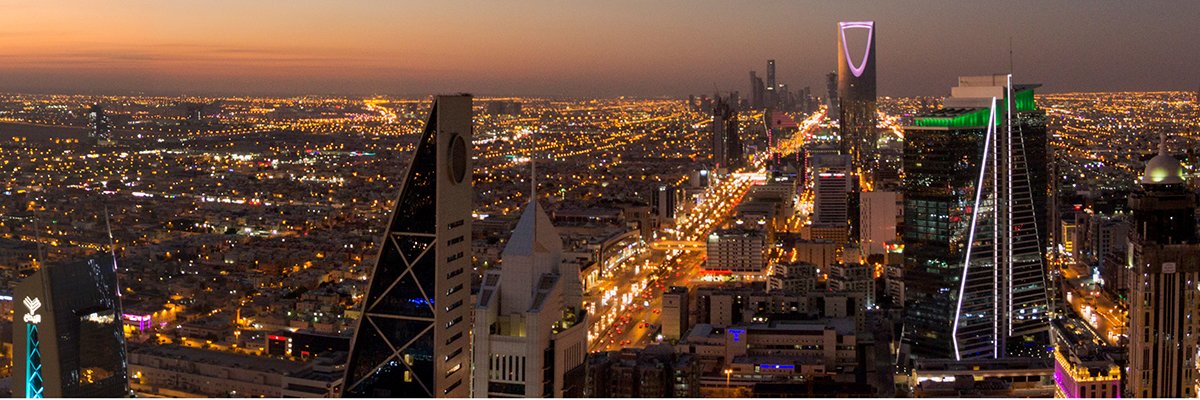
Saudi Arabia has become one of HP’s most strategic markets globally, with the company expanding its footprint across artificial intelligence, local manufacturing and skills development as part of its long-term commitment to the Kingdom’s Vision 2030 agenda.
According to Fadle Saad, managing director of HP’s MENA regional headquarters, the company’s investments are closely aligned with Saudi Arabia’s ambitions to build a diversified, knowledge-based economy capable of attracting global talent, technology investment and advanced manufacturing capabilities.
“Capacity building and capability building really summarises what Vision 2030 is about,” said Saad. “Saudi Arabia has a vision that is pragmatic, detailed and understood across society. That is something that strongly resonated with HP and influenced how we developed our strategy in the Kingdom.”
Over the past year, HP has reached several significant milestones. The company’s Riyadh manufacturing facility has moved into commercial production, with devices now being shipped to customers and partners across Saudi Arabia. At the same time, HP has expanded its education and workforce development initiatives and strengthened its AI research efforts through a dedicated research and development centre in the Kingdom.
A central pillar of HP’s Saudi strategy is the development of locally relevant AI solutions through its AI R&D Centre of Excellence. Rather than creating technologies in isolation, the centre works directly with customers and academic institutions to identify business challenges that can be addressed through AI. The model mirrors a successful HP R&D operation in Spain and is designed to combine customer insights, academic expertise and local talent.
“There are a lot of products that get born from a lab,” said Saad. “However, the whole idea of the HP research and development centre is to identify problems at the customer side and then work on solutions that could be relevant locally, regionally and internationally.”
One example is HP AgentOne, an agentic AI solution developed to address the inefficiencies associated with IT service management. The platform can automatically capture IT support requests from multiple channels, including email, voice interactions and direct employee requests, before routing or resolving issues autonomously.
The project emerged from customer workshops conducted with large organisations in Saudi Arabia, highlighting HP’s focus on practical business outcomes rather than AI experimentation alone. “We ask the billion-dollar question of whether AI can solve a specific problem,” said Saad. “Then we work with local academia and local talent to develop those solutions.”
The company is also investing in AI skills through the launch of the HP AI Academy, which aims to equip students, professionals and future workers with the capabilities needed in an increasingly AI-driven economy.
Alongside AI innovation, HP has made significant progress in local manufacturing. The company confirmed that its Saudi production facility is now commercially operational, marking a major step in its localisation strategy. Devices manufactured in Riyadh are already being delivered to customers and partners across the Kingdom.
Saad credited support from government entities, including the Ministry of Communications and Information Technology (MCIT) and the Ministry of Investment, for helping accelerate the project.
“We were able to have a factory that is actually commercially producing today,” he said. “We have units right now being shipped to our customers and partners from our Saudi factory.”
For HP, manufacturing is closely linked to its AI ambitions. The company sees increasing demand for AI-enabled devices as organisations adopt new applications and productivity tools. “Every knowledge worker needs a device,” said Saad. “The more AI applications and productivity discussions arise, the more organisations need devices that can support them.”
Saudi Arabia’s rapid uptake of AI is creating favourable conditions for HP’s broader technology strategy.
According to Saad, both government and enterprise demand for AI solutions continue to grow at pace. He pointed to recent industry data showing that AI adoption among workers in Saudi Arabia has doubled year-on-year, reflecting how quickly organisations are integrating AI into day-to-day operations.
However, HP believes technology’s value extends beyond productivity gains. The company has increasingly focused on the relationship between technology and employee experience, arguing that better digital tools can improve workplace engagement and organisational culture.
“Technology is actually a contributor to the culture inside the organisation,” said Saad. “The better the technology and tools employees use, the happier they are in their environment.”
This philosophy is influencing both HP’s device strategy and its software development efforts, with AI increasingly being used to understand employee satisfaction and improve workplace experiences.
Supporting the next generation of innovators
Looking beyond enterprise customers, HP is also targeting Saudi Arabia’s growing startup ecosystem, with the launch of Garage 2.0, an incubator programme inspired by the original HP Garage in Palo Alto. The initiative is designed to bring together startups, educators, industry stakeholders and HP experts to support innovation and entrepreneurship in the Kingdom.
Saad believes the expansion of Saudi Arabia’s private sector and startup ecosystem will be one of the most significant outcomes of Vision 2030 and an area where HP can play a meaningful role.
“We see a much larger private sector contribution to the economy,” he said. “That naturally creates opportunities for startups to emerge and grow.”
Through Garage 2.0, HP aims to help aspiring entrepreneurs transform ideas into viable businesses while strengthening the innovation ecosystem around them. “It is a very intentional initiative from HP,” said Saad. “We want to help people move from being wannabe entrepreneurs to becoming actual startups.”
As Saudi Arabia continues its economic transformation, HP expects its role in the Kingdom to expand further. The company sees ongoing infrastructure investments, growing AI adoption and a supportive regulatory environment creating new opportunities across technology development, manufacturing and innovation.
“We are growing with Vision 2030,” said Saad. “We are benefiting from the ecosystem that the government is establishing and facilitating, and we see significant opportunities to continue investing in Saudi Arabia’s future.”
For HP, the Kingdom is no longer simply a sales market. It is increasingly becoming a location where technologies are developed, products are manufactured, and future talent is nurtured, positioning Saudi Arabia as a key pillar of the company’s regional and global strategy.
Related Stories
 AI News
Anthropic IPO timetable shifts towards mid
39 minutes ago
 AI News
Why AI-first development matters
39 minutes ago
 AI News
Scientific literacy must keep pace with artificial intelligence
39 minutes ago
 AI News
Is AI eliminating the first rung of the employment ladder?
1 hour ago
 AI News
People
1 hour ago
 AI News
Tough choices ahead as the US pushes a global artificial
1 hour ago
 AI News
Milan-based Cato raises €6 million to help companies find and win public tenders with AI
2 hours ago
 AI News
Top Tech News Today: AMEC Chips, Claret Capital Funding, Graduate Hiring, Crypto Hack & AI Applications
2 hours ago