
Pakistan’s water politics in full flow
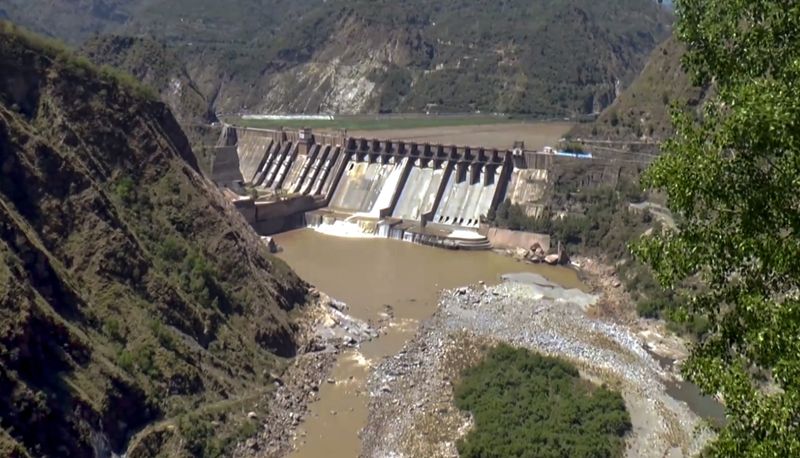
Pakistan’s water politics in full flow
Islamabad has turned the dispute over Indus Waters Treaty into narrative warfare
PAKISTAN has a habit of turning its disputes with India into theatre. What begins as a technical disagreement over design parameters is recast as a moral test. A procedural objection becomes evidence of Indian bad faith, and a narrow finding is made to carry the weight of national alarm. It is doing this again with the Indus Waters Treaty (IWT).
Islamabad appears before a Court of Arbitration, quotes international law and claims fidelity to the treaty. India stays away. For Pakistan, that settles it. The Court proceeds without India. Its award is binding, and New Delhi must obey.
That account leaves out Pakistan’s campaign outside the courtroom. Islamabad is turning an engineering dispute into a political script. Information Minister Attaullah Tarar described the effort as a significant success “in the narrative domain.” Pakistan is loading more rhetoric onto the award than it can bear. It says India is politicising water, then carries a pondage dispute internationally in the language of survival and war.
Pakistan’s script obscures India’s changing needs. Demand for electricity, irrigation and storage capacity has risen steadily, particularly in the northern states. That has strengthened calls in India to use the western rivers more fully within the rights the IWT already provides. Some Indian ministers have put that case more sharply, including talk of stopping flows. India should not answer Pakistan in kind. It should state its case plainly. Treaty cooperation cannot be insulated indefinitely from cross-border terrorism.
India’s objection predates both the latest award and the decision to hold the treaty in abeyance. It began in 2016, when India sought a Neutral Expert and Pakistan demanded a Court of Arbitration over the same two projects. The World Bank itself paused both processes because concurrent proceedings risked contradictory outcomes. When it made both appointments in 2022, it said its role was limited and that the IWT did not empower it to decide which process had priority. India declined to participate when proceedings began in 2023, maintaining that the Court had been improperly constituted.
The procedural collision remains. In January 2025, the Neutral Expert held that he was competent to decide all differences referred to him. The Court of Arbitration has separately held that it too is competent. Two treaty mechanisms are advancing over related ground.
After the Pahalgam terror attack, India’s position hardened. It now says that the IWT remains in abeyance. India argues that the machinery cannot function normally while Pakistan sustains cross-border terrorism and then demands business as usual on the rivers. On July 3, India’s Ministry of External Affairs said that Pakistan must credibly and irrevocably abjure support for cross-border terrorism before normal treaty cooperation can resume.
Pakistan has itself relied on consent to resist arbitral authority. In the Dallah case, Pakistan resisted enforcement on the ground that it had never agreed to commercial arbitration, and the UK Supreme Court upheld the objection. The Indus dispute is different because India is a party to a treaty containing arbitral procedures. The issue is not whether India consented to dispute settlement, but how far that consent extends and whether the IWT’s graded procedure was followed.
Pakistan’s presentation goes well beyond what the maximum pondage award actually decides. Pondage is not long-term storage. It is limited temporary storage that gives a run-of-the-river project some operating flexibility. The award requires realistic, well-founded and defensible projections of installed capacity and anticipated load, tied to actual operations, hydrological and hydraulic data, and power system needs. It also requires the pondage calculation to account for applicable minimum environmental flow obligations. It does not, by itself, make Ratle unlawful, require Kishenganga to be redesigned, or hand Pakistan a veto over run-of-the-river projects in Jammu and Kashmir.
Pakistan relies on the award as binding and without appeal. India maintains that this cannot cure what it regards as a prior jurisdictional defect. Islamabad has the award, but no order requiring an Indian project to be redesigned and no immediate means of compelling such a change.
Pakistan’s water stress is real, but its causes are not all external. On June 11, Dawn reported severe shortages in Sindh and Balochistan, while Punjab was drawing more than its allocated share. The dispute shows that a part of Pakistan’s problem lies in how it divides and uses its water.
Tarbela’s silt is not an Indian conspiracy. A dry canal in Sindh is not automatically proof of Indian coercion. Pakistan’s water insecurity also reflects ageing reservoirs, provincial disputes, water-intensive cropping patterns and falling groundwater, all aggravated by a more volatile climate.
The award is narrow. Pakistan’s campaign is not. Islamabad is combining the vocabulary of arbitration with humanitarian alarm to build pressure abroad. This year, it has written twice to the President of the UN Security Council, turning the Council into a stage for Indus politics. Pakistan calls this treaty defence. It is narrative warfare.
Pakistan is addressing foreign governments and its own public at once. That does not strengthen its legal case. India’s non-participation may carry costs, but absence is not agreement. The chair was empty because India contests the room itself.
Pakistan speaks of water as lifeline, red line and war. India must keep speaking of terrorism, trust and jurisdiction. The question is no longer who won the award. It is whether a treaty can still work when its procedures point in different directions and the trust needed to sustain cooperation has collapsed.
The author is Dean, Kautilya School of Public Policy
Related Stories
 AI News
Gusto and France’s World Cup dream over | News | Official Site
42 seconds ago
 AI News
Iranian flights to Yemen are violation of sovereignty, says Yemeni official
45 seconds ago
 AI News
Trump withdraws Hormuz tolls threat but says US will continue to blockade Iran
54 seconds ago
 AI News
Ford government preparing to update ticket resale law months after passing it
59 seconds ago
 AI News
Spain takes 1
1 minute ago
 AI News
‘We can’t have this happen again’: Highgate Road residents demand answers after Canada Day flooding
2 minutes ago
 AI News
Prices at Canadian pumps rising again as oil climbs to 4
2 minutes ago
 AI News
U.S. to impose more tariffs on fresh Canadian mushrooms
2 minutes ago