
The entrepreneurial advantage in a 100

If you're building a company, it's easy to feel that everything depends on getting this one right — that this is your one chance.
As one founder told me: “I keep wondering whether I’m building the right company or just using all my energy on my only chance.”
Startup culture has given us some extraordinary stories. Bill Gates, Steve Jobs and Mark Zuckerberg have become the archetype of entrepreneurial success: build young, build fast and change the world. That’s encouraged us to think of entrepreneurship as a race against time. That if you haven't built something remarkable by your thirties, you've somehow missed your moment.
Yet the evidence suggests otherwise. Research by Pierre Azoulay and colleagues, analysing millions of new ventures in the US, found that the founders of the fastest-growing companies are typically much older than popular culture would have us believe. In fact, entrepreneurs in their forties are significantly more likely to build high-growth businesses than founders in their twenties.
I've spent the past two decades studying how longer lives are changing the way we work and live. For me, the Azoulay research points to something much bigger than the age of successful founders.
As more of us can expect to work into our seventies and beyond, starting a business — large or small — becomes less of a once-in-a-lifetime gamble and more of an opportunity that more people can take over the course of a much longer working life.
In this longer life, multi-stages can emerge. Here is how it could look: start a business more than once; spend a decade inside a larger organisation before launching a venture; return to employment to build new capabilities; mentor younger founders or invest in the next generation of companies.
So rather than following a single linear career, over a longer period of time, you can assemble an evolving portfolio of experiences. Starting a business is no longer the one defining act of a career: it becomes one of several ways of creating value.
But entrepreneurship offers something even more valuable than another way of creating work. It has the potential to develop the very same capabilities that help people navigate a much longer working life.
Here is why. Navigating the traditional three-stage life of education, work and retirement, required surprisingly little personal design. Indeed, the two major transitions (from education to work; then work to retirement) were supported by institutions (for example, colleges, companies, government policy) rather than navigated by individuals.
The multi-stage life changes all of that. Now there are more choices, more transitions and more opportunities for reinvention. So it’s less about getting that first career decision right, and more about developing the judgement and adaptability to navigate many decisions over decades.
It turns out that that is not straightforward. I vividly remember one founder saying to me: "I know how to think about the next funding round. What I don't know is how to think about the rest of my life."
His comment has stayed with me because it captures a wider challenge. Building a business has taught him how to solve complex problems under pressure. Yet in a longer life, he also has to learn how to navigate repeated transitions — between roles, identities and stages of life.
But these are not separate challenges. My research on longer working lives suggests something surprising: the capabilities developed in building a company are the very capabilities needed to navigate a longer, less predictable career.
Every business founder develops these five capabilities: they experiment before committing; question assumptions rather than defending them; adapt when circumstances change; keep on learning; and exercise judgement under uncertainty.
Perhaps you’ve practised these capabilities every day, often without noticing. You launch before everything is perfect; customer feedback overturns your assumptions; markets force you to adapt; every setback becomes an opportunity to learn; every strategic decision is made with incomplete information.
These capabilities matter because a multi-stage life is full of moments when there is no obvious playbook. You may leave a startup to join a larger company; return to study in mid-career; step back to care for your family; launch a second venture or reinvent yourself as technology reshapes your industry.
Navigating these transitions requires exactly the capabilities founders practise every day — now pivoted to building a career.
In a long working life you will be called upon to experiment before committing to a major career change; you need to question old assumptions about what success means to you; you will have to be prepared to adapt as circumstances evolve; your learning will continue across decades; and you will be exercising judgement when there is no single right answer.
Perhaps that's the deeper lesson from entrepreneurship. The companies you build matter. But so do the habits of experimenting, questioning, adapting, learning and judging that you develop along the way. In an age of longer, multi-stage working lives, those may become the greatest asset your company ever gives you.
Lynda Gratton is to be academic co-director of the soon-to-be established SARI Foundation Institute for Work, Careers and Longevity at London Business School, alongside fellow academic co-director Professor Herminia Ibarra. Her latest book is ‘Living the 100-Year Life: How to Build a Career That Lasts And a Life You Love’ To learn more, take a look at the free reflective tool which will help you take stock of where you are now and where you might want to focus next. You can find it at www.livingthe100yearlife.com
Living the 100-Year Life, will be published by Bloomsbury in September 2026.
Related Stories
 Business
“From ‘The Old Man and the Sea’ to ‘Ocean and Entrepreneurship’”… Son Ju
6 hours ago
 Business
Unhinged Business Co. Receives Best Scaling Start Ups Advisory in Australia of 2026 Recognition for Commercial Strategy and Founder Focused Growth
8 hours ago
 Business
Uber invests $10M in Indian fleet operator Carrum at $168M valuation
18 hours ago
 Business
Startup Teragen Energy bets on fuel cells for data centers
19 hours ago
 Business
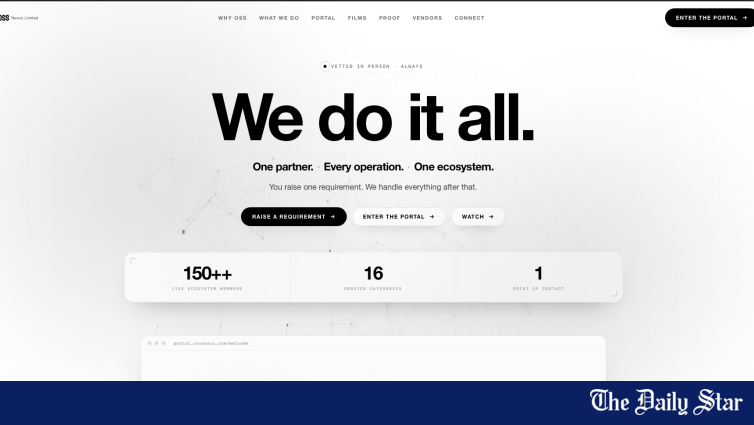
This startup is building a single platform to manage operations and suppliers
20 hours ago
 Business
The Legacy Question: What Happens When A Startup Founder Passes Away?
22 hours ago
 Business
Ukraine has been trying to bring the war to Russia. More Russians are beginning to feel it
23 hours ago
 Business
Mirzapur: The Movie Becomes Producer Farhan Akhtar's Biggest Hit Beating Don 2, Gully Boy
23 hours ago