
The politics of Yoga Day: Global consensus abroad, one
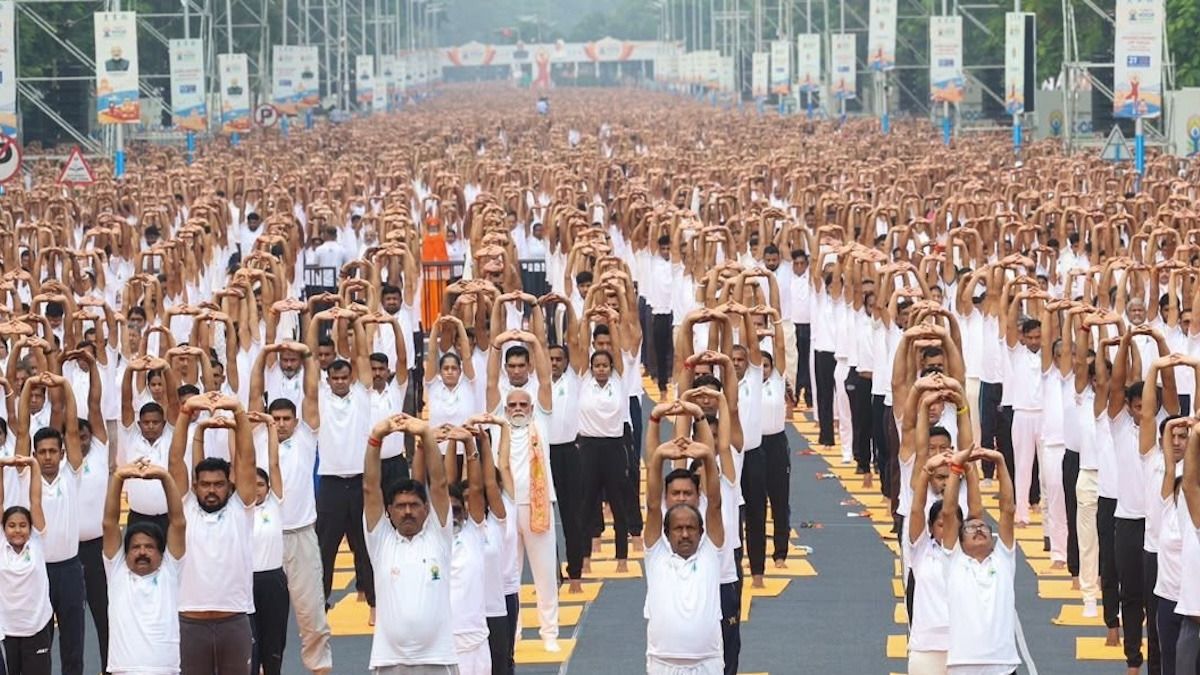
New Delhi: Prime Minister Narendra Modi led thousands at Kolkata’s Red Road on Sunday as India marked the 12th International Day of Yoga, turning this year’s theme, “Yoga for Healthy Ageing”, into a wider message on preventive health, daily discipline and India’s civilisational soft power.
The Kolkata event was large, carefully staged and politically significant.
It was the first Yoga Day flagship event in the city. It was also held weeks after the BJP formed its first government in West Bengal, with Chief Minister Suvendu Adhikari heading the state.
Union Minister of State (Independent Charge) for AYUSH Prataprao Jadhav and Adhikari had flagged off preparatory events in Kolkata ahead of June 21. The build-up included a run-for-yoga initiative, public outreach, a special philatelic cover, city-level mobilisation and large arrangements for the main Red Road programme.
The event was not an isolated Kolkata function. It was part of a wider official ecosystem built over the past decade by the Centre around Yoga Day.
That is where the political reading begins.
Internationally, Yoga Day has travelled far beyond party politics. Domestically, its most visible ownership still sits largely with Modi, the Union government and BJP-led states.
Modi proposed the idea of an International Day of Yoga at the United Nations General Assembly in September 2014, months after taking office as Prime Minister.
The UN General Assembly adopted the resolution in December 2014 without a vote. The first International Day of Yoga was observed on June 21, 2015, with Modi leading the main event at Rajpath in Delhi.
Since then, Yoga Day has grown into one of India’s most recognisable diplomatic exports.
Indian missions, cultural centres, public institutions and yoga organisations now use June 21 as an annual global outreach moment. This year, over 210 Indian missions abroad, in coordination with the Indian Council for Cultural Relations, were expected to organise events at nearly 2,500 locations worldwide.
The domestic architecture has also expanded.
The Ministry of AYUSH, formed in November 2014, has become the nodal centre for official yoga outreach. The government’s 2026 plan included the multilingual International Day of Yoga handbook in English, Hindi and 21 regional languages, the Common Yoga Protocol, digital participation tools, the Yoga Sangam initiative and programmes at iconic locations.
This is not casual cultural promotion. It is structured state-led branding.
The 2026 theme gives the event a stronger public-health frame than routine mass yoga visuals.
The world is ageing faster than before. The World Health Organisation has said that by 2030, one in six people globally will be aged 60 years or above. By 2050, the number of people aged 60 years and older is expected to double to 2.1 billion.
India faces the same pressure, though in its own way.
The India Ageing Report 2023, prepared by UNFPA and the International Institute for Population Sciences, looks at India’s ageing population through social security, disability, healthcare access and insurance use among older persons.
This is the context in which “Yoga for Healthy Ageing” becomes more than a slogan.
Modi’s Kolkata message rested on that point. He said the aim should be to remain more flexible at 40 than at 20, more energetic at 50 than at 30, and more resistant to lifestyle diseases at 70 than at 50.
That line worked because it converted a ceremonial day into a practical argument: ageing well cannot begin after old age has arrived. It has to begin earlier through mobility, strength, breathing, balance and regular habits.
Research on yoga does not support careless miracle claims. But it does point to benefits when yoga is practised regularly and safely. Studies have linked yoga with improvements in flexibility, balance, mobility, stress regulation, mental well-being and quality of life among older adults.
In India, the public face of Yoga Day has remained heavily linked to the BJP-led Centre.
Modi has personally led major Yoga Day events across venues, including Delhi, Chandigarh, Lucknow, Mysuru, Srinagar, Visakhapatnam and now Kolkata. Union ministers, governors, chief ministers, central ministries, armed forces, government institutions and BJP-led state governments have consistently given the event its most visible domestic scale.
This does not mean yoga belongs to the BJP. It does not.
Yoga predates modern party politics by centuries. Its global recognition came through the United Nations, not through a party resolution. Its practice cuts across religion, nationality, ideology and class.
But public ownership is not decided only by historical origin. It is also shaped by who invests political capital, administrative energy and public communication into an event year after year.
On that test, the BJP has dominated Yoga Day’s domestic presentation.
The opposition’s presence has been far less visible. There have been greetings, local participation and routine messages from non-BJP spaces over the years. But there has not been a comparable national political mobilisation by the Congress, AAP, TMC or other major opposition formations around Yoga Day.
It has allowed a universal wellness practice to be seen, in domestic political terms, as a signature Modi-era platform.
The reasons are not difficult to understand.
In India’s polarised politics, opposition parties often avoid giving visibility to programmes that carry the Prime Minister’s personal imprint. Yoga Day is one such programme. It began as a Modi proposal at the UN, was executed after the BJP came to power in 2014 and has been presented every year through the language of Indian heritage, global recognition and national pride.
For opposition parties, embracing it too visibly risks giving credit to Modi.
It has left the BJP with uncontested symbolic space around a practice that is not inherently partisan. It has allowed the ruling party to appear as the only political formation willing to organise around yoga at scale. It has also reduced the possibility of a broader, non-partisan public-health framing inside India.
Globally, Yoga Day has become a shared platform. In New York, London, Paris, Dubai, Singapore and dozens of other cities, yoga is presented as Indian-origin wellness, not BJP politics. But within India, the annual images are overwhelmingly shaped by the Prime Minister, the Centre and BJP-led state machinery.
The BJP understood early that Yoga Day could serve more than one purpose.
It could showcase India’s civilisational heritage. It could strengthen cultural diplomacy. It could fit the Modi government’s larger soft-power narrative. It could connect health, nationalism and tradition without the harder edges of electoral politics.
It also gave the government an annual visual spectacle.
Every June 21, images of mass participation, ministers on yoga mats, soldiers performing asanas, schoolchildren gathered in open grounds and Indian missions abroad holding public sessions reinforce a simple message: India has given the world a health practice, and the Modi government took it global.
That communication has been consistent for 12 years.
The opposition has never really countered it. Nor has it built an alternative framing that says yoga is national, not governmental; public-health oriented, not partisan; and open to all political parties without credit anxiety.
As a result, the BJP’s association with Yoga Day has deepened by default as much as by design.
Under previous political circumstances, a Modi-led flagship Yoga Day event in Kolkata would have carried the tension of Centre-state rivalry. In 2026, with a BJP government in West Bengal, the event had a smoother political alignment.
Red Road has long been associated with state ceremonies and public spectacles. Placing Yoga Day there, under a BJP-led state government, turned the event into a national-cultural display in a state where the party’s rise has been politically significant.
The message was not only about ageing, health or global yoga.
It also signalled that Bengal was now part of the BJP’s national event architecture, not merely a stage where the Centre and state stood apart.
That makes the 2026 Yoga Day event more politically layered than a routine wellness programme.
If yoga is to be taken seriously as a tool for healthy ageing, it cannot remain dependent on one annual visual led by the Prime Minister. It has to enter schools, workplaces, community health centres, senior citizen programmes, public parks, preventive healthcare campaigns and local government planning.
That would require wider political ownership.
It would also require opposition parties to decide whether avoiding the BJP’s cultural platforms is always a smart strategy. In this case, the distance has not weakened the BJP’s claim. It has strengthened it.
Yoga itself remains larger than any party.
But 12 years after the first International Day of Yoga, its domestic public image still carries the colours of the political formation that claimed it, organised it, funded it, staged it and repeated it every year.
Related Stories
 India
India
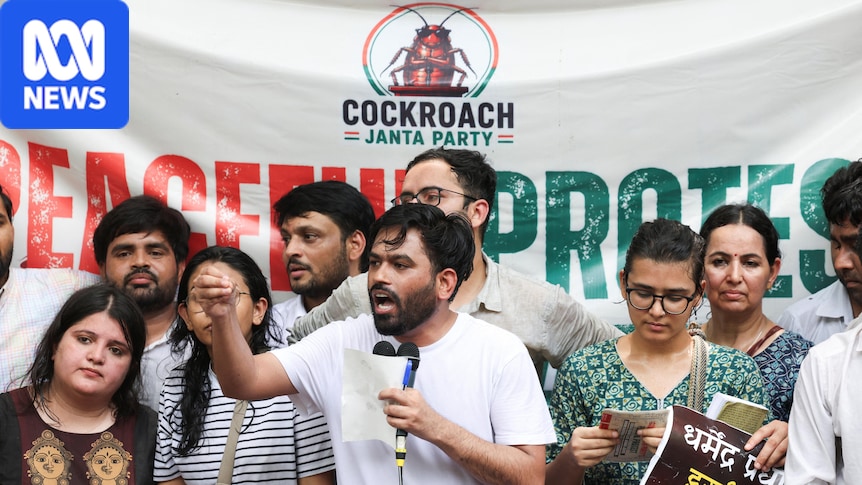
India's 'cockroach' movement founder detained as anger against Modi grows
1 hour ago
 India
India
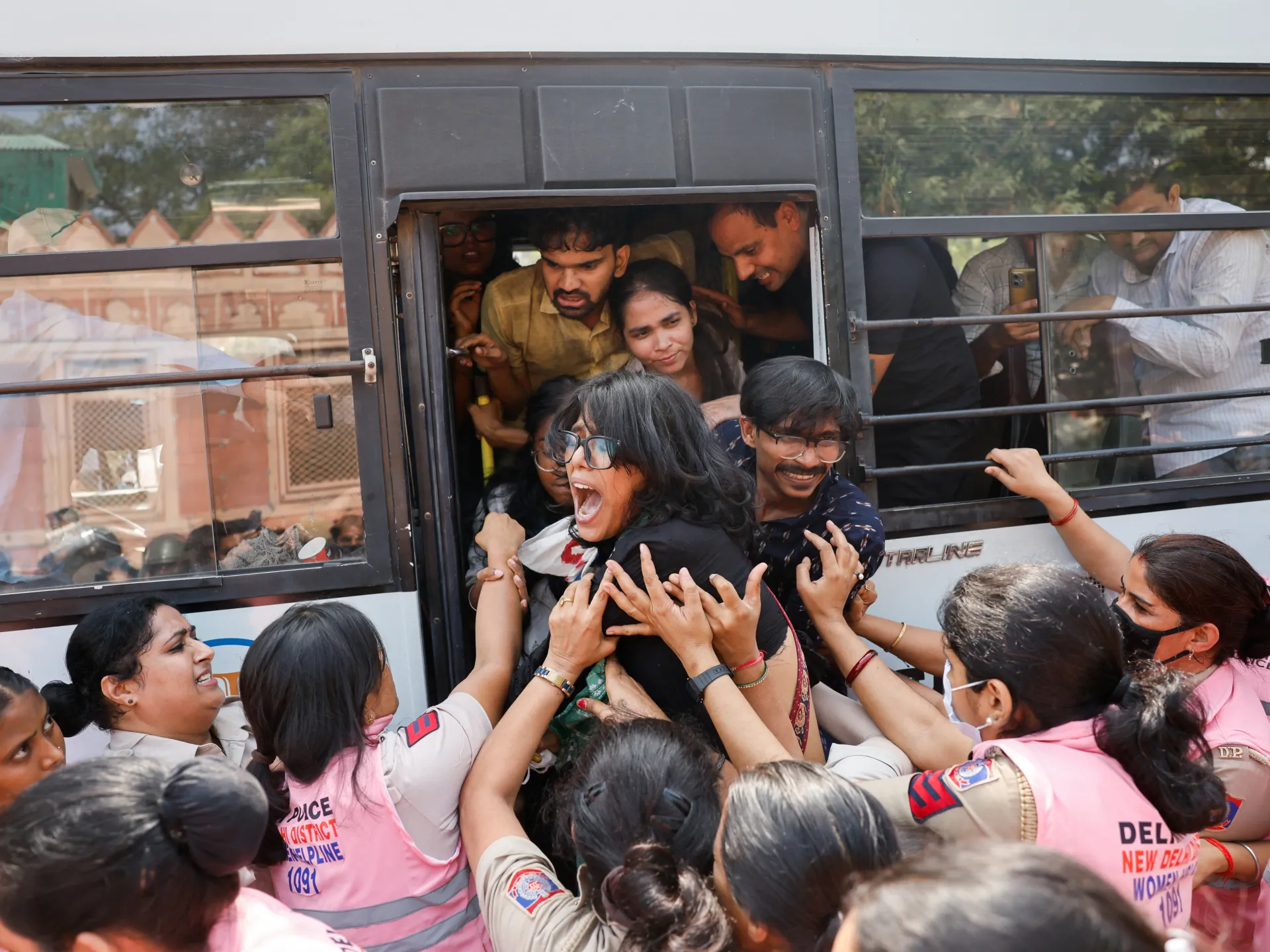
India’s ‘Cockroach’ leaders detained; New Delhi in lockdown
2 hours ago
 India
India
India ordered 200,000 online content takedowns in 4 months: RSF
8 hours ago
 India
India
Telengana CM Revanth Reddy asks party MPs, MLAs to participate in INDIA bloc protest in Delhi on October 1
9 hours ago
 India
India
India detains thousands as 'Cockroach' youth movement protests voter list revision
10 hours ago
 India
India
CJP protest 'flop show', Opposition destabilising India, says BJP chief Nitin Nabin
11 hours ago
 India
India
Meet India's feisty Gen Z protester who is taking on Modi
11 hours ago
 India
India
CJP accuses Delhi Police of ‘petty politics’ over Abhijeet Dipke’s grandmother’s death, seeks his immedia
12 hours ago