
Why Aura Entertainment Isn’t Obsessed With Topping ‘Obsession’
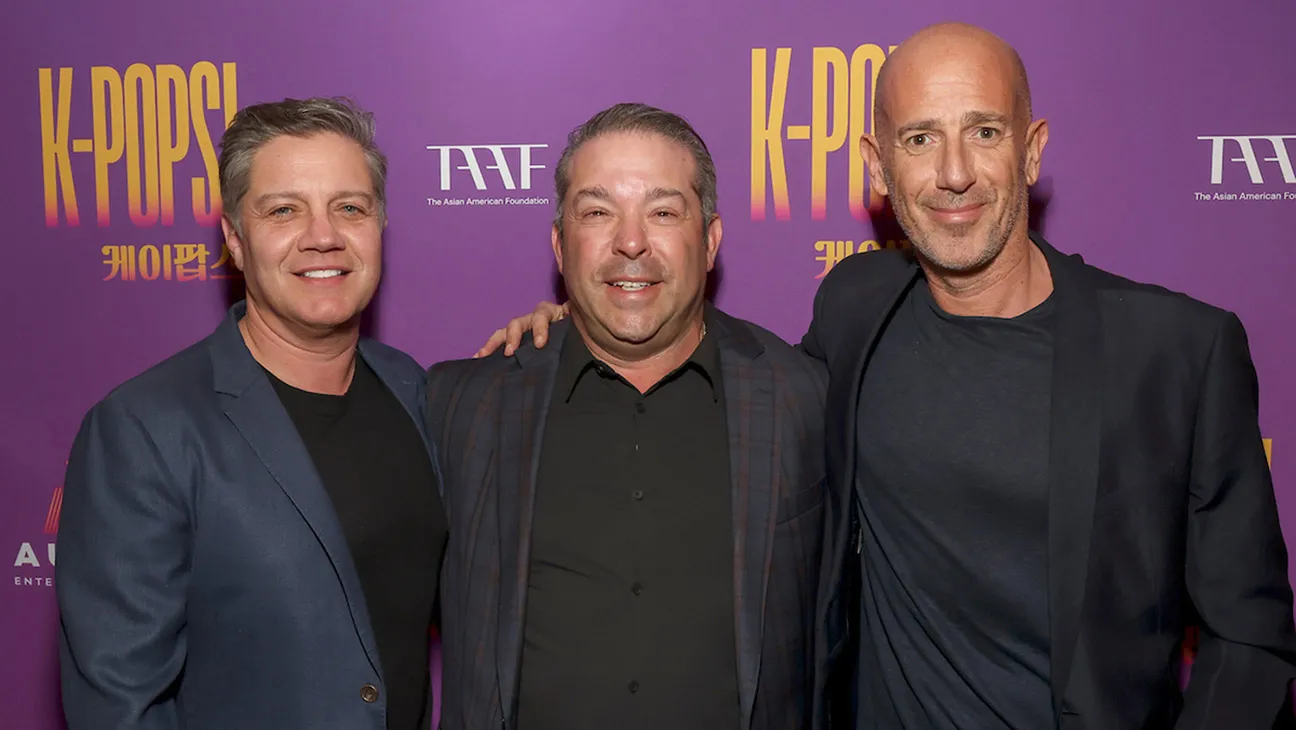
When indie film veterans Marc Goldberg, Christian Mercuri and Jared Goetz joined forces last year to form a new U.S. distribution company, Aura Entertainment, they knew they were entering a tough market. The past two years had seen a flood of new indie buyers — Row K, Room 8 Films, Obscured Releasing, 1-2 Special, Sumerian Pictures, 101 Studios — launch with big dreams but, to date, only meager results.So they kept things modest, focusing on commercially oriented, midbudget films with theatrical potential that could still make their money back on digital release.
“We don’t try to go too big,” says Mercuri. “We’re not dreamers; we’re pretty grounded, [and] we try to produce and distribute films with that mindset.”
They even kept their day jobs. Aura is a partnership between Mercuri’s sales, finance and production outfit Capstone, known for horror and action titles like Fall (2022) and Boy Kills World (2023); Goldberg’s Signature Entertainment, a U.K. distributor that also produces indie action, including last year’s Trap House with Dave Bautista; and Goetz’s Ascending Media, the digital distribution and consultancy firm he set up in 2019 after stepping down as president of domestic TV at Lionsgate. All three continue to lead their respective companies while running Aura independently.
Going into TIFF last year, they were cautiously optimistic. Aura’s new slate — which included Trap House, the paramedic buddy comedy Code 3 with Rainn Wilson and Lil Rel Howery, the comedy K-Pops! from first-time director Anderson .Paak, and Doin’ It, a comedy co-written by and starring Lilly Singh — looked solid. They also had a little indie horror film, directed by a 25-year-old YouTuber, they were bringing to TIFF’s Midnight Madness. A film called Obsession.
The rest is the stuff of festival legend. Curry Barker’s film killed it in the room, setting off a bidding war that ended with a $15 million worldwide sale to Focus Features. With global box office at $512 million and counting, Obsession is the biggest-ever TIFF pickup.
The Aura boys, however, are staying calm.
“I couldn’t be prouder of the results in our first year,” notes Goetz. “And we are going bigger, but without losing the disciplined approach on every single film that got us here.”Before Obsession premiered at TIFF and became the biggest film ever sold at Toronto, what attracted you to it?
CHRISTIAN MERCURI We’re one of the few truly independent studios — we develop, produce, finance, we do everything technically in-house. We pride ourselves on being very producer- and director-friendly, and we’ve been making films that don’t depend on cast. We like commercial concepts in a genre that’s not right down the middle, films that are a little left of center, and we look for unique filmmakers. Obsession was in that world for us. We study the directors we’re going to work with — we really dig into the stories and we try to champion them. I think we did a really good job of shepherding it with Curry, and we’d worked with [Obsession star] Inde Navarrette before, so we thought she’d be perfect for it. And then you hand it over to the movie gods.
MARC GOLDBERG When Christian brought us the film for our inaugural slate, we had a chance to look at it before everyone else, and we were hugely excited. But equally, we’ve all been in the business long enough to know that films premiering at Midnight Madness sometimes don’t even find distribution. So we headed into the festival with the view that this could quite easily have been an Aura release as part of our initial slate. That was a plan the three of us had discussed.
MERCURI From the onset of when we announced, the one thing we always told ourselves is: Every film is unique. It’s not one-size-fits-all, so we don’t force things into our hands or somebody else’s hands. We take an individual approach, even to the films Aura releases, and to how we market and promote them, and it keeps all our companies very flexible.You’ve said you are focusing on acquisitions at this year’s market. What are you hunting for, and does coming off a massive success change your ambition?
GOLDBERG There are 29 movies right now that the Aura acquisitions team is looking at, but also with Signature in the U.K., where Signature is releasing 60 movies. We bring with us three acquisitions people, so there are five of us covering 29 movies, with a look specifically for Aura to find the commercial movies that are audience-pleasing. We’re looking for films that, when they hit the platforms, are going to be watched. That fundamentally sounds like common sense, but it doesn’t always seem to come into the mindset of acquisitions people.
A great case in point: We’ve had the No. 1 movie on Amazon for the past six days: Icefall, with Joel Kinnaman, which didn’t have any theatrical release. It’s a by-the-numbers action film, but with the right promotion, it’s a movie audiences clearly are hungry for. There is that sweet spot of finding exactly that kind of material.
Is there a volume you’re targeting on the distribution side?GOLDBERG At the moment, our target is 12 to 15 movies a year. That said, we’re incredibly opportunistic, and if the right movie comes along, we don’t have a set amount we have to release or can’t release, so it could quite easily stretch up to 20-plus depending on what opportunities are out there. It’s more internal bandwidth than anything.
In terms of the slate, one we’re really excited about is a big-budget action film with Samuel L. Jackson and Joel Kinnaman again — The Beast, which is being released in theaters on Oct. 9. It has full support from the cast, and we’re really excited with the strategy we’ve got on that, releasing on a minimum of 500 screens.
GOETZ This time last year, there were announcements of lots of companies coming into the distribution space. They made a lot of noise in Toronto, and we see what’s happened since. We are very disciplined in our approach. The three of us provide a unique combination of skills and experience that allows us to find angles when other people can’t. And we are going bigger, but without losing the disciplined approach on every single film that got us here.
How do you assess the health of the distribution side of the business?
GOETZ Last year, when some of these new entrants were throwing down pretty sizable MGs [minimum guarantees] on films, we’d look at that, hear what the numbers were and think, “That just doesn’t make sense.” There’s just no way. So we sat back. The three of us have two major meetings a week where we go through what’s out there, how we assess it, what the potential is. It’s just staying disciplined and staying true to our internal mandate. We want commercial films.Where do you see the gaps in the market at the moment?
MERCURI Original content. Original content across all studios, independents, platforms — original ideas, where we used to push the envelope a little bit and take chances and take risks. Doing something slightly different, having an eye to the cinematic experience. It’s a tough market, but we know what we’re doing, we’re good at what we do, and this is actually the right time to start a distribution company because where there are difficulties and challenges, there are also opportunities.
Related Stories
 Entertainment
Search and Follow Your Favorite Venues on Spotify
1 hour ago
 Entertainment
Excel Entertainment's Boong wins Best Feature Film and Best Young Talent at South Asian Film, Literary and...
7 hours ago
 Entertainment
House Lawmakers Launch Movies, Music, Entertainment & Sports Caucus
7 hours ago
 Entertainment
How being music's Mr Nice Guy contributed to biggest crisis of Ed Sheeran's career
7 hours ago
 Entertainment
Korean film 'Hope' reaps $5 mil. in 1st week of N. America release
8 hours ago
 Entertainment
Brazilian cinema is having a moment. A new S.F. film festival shows why
9 hours ago
 Entertainment
FilmOne Entertainment becomes one of only six African companies selected for TIFF's new film market
10 hours ago
 Entertainment
Huntington meeting a show of support for Cinema Arts Centre's fired co
14 hours ago